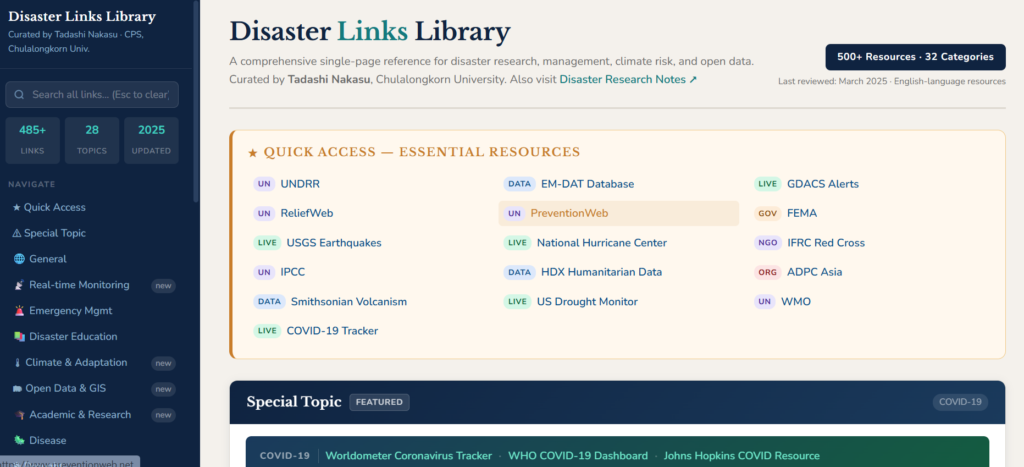
Balancing Continuity and Survival: Lessons for Overseas Manufacturers from Thailand’s 2001 Flood
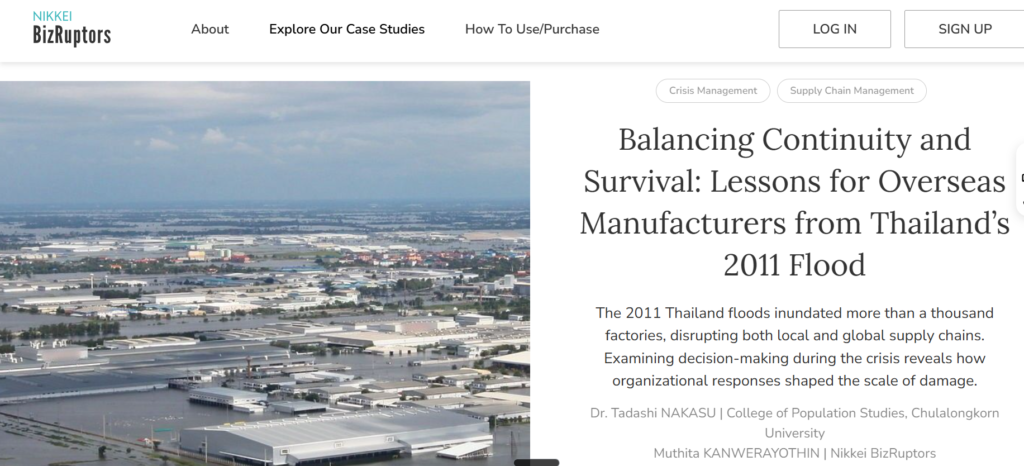

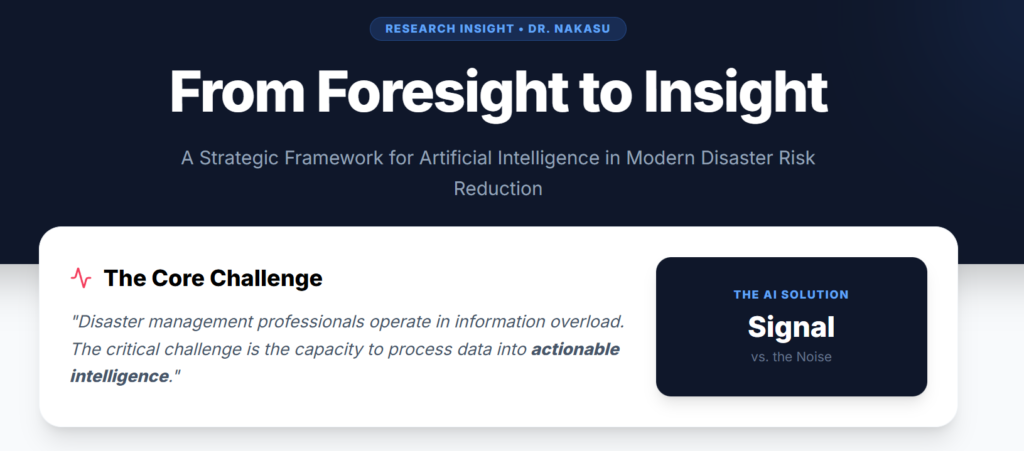
The infographic of the AI-Integrated Disaster Preparedness Platforms is shown as an infographic: AI-Integrated Disaster Preparedness Platforms
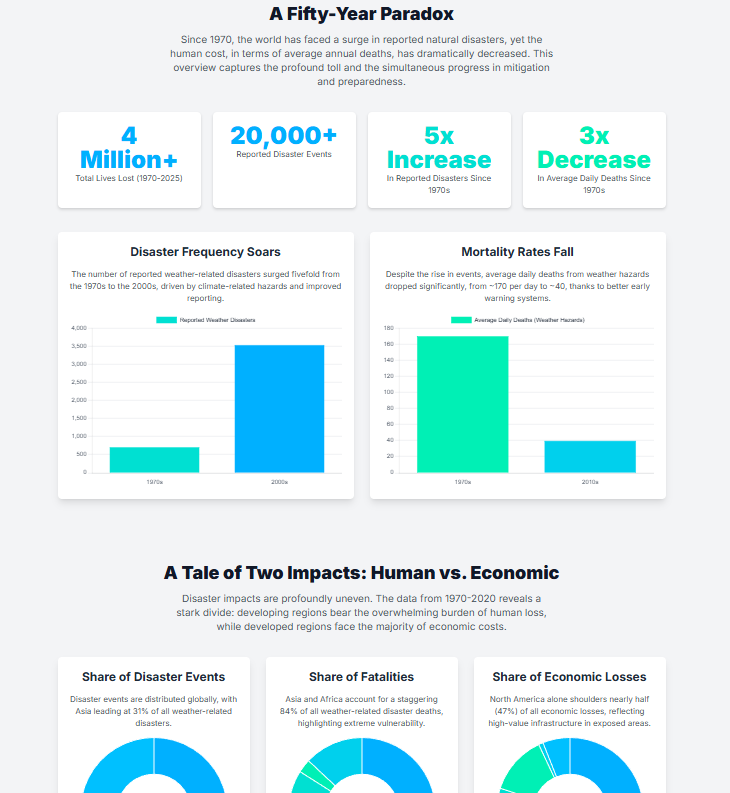
The infographic of the global trends of disasters (1970-2025) is shown as an infographic: https://disasters.weblike.jp/global%20trends.html
From Tragedy to Leadership: The Birth of ADRC
The Asian Disaster Reduction Center (ADRC) was established in 1998 following the devastating Great Hanshin-Awaji Earthquake (commonly known as the Kobe Earthquake) that struck Japan in 1995. This catastrophic event became a catalyst for change, transforming how Japan—and later Asia—approached disaster management and resilience.
Kobe’s Remarkable Recovery Journey
Kobe’s recovery story stands as a powerful testament to resilience and strategic rebuilding. Within just 9 years after the earthquake, Kobe’s population returned to pre-disaster levels—an extraordinary achievement considering the scale of destruction. This recovery wasn’t merely about rebuilding structures but reimagining the city’s future role.
HAT Kobe: A Hub for Disaster Reduction Excellence
Today, Kobe has reinvented itself as a global center for disaster reduction policies and activities. The area known as HAT Kobe hosts numerous disaster-related organizations, including ADRC. The name “HAT” carries dual significance:
This wordplay perfectly captures Kobe’s transformation from a disaster-struck city to a knowledge hub that helps others prepare for and respond to unexpected disasters.
Learning From Kobe: A Model for Disaster Recovery
Kobe’s recovery process offers valuable lessons for communities worldwide facing similar challenges. The city demonstrates how effective post-disaster planning can transform tragedy into opportunity, creating not just infrastructure but institutional knowledge that benefits others.
ADRC’s Mission Across Asia
ADRC plays a vital role in sharing disaster reduction expertise with its member countries throughout Asia. The organization:
Resources for Disaster Management Professionals
ADRC maintains comprehensive resources that disaster management professionals can access:
These resources provide valuable insights into regional disaster management systems, country-specific approaches, and up-to-date information on current disaster situations across Asia.
Building Regional Resilience Together
Through organizations like ADRC and the example set by Kobe, Asian countries are developing stronger collaborative approaches to disaster risk reduction. By learning from past experiences and sharing knowledge, communities across the region are better prepared to face future challenges with resilience and determination.
1991 Unzen Fugendake Volcano Eruption Killed 43 people. This disaster has taught a lot of lessons. The key words are media, volunteer firefighters, police officers, and an evacuation area. The people were all dead in the evacuation area. During the volcano eruption, media people tried to get into the area to shoot pictures, videos, and report. They went into the local people’s houses. The residents were worried about their belongings in their houses. So many volunteer firefighters (12) also went into the area to check, and police officer (2) also did that. The taxi drivers (4) bring them into the area. They all died in the area. Katia Krafft and Maurice Krafft, world’s famous French volcanologists were also dead during the disaster.
Wikipedia (Katia and Maurice Krafft)
https://en.wikipedia.org/wiki/Katia_and_Maurice_Krafft
Wikipedia (Unzen Fugendake Pyroclastic flow, Japanese)
https://ja.wikipedia.org/wiki/%E9%9B%B2%E4%BB%99%E5%B2%B3#1991.E5.B9.B46.E6.9C.883.E6.97.A5.E3.81.AE.E7.81.AB.E7.A0.95.E6.B5.81
One of the most significant volcanic disasters we must know about is the 1985 Nevado del Ruiz volcano eruption. Approx.23000 citizens in Armero city were dead. The cultural aspects were embedded in this disaster. The disaster was predicted. The hazard maps indicate that the city will be affected by a volcanic eruption and lahars. Both priest and mayor told the citizens to stay in the same place because they were afraid of panic before the time, but did not tell them to evacuate. That made tragedy. The people in the city tended to follow both persons because of the culture, which is a religious and vertically structured society. There were also other factors*.
*https://en.wikipedia.org/wiki/Nevado_del_Ruiz#Eruption_and_lahars
I want to introduce you to two disaster technology websites: DRH Asia-Disaster Reduction Hyperbase and Global DRR Technology.
1) DRH Asia
This site provides qualified information about DRR technology. Its content is easy to grasp, making it possible to transfer DRR technology. The content comes from many Asian countries and has been reviewed by experts. The challenge is the limited number of contents.
The following is an example of the contents.
Earthquake Early Warning and its Application to Mitigate Human and Social Damages (Figure 1)
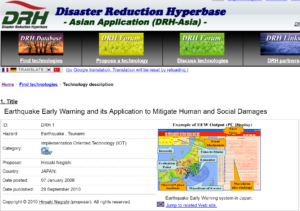
Figure 1
We can understand the quality and availability of the content.
2) Global DRR Technology
This site focuses on an online Community of Practice(CoP) in Disaster Risk Reduction(DRR). Although the content is limited, the site can be easily accessed. The case study site is incredibly visually appealing.
The site below is an example of a case study site. (Figure 2)
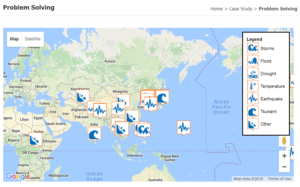
Figure 2
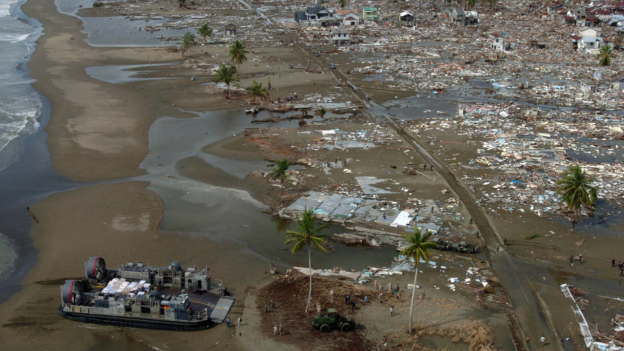
80% ofall tsunamis occurring in the world are concentrated in the Circum-Pacific Belt.The leading countries researching the tsunami are Japan, the U.S., and Russia. The tsunami is originally a Japanese term that means a high tidal wave. The name was used by Japanese immigrants during a tidal wave caused by the 1946 Aleutian Islands earthquake (tsunami) hit in Hiro, Hawaii and it became an international word, especially an academic word, ”Tsunami”. The International Union of Geodesy and Geophysics (IUGG) is in charge of a tsunami session at the start of an international conference about tsunamis. “Tsunami” became public after the 2004 Indian Ocean Tsunami disaster.
*The word “tsunami” is composed of the Japanese words “Tsu” (which means harbor) and “Nami” (which means “wave”)(ITIC)
The 1946 Aleutian Islands earthquake
Hiro, 1964
You cannot copy content of this page