
Category Archives: Capacity

When Help Can’t Come: What the 1995 Kobe Earthquake Still Teaches Us About Surviving Disaster

In 15 seconds, 6,434 people lost their lives — and the rescuers who saved the most were not professionals. They were neighbors.
6,434 lives lost in the Great Hanshin-Awaji Earthquake80%+ of deaths caused by building collapse and falling furniture1–2% of survivors rescued by professional emergency services

I was in Kyoto that morning

At around 6 a.m. on January 17, 1995, I was just waking up in Kyoto. I remember feeling a faint tremor. I thought it might be a dream. When I walked to the nearby station to check the trains, and then arrived at my office to find no one there, I turned on the television — and saw images I have never been able to forget: elevated expressways on their sides, rows of wooden homes pancaked flat, smoke rising across an entire district of Kobe.

I was working in tourism at the time. That morning changed the direction of my life. I went on to join the National Research Institute for Earth Science and Disaster Prevention in Japan, investigating disasters from Katrina to Ondoy to the 2011 Great East Japan Earthquake. I now research disaster resilience at Chulalongkorn University in Bangkok. And across every disaster I have studied, one truth keeps surfacing: what happens in the first 15 minutes is determined by what people did — or did not do — in the weeks and months before.

Fifteen seconds. 6,434 lives.

At 5:46 a.m. on January 17, 1995, the Nojima Fault ruptured beneath the northern tip of Awaji Island, generating a Japan Meteorological Agency magnitude-7.3 earthquake. The strongest shaking lasted no more than 15 to 20 seconds. But in those seconds, the outcome for most victims was already decided. More than 80 percent of those who died were crushed or suffocated beneath collapsed buildings and toppled furniture — almost all in wooden structures built before Japan’s 1981 earthquake-resistant building code revision. The majority died almost instantly, before any rescue could have reached them. Over 100 fires broke out simultaneously. A 600-meter section of the elevated Hanshin Expressway toppled sideways. Water mains ruptured across the city, leaving fire crews with no water to fight the flames. More than 300,000 people poured into evacuation centers in mid-January cold.

“Kobe did not fail because rescuers were slow. It failed because, when an entire city is struck at once, professional rescue is physically impossible at scale. That was the lesson. It took the world by surprise.”

Who actually saved people?

A post-disaster survey conducted in one Kobe ward asked survivors rescued from collapsed buildings a single question: who helped you get out? The answer was striking. The overwhelming majority were freed by themselves, by family members, or by neighbors — by people who were physically present in the first minutes. Professional rescue services — fire departments, police, the Self-Defense Forces — accounted for only an estimated 1 to 2 percent of rescues in the acute phase.

This is not a criticism of those services. They responded. But roads were blocked, phones were down, and simultaneous structural collapses across an entire metropolitan area created a physical impossibility: no rescue organization, however skilled or well-resourced, can be everywhere at once when an entire city falls. The real rescuers that morning were the neighbors who grabbed bicycle frames and iron pipes to lever beams off pinned family members in the dark.

This single finding — 1 to 2 percent professional rescue — is widely credited as the moment Japan’s disaster policy pivoted permanently toward community-level preparedness. It gave rise to the framework now central to Japan’s DRR thinking: Jijo–Kyojo–Kōjo.

The survival ratio in a city-scale disaster (acute phase)

Self-help (Jijo)  — 70%Mutual (Kyojo)  20%Public 10%

This is not a rigid formula. It is a policy reminder: in the acute phase of a city-scale disaster, survival is predominantly a household and neighborhood question. Public help is essential — but it is slower and finite. Self-help is the foundation that lets you reach the moment when mutual-help and public-help can act.

The Tanaka family: a story rooted in real experience

In my research, I use case-based scenarios to make these dynamics visible. Consider a composite family — based on documented experiences in Kobe’s Nagata Ward — that I will call the Tanaka household. Hiroshi (42), a shoe-factory worker; his wife Keiko (39); their teenage daughter Aoi and young son Ren; and Hiroshi’s mother Sumiko (71), who has limited mobility from arthritis and takes daily blood-pressure medication. They live in a two-story wooden row house built decades before the 1981 code.

When the quake hit, the second floor partially collapsed onto the first. Hiroshi and Keiko were pinned by a fallen wardrobe. Aoi was trapped under a collapsed beam. Sumiko could not move. It took nearly an hour — with neighbors using a bicycle and a length of pipe — to free Sumiko as fire spread through the block. They evacuated barefoot, in nightclothes, in near-freezing air. Sumiko’s medication bottle was buried in the rubble. So were the bank books, the property deed, and the insurance papers.

Every difficulty this family faced was foreseeable. Almost all of it was preventable. That is the defining lesson of Kobe.

What you can do — starting tonight

As a researcher who has walked through disaster zones from New Orleans to the Philippines to Japan’s Tohoku coast, I am often asked what the single most important thing a household can do is. The honest answer is that it is not one thing — but all of the following are straightforward, low-cost, and evidence-backed.

1. Anchor all tall furniture in your bedroom

The number-one killer in Kobe was not the earthquake itself, but falling wardrobes and bookshelves onto sleeping people. An L-bracket costs less than lunch.

2. Place shoes and a flashlight beside your bed

Glass-covered floors in the dark are a serious injury risk after any structural event. Do this tonight before you sleep.

3. Build a 3-to-7-day stockpile of water and food

3 liters of water per person per day, plus food requiring no cooking. In Kobe, water mains in some areas were not fully restored for months.

4. Keep essential medications grab-ready

At least one week of any chronic-disease prescription, children’s inhalers, or blood pressure drugs — in a sealed pouch outside the collapse zone. For Sumiko, this was a near-fatal omission.

5. Digitize your key documents

Photograph your ID, property deed, insurance policies, and bank documents. Store copies in the cloud and with a relative in another city. Lost documents delay every form of recovery assistance.

6. Agree on two meeting points

One just outside the building, one nearby landmark. Assign who is responsible for each vulnerable member. Do not rely on mobile phones — lines fail in disasters.

7. Run a household drill twice a year

A kit you have never practiced with, with expired medication and no agreed plan, is a false comfort. The preparation is the practice.

Mutual-help: the neighbor you know is the neighbor who digs you out

Self-help has limits. Sumiko survived because neighbors came. In modern cities, it is not uncommon to not know the person living next door. But my field research across Japan, Thailand, and the Philippines confirms the same finding repeatedly: communities that recover fastest — and lose the fewest lives in the acute phase — are communities where people already knew each other before the disaster.

You do not need a formal community organization to start. A brief greeting in the elevator. Passing along a neighborhood bulletin with a few words added. Attending one local meeting. These small acts create familiarity — and familiarity, in a disaster, means you are someone a neighbor will think to check on. That is not sentimentality. It is disaster science.

In the months after the 1995 earthquake, over one million volunteers descended on Kobe from across Japan. That outpouring is remembered as the birth of modern volunteer culture in Japan. It was remarkable. But the real mutual-help happened in the first hour — in the hands of people already there, already awake, already digging.

Disasters are social, not just natural

I want to close with something that three decades of research have made impossible for me to ignore. The scale of deaths in Kobe was not determined by the earthquake alone. It was determined by which buildings people were sleeping in, and which neighborhoods they lived in. Homes built before 1981 — concentrated in older, lower-income districts — collapsed at far higher rates than newer structures. The same magnitude of shaking killed far fewer people in neighborhoods with newer construction.

This is the core argument of disaster research as I practice it: the disaster begins before the disaster. Vulnerability — to poverty, to age, to disability, to housing precarity — shapes who is at risk long before any fault line moves. Individual preparedness matters enormously. But so does the society we build together. Ensuring that the most vulnerable households have access to retrofitting subsidies, medication coverage, and document support is not charity. It is evidence-based risk reduction.

At 5:46 a.m. on January 17, 1995, I was in Kyoto and barely noticed the tremor. Most people in Kobe had no warning at all. The question that has driven my research ever since is simple: what, in the days and weeks before that morning, could have changed what happened in those 15 seconds?

The answer — every time — is: quite a lot.

Key takeaway

The Great Hanshin-Awaji Earthquake proved that when a city is struck all at once, professional rescue is overwhelmed within minutes — and the vast majority of survivors are saved by themselves, their families, and their neighbors. Real resilience is built before disaster strikes: anchor your furniture, stockpile for at least three days, protect medications and documents, agree on how to reunite, and practice. Self-help and mutual-help are not substitutes for public assistance — they are what keep you alive until it arrives.

Sources & further reading

Great Hanshin-Awaji Earthquake documentation: Cabinet Office, Japan (https://www.bousai.go.jp/kyoiku/kyokun/hanshin_awaji/)

Disaster Research Notes (Nakasu): disasterresearchnotes.site (https://disasterresearchnotes.site)

Sendai Framework for DRR (2015–2030): UNDRR (https://www.undrr.org/publication/sendai-framework-disaster-risk-reduction-2015-2030)

Note:

This is my personal experience and knowledge. Disaster preparedness depends entirely on your situation. Please use this article for your reference.

Why Your Culture May Determine Whether You Survive a Disaster

When disaster strikes, we tend to focus on the storm, the flood, or the earthquake itself. But after two decades of fieldwork across Southeast Asia and Japan, I keep coming back to something less visible — and just as powerful: the culture, institutions, and social structures of the communities involved shape survival just as much as the disaster itself.

It’s Not Just About the Disaster

Sociologist Benjamin F. McLuckie compared disaster responses across Japan, Italy, and the United States as far back as the 1970s. His key finding: how centralized a government is — how much decision-making power sits with national versus local authorities — significantly shapes what actually happens on the ground when emergencies unfold.

But culture alone does not explain everything. What really drives outcomes is a three-way mix of culture, institutions, and technology. A community that values collective action still needs neighborhood associations, shelters, and early warning systems to turn that value into real protection. Without those structures, values remain just values.

What I Found in the Field

My work on the 2011 Thailand floods — which disrupted global supply chains and devastated communities around industrial parks — brought this home clearly. Social cohesion and local governance structures were just as predictive of recovery as physical flood barriers. Through the Japan-Thailand SATREPS collaboration, my colleagues and I developed community capacity assessments and social vulnerability indices to help local leaders act before the next disaster, not scramble after it.

What struck me most was this: communities with strong internal networks recovered faster, not because they had more resources, but because they already knew how to work together.

The New Orleans Lesson

After Hurricane Katrina in 2005, researchers noticed that Vietnamese-American communities in New Orleans recovered more quickly than many others. The easy explanation was “culture.” But the real answer was more grounded: strong churches functioning as organizing hubs, dense social networks built through shared migration experience, and established community leadership capable of coordinating a return. Culture mattered — but it worked through concrete institutions. That distinction is important.

Why This Matters Now

Climate change is making disasters more frequent and more severe. Yet many governments still treat disaster response as a purely technical problem — better seawalls, faster alert systems. Those matters. But they miss the human layer that makes those tools actually work.

When we recognize that community trust, family networks, and local governance are all part of the disaster equation, we can design better evacuation plans, more effective early warnings, and recovery programs that genuinely reach the people who need them most.

Every disaster holds up a mirror to the society it strikes. What we see reflected — who gets help quickly, who rebuilds together, who gets left behind — is shaped by culture, institutions, and history working in combination. That is not just a scholarly observation. It is, ultimately, a matter of life and death.

Sources:

McLuckie, B.F. (1977). Italy, Japan, and the United States: Effects of Centralization on Disaster Responses. University of Delaware;

Nakasu, T. et al. (2022). International Journal of Disaster Resilience and Built Environment. https://doi.org/10.1108/IJDRBE-10-2020-0107;

Nakasu, T. (2023). Environmental Development and Sustainability. https://doi.org/10.1007/s10668-023-04305-7

【The 2011 Chao Phraya River Floods Case Study Content: Nikkei BizRuptors (website)】

Balancing Continuity and Survival: Lessons for Overseas Manufacturers from Thailand’s 2001 Flood

【Project launched (website)】Disaster Risk Management in Aging Societies: Bridging Japanese Experience with Thai Policy Needs

Disaster Risk Management in Aging Societies

【Disaster Research: Infograph】AI-Integrated Disaster Preparedness Platforms (Open Access Examples)

The infographic of the AI-Integrated Disaster Preparedness Platforms is shown as an infographic: AI-Integrated Disaster Preparedness Platforms

【Disaster News】FEMA Cuts before Hurricane Season: What you need to know

DALLE 20250304

Today, I gonna talk about the FEMA cost cuts.

Hurricane season is just 3 months away, but FEMA just lost 200 employees. Should you be worried?

 The Trump administration has made major budget cuts to FEMA and other disaster agencies as part of a government streamlining effort guided by Elon Musk.

These cuts don’t just affect FEMA – they’ve also hit HUD and NOAA, agencies crucial for weather forecasting and housing recovery after disasters.

States like Texas, which depend heavily on federal disaster funds, could face delayed or reduced assistance during emergencies.

Local officials in Houston, still rebuilding from past storms, now question how these changes will impact their disaster preparations.

 Some Republicans argue these cuts eliminate waste, while critics warn they’ll cripple response times when disasters strike – especially with storms becoming more frequent and severe.

If you live in a disaster-prone area, now might be the time to strengthen your personal emergency plans before hurricane season arrives.

News Source: Houston Chronicle

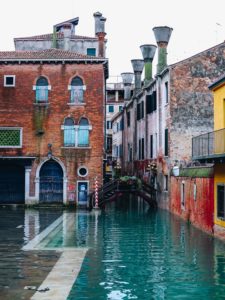
Day_175: Exploring Italy’s Struggle with Flooding and Innovative Solutions for a Safe Future Amidst Rising Waters.

Image Source: Unsplash‍

This article is prepared based on the recent flood to understand the flood management status in Italy.

https://www.youtube.com/watch?v=nHgTocw3Ogs

Italy, a country renowned for its captivating aesthetics and profound cultural legacy, confronts a mounting predicament as the water levels surge, jeopardizing its architectural wonders and the routine existence of its populace. The acceleration of climate change has resulted in the nation grappling with the adverse impacts of devastating floods that cause significant damage to its scenic cities and towns. This article delves into the multifaceted challenges posed by floods in Italy, exploring the underlying complexities of the issue and highlighting creative approaches that are transforming the nation’s trajectory. Italy is making strides toward preserving its legacy for future generations by utilizing advanced technology, implementing community-based strategies, and demonstrating an unwavering commitment to environmental sustainability. Embark with us on an enlightening expedition as we delve into the unyielding struggle against the advancing waters and commemorate the achievements of human innovation and resilience in the midst of hardship.

The Impact of Climate Change on Italy’s Flood Risks

The phenomenon of climate change has had a significant impact on the global environment, including Italy. The escalation of global temperatures has resulted in an augmented peril of floods within the nation, which could potentially culminate in disastrous results. The increase in temperature has been found to have a significant impact on the melting of glaciers in the Alps. This phenomenon has been observed to result in a rise in sea levels and an increase in the volume of water in rivers and lakes. The excess of water increases the susceptibility to floods, especially in the coastal regions of Italy that are situated at lower elevations.

Furthermore, the phenomenon of climate change has led to an increase in the frequency and intensity of extreme weather occurrences, including but not limited to heavy precipitation and storms. The occurrence of heavy rainfall can result in the inundation of drainage systems and the emergence of flash floods, which pose a significant threat to urban regions. The impact of climate change on flood risks in Italy is a critical issue that requires comprehensive understanding and innovative solutions to be tackled.

Italy has exhibited a resolute dedication to mitigating its flood hazards, despite the adversities presented by climate change. In recent decades, the nation has made noteworthy progress in comprehending the origins and consequences of floods, while also executing effective measures for prevention and reduction. The forthcoming sections will examine the historical occurrences of floods in Italy, the underlying factors that contribute to its susceptibility to flooding, and the pioneering measures that are shaping a more secure and robust future.

Historical Floods in Italy: Lessons Learned and Progress Made

Italy boasts a rich historical record of disastrous floods that have inflicted enduring damage upon its terrain and populace. In 1966, the Arno River in Florence experienced a catastrophic flood that resulted in the loss of over 100 lives and extensive damage to numerous works of art and cultural artifacts. This event has become widely recognized as one of the most infamous floods in history. The aforementioned calamitous incident acted as a stimulus for the country and instigated a revitalized emphasis on flood prevention and readiness.

Subsequent to the Florence flood, Italy encountered a multitude of consequential flood occurrences. The Piedmont region experienced a catastrophic flood in 1994, resulting in extensive devastation and loss of human lives. In 2011, Genoa experienced a flash flood that resulted in the loss of six lives and significant harm to infrastructure. The aforementioned calamitous incidents have underscored the necessity for effective flood management strategies, prompting the Italian authorities to allocate resources towards scholarly inquiry, enhancements in infrastructure, and pioneering approaches aimed at mitigating the hazards associated with flooding.

Italy has achieved significant advancements in comprehending its flood hazards and executing strategies to avert and reduce their consequences, owing to these endeavors. The nation has implemented advanced flood forecasting and early warning mechanisms to furnish prior intimation of potential flood incidents, thereby empowering communities to make adequate preparations and respond with greater efficacy. Moreover, Italy has made significant investments in enhancing its infrastructure, including the development of dams, levees, and drainage systems, with the aim of providing greater protection to regions that are susceptible to flooding. Despite notable advancements, there remains a substantial amount of work to be undertaken in order to guarantee the safety and fortitude of Italy’s populace in light of the escalating threat of flooding.

Factors Contributing to Italy’s Flood Vulnerability

Italy’s susceptibility to floods can be attributed to a combination of factors, such as its distinctive geography, urbanization, and land-use practices. The nation’s vast expanse of coastal areas and multiple waterways provide it especially vulnerable to inundation caused by both coastal storms and riverine deluges. Furthermore, the topography of Italy is distinguished by steep mountainous regions and narrow valleys, which can intensify the probability of flooding by directing water towards densely inhabited regions and enhancing the possibility of landslides.

The surge in urbanization and alterations in land use has been instrumental in enhancing Italy’s susceptibility to flooding. The expansion of urban areas results in the replacement of natural landscapes with impervious surfaces, such as buildings, roads, and parking lots, that hinder the infiltration of water into the ground. Consequently, there is a rise in surface runoff and an enhanced susceptibility to flooding in the occurrence of intense precipitation episodes. Moreover, the development of infrastructure in regions susceptible to flooding has increased the vulnerability of both individuals and resources, thereby exacerbating the potential consequences of a flood occurrence.

Italy’s susceptibility to floods can also be attributed to insufficient maintenance of flood defense infrastructure, including levees, dams, and drainage systems. Insufficient investment in maintenance and aging infrastructure can result in the failure of crucial systems during critical times, thereby endangering lives and property. It is imperative to consider these factors in order to mitigate flood hazards in Italy and establish a future that is more resilient.

Innovative Flood Management Solutions in Italy

Italy has adopted a multifaceted approach to address the intricate issues posed by flooding, which integrates conventional flood protection strategies with state-of-the-art technology and environmentally conscious methodologies. The proposed solutions endeavor to mitigate the underlying factors that contribute to susceptibility to flooding, while simultaneously advocating for ecological sustainability and adaptability.

The implementation of green infrastructure within urban environments represents a viable strategy. Green infrastructure applies to the utilization of natural or semi-natural mechanisms, such as green roofs, parks, and permeable pavements, for the purpose of effectively handling stormwater and mitigating the likelihood of flooding. The aforementioned characteristics not only facilitate the assimilation and absorption of surplus water but also result in dramatic ecological and communal advantages, including reduced atmospheric conditions, diminished urban heat island consequences, and enhanced biodiversity.

An additional inventive approach involves the adoption of flexible and adaptable flood control tactics that can adapt to fluctuating circumstances and ambiguities. The MOSE project, a system of mobile barriers, has been developed by the city of Venice to safeguard the city from the negative impacts of rising sea levels and storm surges. The barriers possess the capacity to be adjusted in accordance with the varying flood risks, thereby facilitating a flexible approach while mitigating the adverse effects on the city’s fragile ecosystem and heritage edifices.

Urban Planning and Design for Flood Resilience

Apart from pioneering flood management strategies, Italy has acknowledged the significance of urban planning and design in advancing flood resilience. The incorporation of flood risk assessments into the planning and development process can enhance the resilience of urban and rural areas to floods and facilitate their adaptation to the dynamic climate.

The identification and preservation of natural floodplains is a crucial element in urban planning strategies aimed at enhancing flood resilience. The aforementioned regions, which exhibit susceptibility to inundation in the event of heavy precipitation, play a pivotal role in affording storage and absorption capacity for surplus water. Through the preservation of these regions and the imposition of development restrictions within them, communities can mitigate their exposure to flood hazards while simultaneously safeguarding crucial ecosystem services and habitats for wildlife.

Another important consideration is the integration of flood risk management into the design of buildings and infrastructure. Potential strategies for mitigating flood risks may involve implementing techniques such as raising structures to exceed projected flood levels, utilizing materials and construction methods that are resistant to flooding, and creating adaptable spaces that can serve a variety of purposes, such as temporary flood storage or evacuation facilities. Through the integration of these design principles, communities have the ability to mitigate the potential adverse impacts and disturbances resulting from flooding while simultaneously strengthening their overall capacity for resilience.

The Role of Nature-Based Solutions in Flood Mitigation

In contemporary times, there has been a growing interest in nature-based solutions (NBS) as a practical and economical strategy for mitigating floods. The aforementioned solutions utilize natural processes and ecosystems to mitigate flood hazards through restoration, preservation, or enhancement. Instances of Nature-Based Solutions (NBS) encompass the rehabilitation of wetlands and floodplains, afforestation of slopes, and establishment of green areas in urban settings.

Several NBS (Nature-Based Solutions) initiatives have been successfully executed in Italy, exhibiting encouraging outcomes. The “Life-Envi-Med” initiative, located in the Sardinia region, aims to mitigate flood hazards and foster biodiversity by rehabilitating and safeguarding coastal dunes and wetlands. An additional instance is the “Vallevecchia” initiative located in the Veneto region, with the objective of rehabilitating prior farmland to establish a natural barrier area that can assimilate floodwaters and offer significant habitat for fauna.

Through the implementation of Nature-Based Solutions (NBS), Italy is able to mitigate the potential hazards of flooding while simultaneously demonstrating its dedication to the principles of ecological sustainability and the preservation of biodiversity. Moreover, Natural Based Solutions (NBS) frequently offer supplementary advantages, such as improved water quality, heightened recreational possibilities, and enhanced climate change adaptability, rendering them a valuable constituent of Italy’s comprehensive flood management approach.

Technological Advancements in Flood Forecasting and Early Warning Systems

The utilization of technology is of utmost importance in Italy’s endeavors to effectively mitigate flood hazards and strengthen its capacity to adapt to adverse circumstances. The implementation of flood forecasting and early warning systems has played a crucial role in mitigating the adverse effects of floods on both human settlements and physical infrastructure.

The National Early Warning System for Hydrogeological and Hydraulic Risks (SINIFF) is a noteworthy instance of technological advancement, which was established through a joint venture between the National Civil Protection Department of Italy and the regional environmental protection agencies. SINIFF integrates contemporaneous data from monitoring stations with sophisticated hydrological and meteorological models to furnish prompt and precise flood prognostications and notifications. The aforementioned data empowers regional governing bodies and first responders to adopt preemptive measures aimed at safeguarding human lives and assets, including but not limited to the evacuation of inhabitants, road closures, and fortification of flood barriers.

Apart from SINIFF, various early warning systems at regional and local levels have been formulated to cater to distinct flood hazards and susceptibilities. The Piedmont region has incorporated a sophisticated flood prediction system that integrates current information from river monitoring stations, weather radar data, and hydrological models to predict potential flood occurrences. Through the utilization of technological advancements, Italy can enhance its ability to forecast and address flood hazards, leading to a reduction in the adverse impact on both human life and economic resources caused by such disasters.

Community Engagement and Collaboration in Italy’s Flood Management

Effectively addressing the complex problems related to flood management necessitates the involvement and cooperation of various entities, such as government agencies, scholars, enterprises, and nearby populations. Italy has adopted a participatory strategy for flood management, prioritizing the involvement of all pertinent stakeholders in the decision-making process and promoting a collective sense of accountability for mitigating flood risks.

An instance of community involvement in flood management is the formation of regional flood committees, which convene delegates from diverse sectors to formulate and execute strategies for managing flood risks. The aforementioned committees serve as a platform for various stakeholders to exchange information, collaborate on initiatives, and devise novel approaches to address flood-related issues at the local level.

Additionally, Italy has acknowledged the significance of public education and awareness in advancing flood resilience. The National Flood Awareness Campaign is an endeavor that seeks to disseminate knowledge and provide instruction to individuals regarding the hazards of flooding and the actions they can undertake to safeguard themselves and their localities. Italy is fostering a culture of resilience and enhancing its capacity to adapt to the evolving climate by equipping individuals and communities with knowledge and skills.

The implementation of collaborative efforts and partnerships is deemed essential in Italy’s flood management endeavors. The nation has forged collaborations with global organizations, such as the European Union, to exchange knowledge and proficiency and acquire financial resources for inundation control initiatives. Furthermore, Italy has engaged in cooperative efforts with its adjacent nations, including France and Switzerland, to tackle the issue of cross-border flood hazards and establish collective flood control strategies.

It is imperative that Italy takes measures to enhance its flood management capabilities to safeguard its future.

The current situation in Italy highlights the necessity for a holistic and cohesive strategy toward flood control and mitigation. Italy can enhance its flood risk mitigation strategies by integrating traditional flood defense measures with innovative methods such as green infrastructure, adaptive flood management, and nature-based solutions, thereby fostering ecological sustainability and resilience.

In addition, it is imperative that Italy involves all pertinent parties such as governmental entities, scholars, enterprises, and nearby communities in the process of making decisions and cultivates a mindset of fortitude and cooperation. Through collaborative efforts, Italy has the potential to construct a more secure and durable future for its populace while safeguarding its cultural legacy for future generations.

Italy’s ability to overcome challenges related to climate change and flooding is noteworthy, given its history of resilience and innovation, which serves as a source of inspiration and optimism. Italy is able to overcome these challenges and establish a more sustainable future by persisting in its investment in flood management strategies and adopting innovative ideas and technologies.

Day_165: Capacity, Coping Capacity, and Capacity Assessment

Based on the UNDRR, capacity, coping capacity, and capacity assessment are defined as follows:

Capacity is “the combination of all the strengths, attributes and resources available within an organization, community or society to manage and reduce disaster risks and strengthen resilience.” and also annotated, “capacity may include infrastructure, institutions, human knowledge and skills, and collective attributes such as social relationships, leadership and management”

Coping capacity is “the ability of people, organizations and systems, using available skills and resources, to manage adverse conditions, risk or disasters. The capacity to cope requires continuing awareness, resources and good management, both in normal times as well as during disasters or adverse conditions. Coping capacities contribute to the reduction of disaster risks.”

Capacity assessment is “the process by which the capacity of a group, organization or society is reviewed against desired goals, where existing capacities are identified for maintenance or strengthening and capacity gaps are identified for further action.”

We consider the capacity as a part of the vulnerability mentioned in the Press and Release (PAR) model. The capacity is examined as a coping capacity in the context of the disaster.

This means capacity is more changing, human-centered, government-related, and has timely measurement aspects compared to the other vulnerability factors.

As mentioned above, capacity is considered one of the vulnerability factors, and the vulnerability index can be analyzed based on the statistical data. However, the applicable capacity statistical data is difficult to determine and also difficult to obtain in Thailand. In addition, capacity cannot be measured well by the statistical data. They could be greatly influenced by social networks, past experience, and other factors. With this situation, the capacity assessment can be utilized not only to measure social vulnerability but also to visualize the risk by overlapping with hazard risk on the GIS. Also, capacity can be considered to be the key to examining resilience.