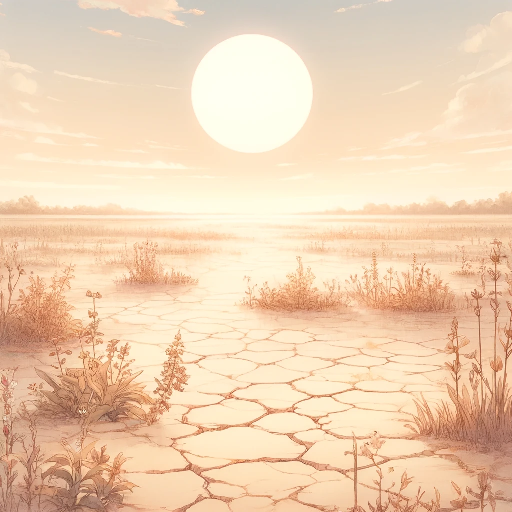
Recent years have seen a substantial impact of both climate change and human activities on droughts, which are complex and multifaceted natural phenomena. Droughts are marked by prolonged periods of precipitation that fall below average, resulting in significant scarcity of water that has far-reaching consequences for economies and ecosystems worldwide. This expanded guide delves deeper into the causes of droughts, their wide-ranging impacts, and the innovative solutions needed to mitigate their effects.
Causes of Droughts
Droughts arise from a blend of natural variability and human-induced factors. Key natural causes include shifts in atmospheric circulation patterns, which can disrupt traditional weather patterns, and the ongoing challenge of global warming, which intensifies evaporation rates, reducing soil moisture and water availability. Human activities, such as deforestation, directly alter land use and local climates, further diminishing rainfall and aggravating drought conditions. Additionally, the unsustainable use of water resources and pollution significantly strain water supplies. A comprehensive understanding of these factors is essential for crafting effective and sustainable drought mitigation strategies.
The Multidimensional Impacts of Droughts
The consequences of droughts extend far beyond the immediate lack of water, affecting environmental, economic, and social spheres. Environmentally, droughts can cause severe soil degradation, loss of plant and animal life, and an increased incidence of wildfires. Economically, they can devastate agricultural productivity, leading to food scarcity, skyrocketing prices, and a decrease in energy production, especially in regions reliant on hydroelectric power. Socially, the effects of droughts can be devastating, causing displacement, heightening conflicts over dwindling resources, and exacerbating health crises due to limited water supplies. The impacts are particularly pronounced in developing nations, where agriculture forms the backbone of the economy.
Historical Context of Droughts
Historically, droughts have posed significant challenges to civilizations, with events like the Dust Bowl of the 1930s in the United States serving as stark reminders of their potential severity. Recent droughts, such as the prolonged one in California, underscore the increasing frequency and intensity of these events in the face of climate change. Studying these historical droughts offers invaluable lessons for current and future drought preparedness and response strategies.
Measuring and Monitoring Droughts
Accurately measuring and monitoring droughts is crucial for early detection and response. The Palmer Drought Severity Index (PDSI) and other metrics like soil moisture and streamflow offer insights into drought severity and progression. Advancements in remote sensing and satellite imagery provide comprehensive data on drought impacts over large areas, facilitating timely and effective mitigation efforts.
Global Drought Conditions and Responses
Droughts today impact vast regions globally, with severe conditions persisting in areas such as the Sahel in Africa, Maharashtra in India, and across Australia. These conditions call for a unified global response, integrating both traditional strategies and innovative technologies to address the multifaceted challenges of droughts.
Forward-Looking Solutions for Drought Mitigation
Sustainable water management practices are foundational to drought mitigation. Techniques like rainwater harvesting, water recycling, and the adoption of efficient irrigation methods can dramatically improve water security. Embracing drought-resistant crops and soil conservation techniques further bolsters agricultural resilience. Innovatively, solutions such as desalination and cloud seeding present promising avenues for augmenting water supplies, while genetically modified crops offer potential for enhanced drought resistance.
A Unified Call to Action
The challenge of droughts is formidable but not insurmountable. With a deep understanding of their causes and impacts, combined with a commitment to sustainable management and innovative solutions, we can confront droughts effectively. It is a collective responsibility, from policymakers to individuals, to foster a resilient and sustainable approach to water management. Together, we can ensure a water-secure future for all, safeguarding our environment, economy, and societies against the enduring challenge of droughts.