Category Archives: Culture

Why Your Culture May Determine Whether You Survive a Disaster

When disaster strikes, we tend to focus on the storm, the flood, or the earthquake itself. But after two decades of fieldwork across Southeast Asia and Japan, I keep coming back to something less visible — and just as powerful: the culture, institutions, and social structures of the communities involved shape survival just as much as the disaster itself.

It’s Not Just About the Disaster

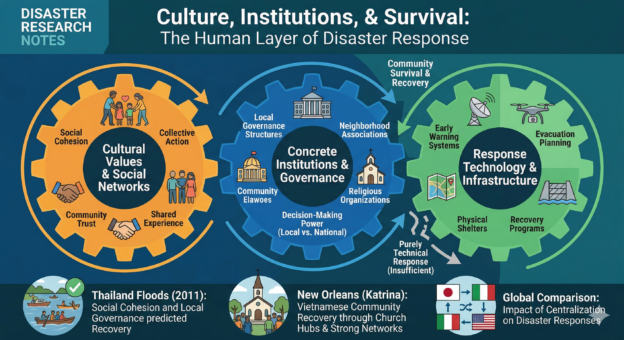
Sociologist Benjamin F. McLuckie compared disaster responses across Japan, Italy, and the United States as far back as the 1970s. His key finding: how centralized a government is — how much decision-making power sits with national versus local authorities — significantly shapes what actually happens on the ground when emergencies unfold.

But culture alone does not explain everything. What really drives outcomes is a three-way mix of culture, institutions, and technology. A community that values collective action still needs neighborhood associations, shelters, and early warning systems to turn that value into real protection. Without those structures, values remain just values.

What I Found in the Field

My work on the 2011 Thailand floods — which disrupted global supply chains and devastated communities around industrial parks — brought this home clearly. Social cohesion and local governance structures were just as predictive of recovery as physical flood barriers. Through the Japan-Thailand SATREPS collaboration, my colleagues and I developed community capacity assessments and social vulnerability indices to help local leaders act before the next disaster, not scramble after it.

What struck me most was this: communities with strong internal networks recovered faster, not because they had more resources, but because they already knew how to work together.

The New Orleans Lesson

After Hurricane Katrina in 2005, researchers noticed that Vietnamese-American communities in New Orleans recovered more quickly than many others. The easy explanation was “culture.” But the real answer was more grounded: strong churches functioning as organizing hubs, dense social networks built through shared migration experience, and established community leadership capable of coordinating a return. Culture mattered — but it worked through concrete institutions. That distinction is important.

Why This Matters Now

Climate change is making disasters more frequent and more severe. Yet many governments still treat disaster response as a purely technical problem — better seawalls, faster alert systems. Those matters. But they miss the human layer that makes those tools actually work.

When we recognize that community trust, family networks, and local governance are all part of the disaster equation, we can design better evacuation plans, more effective early warnings, and recovery programs that genuinely reach the people who need them most.

Every disaster holds up a mirror to the society it strikes. What we see reflected — who gets help quickly, who rebuilds together, who gets left behind — is shaped by culture, institutions, and history working in combination. That is not just a scholarly observation. It is, ultimately, a matter of life and death.

Sources:

McLuckie, B.F. (1977). Italy, Japan, and the United States: Effects of Centralization on Disaster Responses. University of Delaware;

Nakasu, T. et al. (2022). International Journal of Disaster Resilience and Built Environment. https://doi.org/10.1108/IJDRBE-10-2020-0107;

Nakasu, T. (2023). Environmental Development and Sustainability. https://doi.org/10.1007/s10668-023-04305-7
Great Kanto Fire Disaster 1923

The following is my past short essay for the institute after the study session on the 1923 Great Kanto Earthquake at the open office event:

In 1923, an earthquake killed over 105,000 people in the Tokyo area (including Kanagawa, where contributes approx. 30% death toll of the total). But here’s the shocking truth—87% weren’t killed by the shaking. They were killed by fire.

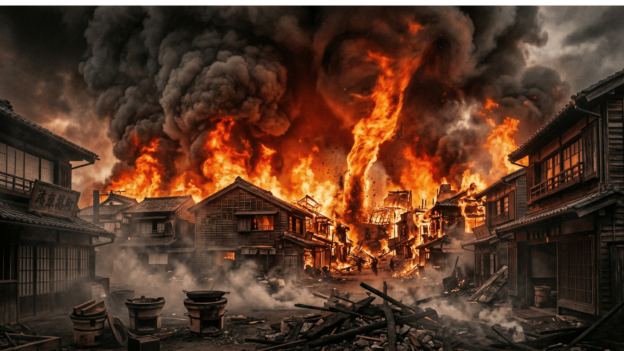
September 1, 1923. The earthquake struck at 11:58 AM—two minutes before noon—when families across Tokyo were cooking lunch over open flames. Within an hour, over 100 fires erupted across a city built almost entirely of wood and paper.

The fires merged into massive firestorms, generating winds so powerful they created fire tornadoes—what survivors called “dragon twists.” At the Honjo Clothing Depot, 40,000 refugees thought they’d found safety in an open field. At 4:00 PM, a fire tornado swept through. Within minutes, 38,000 people perished—over a third of the entire disaster’s death toll, in one location.

What’s tragic is that seismologist Imamura Akitsune had predicted this exact scenario 18 years earlier. He warned that cooking fires would turn an earthquake into an inferno. His senior colleague ridiculed him publicly. Imamura was right.

Japan learned. In 1960, September 1st became Disaster Prevention Day. Every Japanese child now practices earthquake drills. Gas meters have automatic seismic shut-offs. Tokyo’s wide avenues and parks? They were designed as firebreaks. The deadliest disasters aren’t always the ones we expect. Sometimes the real killer comes after.

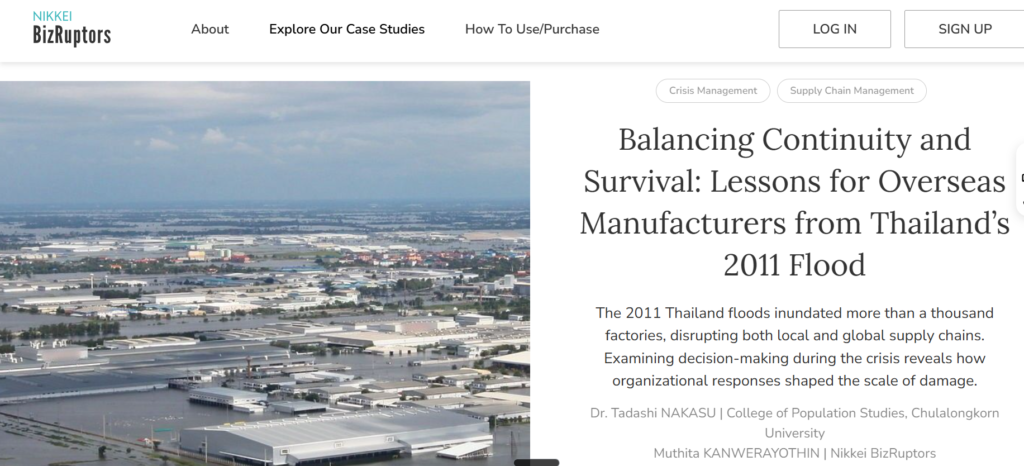
【The 2011 Chao Phraya River Floods Case Study Content: Nikkei BizRuptors (website)】

Balancing Continuity and Survival: Lessons for Overseas Manufacturers from Thailand’s 2001 Flood

【Project launched (website)】Disaster Risk Management in Aging Societies: Bridging Japanese Experience with Thai Policy Needs

Disaster Risk Management in Aging Societies

【Disaster Research】The 1983 Sea of Japan Earthquake and Tsunami: A Pivotal Disaster in Japanese History

On May 26, 1983, a powerful 7.8 magnitude earthquake struck the Sea of Japan, triggering a devastating tsunami that would change Japan’s approach to disaster preparedness forever. This catastrophic event, officially known as the 1983 Nihonkai-Chubu earthquake, claimed 104 lives and reshaped coastal communities along the Japanese coastline.

Three Critical Aspects of the 1983 Tsunami Disaster

1. Unexpected Tsunami Location Challenged Historical Beliefs

A longstanding belief persisted among coastal communities that tsunamis never struck the coast of the Sea of Japan. This normalcy bias—the tendency to minimize threat warnings and assume things will function as normal despite signs to the contrary—significantly amplified the disaster’s impact. Communities along the western coast had not prepared adequately for such an event, leaving them vulnerable when waves struck shores in Aomori and Akita Prefectures and along the eastern coast of Noto Peninsula.

2. First Globally Broadcast Tsunami Disaster

The 1983 tsunami marked a historic milestone in disaster reporting as the first tsunami disaster broadcast worldwide in real-time. Civilians with home video cameras captured footage that was incorporated into media coverage, providing unprecedented documentation of the disaster as it unfolded. This extensive coverage catalyzed significant improvements to Japan’s tsunami warning system, enhancing wireless tsunami information transmission from the Sea of Japan to local areas.

3. Tragic Impact on Schoolchildren

One of the most heartbreaking aspects of the disaster involved a school excursion caught in the tsunami’s path. Forty-three schoolchildren were struck by the waves, with thirteen losing their lives. Teachers present during the disaster found themselves unable to protect all their students—a tragedy that would find haunting parallels during the 2011 Great East Japan Earthquake and Tsunami. Both devastating events occurred during daylight hours, presenting unique challenges for evacuation and response.

Legacy and Lessons Learned

The 1983 Sea of Japan earthquake and tsunami fundamentally changed Japan’s understanding of tsunami risk zones and highlighted the dangers of complacency in disaster preparedness. The disaster’s documentation and worldwide broadcast raised global awareness about tsunami dangers and influenced modern early warning systems that continue to evolve today.

For more information about normalcy bias and its impact on disaster response:

Day_153 : Reported Death Numbers

I will update a column of the NIED e-mail magazine which I wrote a long time ago because the content is not faded with time. (I will do this step by step in Japanese and English.) I will also add comments to update the situation.

Published February 4, 2010
NIED-DIL e-mail magazine: Reported fatalities due to disasters

January 12 There was a big earthquake in Haiti. The consequences are still a major social issue, but at an early stage, the President declared that the number of casualties reached 200,000.

At the time of the Hurricane Katrina disaster at the end of August 2005, the first report was 10,000 casualties. But, in the end, there were about 1,300. I felt that nationality, culture, and so on became apparent compared to Japan.

A typical case in Japan is the Great Hanshin-Awaji Earthquake. I was living in Kyoto and worked in Kyoto City at that time. I remember that around 7 a.m., it was reported on TV that there were only a few deaths. As time went by, it increased to hundreds and thousands.

The U.S. tends to have a top-down and strategic approach; on the other hand, Japan seeks bottom-up and accurate process to disclose the number. In the 2004 Indian Ocean tsunami, reported death tolls in affected countries fluctuated, but taking this into account is a way to understand the disasters that reflect the country’s situations, including social backgrounds, cultures, economies, and so on.

Regarding Haiti, the number of reported deaths increases with time. I pray that the number will not be so huge.

P.S.
For example, the following World Vision website considers the current estimated death to be 250,000. In short, the first report ended up gaining some meaning.

https://www.worldvision.org/disaster-relief-news-stories/2010-haiti-earthquake-facts

Day_190: The Future of Safety: Emphasizing Disaster Risk Reduction Education

The Increasing Importance of Disaster Risk Reduction Education

In an era marked by more frequent and severe natural and man-made disasters, the necessity for communities to be prepared and resilient is paramount. The crux of achieving this resilience lies in disaster risk reduction education. This education covers a broad spectrum of activities designed to inform communities about disaster risks and the steps necessary to mitigate their effects. Beyond understanding the scientific mechanisms of disasters, this education emphasizes the human and social factors contributing to vulnerabilities, adopting a comprehensive approach that encompasses knowledge of disaster types, their causes, and management strategies. By equipping communities with essential knowledge and skills, disaster risk reduction education cultivates a culture of safety and resilience, essential for confronting disasters effectively.

Building Disaster-Resilience Communities through Education

Disaster risk reduction education’s role in fostering prepared communities is invaluable. It equips individuals with the knowledge and skills for proactive disaster risk reduction, promoting a preparedness culture and self-reliance. This education bridges scientific knowledge and local wisdom, enhancing community awareness of risk reduction measures and fostering community cohesion. The solidarity and collective responsibility nurtured through this education are vital for effective disaster response and recovery.

Comprehensive Strategies for Effective Disaster Risk Reduction Education

Effective disaster risk reduction education programs are characterized by their comprehensive nature, inclusivity, and adaptability. Essential components include risk assessment, community engagement, interdisciplinary approaches, and context-specific content, all aimed at addressing the unique needs and vulnerabilities of each community. Schools and community centers play pivotal roles in disseminating this education, serving as hubs for knowledge sharing and skill development.

Technological Advancements Enhancing Education Efforts

Technology offers innovative ways to enhance disaster risk reduction education. E-learning platforms, mobile applications, social media, and immersive technologies like virtual and augmented reality are transforming how communities engage with disaster preparedness. These tools provide accessible, interactive, and engaging learning experiences, broadening the reach and impact of educational efforts.

Global Initiatives and Success Stories

Global initiatives, such as those led by the United Nations Office for Disaster Risk Reduction and frameworks like the Sendai Framework for Disaster Risk Reduction, highlight the international commitment to disaster resilience through education. Success stories from countries like Bangladesh, Japan, Haiti, New Zealand, and Mexico illustrate the transformative impact of comprehensive disaster risk reduction education programs. These examples demonstrate significant reductions in disaster-related fatalities and enhanced community preparedness.

Looking Ahead: Future Directions in Disaster Risk Reduction Education

The future of disaster risk reduction education will be shaped by technological innovation, community-led initiatives, and an increased focus on social and environmental justice. Collaboration and integration into broader development agendas, including the Sustainable Development Goals, are essential for addressing the complex challenges posed by climate change and urbanization.

A Call to Prioritize Disaster Risk Reduction Education

The path to mitigating disaster impacts lies in empowering communities with the knowledge and skills for disaster risk reduction and response. A collective effort from governments, organizations, and individuals worldwide is necessary to prioritize and advance disaster risk reduction education. Together, we can build more resilient and sustainable communities capable of withstanding the challenges of our changing world.

Day_152 : (In Japanese) 災害による報告死者数

かなり前に書いたメールマガジンのコラムですが、内容は、色あせていないので、復習を兼ねて、これから数回にわたり掲載致します。(同様に英語版も順番に掲載していきます。)

2010年2月4日発行
再掲NIED-DILメールマガジン:1回】災害による報告死者数
■災害による報告死者数■

1月12日ハイチで大きな地震がありました。その影響は、現在でも大きな社会問題ともなっていますが、初期の段階で大統領が20万人の犠牲者が出ていると宣言しました。

2005年8月末のハリケーン・カトリーナ災害のときは、最初1万人との報道がなされましたが、最終的に1千3百人ぐらいになりました。死者が少ないのに越したことはありませんが、日本と比べてお国柄がこのようなところにもでるのかと感じます。

日本の場合で典型的な事例は、阪神・淡路大震災の時です。当時筆者は京都に住んでおり、京都市内で働いておりましたが、大きなゆれのあと、朝7時ごろは、死者の数がまだ数人だったとTVなどで報道されていたのを覚えています。それが時間が経つにつれて、数百人、数千人と時間が経つごとに増えていきました。

アメリカは、トップダウンで戦略的、日本は、ボトムアップで正確さ重視、そんな感じがします。2004年のインド洋津波では、周辺諸国の報告死者数が上下していましたが、この点をとっただけでも、災害がその国の経済や社会状況を浮き彫りにする一端が見えてきます。

ハイチに関しては時を追うごとに報告死者数が増えておりその状況が心配されます。初期の段階の大統領の宣言どおりの数字にならないことを祈ります。

2010年2月4日発行

P.S.

例えば下記のワールドビジョンのHPでは、現在の推定死者を、250,000人としています。つまり、最初の報告は最終的には、ある意味的を得ていたことになってしまいました。

https://www.worldvision.org/disaster-relief-news-stories/2010-haiti-earthquake-facts

Day_133 : Science, Technology, Population, and Lessons for DRR

Japanese people have tended to trust the government and science & technology so much.
These are one of what we learned from recent disasters. After the second world war, Japanese gov. has built high sea walls along the coastline especially potential risk areas all over Japan. We have also developed warning systems along with rapid economic growth. Not only those, but we have also developed soft countermeasures such as disaster education and training, especially after the 1995 Kobe Earthquake. After the Great East Japan Earthquake and Tsunami (GEJET) disaster, we have realized what has happened because of our over trust to the government and science&technology. This is why Japanese gov. has particularly focused on the community since the disaster, establishing a new frame on the community disaster planning in the disaster countermeasure basic act. The recovery plans on the affected coastal communities tended to change more integrated manners and so did disaster countermeasures than before, looks like turning back to the time when we did not have advanced science and technologies.

We need to know the limitations of the gov. and science&technology’s roles. We also can consider the demographic change to do the job for disaster risk reductions. For example, Japan is facing a severe aging society, so our government resources will be decreasing to cover the situations. We need to have more self-help and mutual help than public help.

Learning from the lessons and past wisdom with those considerations is also very important. “Inamura no Hi” is one of the important lessons we can learn from the past.

http://disasterresearchnotes.site/archives/2720

“Inamura no Hi” is a story of a man who noticed a precursor of a large tsunami at the earliest stage and led village inhabitants to a higher ground by burning harvested rice sheaves. This story was based on a true story at the time of Ansei-Nankai Tsunami (1854), which claimed around 3,000 lives in the coastal areas of Western Japan (ADRC).

Hirokawa Town’s video well explains the background of the story in short and their tsunami disaster education.


Day_126 : World Disaster Chronology-1989

The accuracy will be improved with citing some data sources.

Date Place Disaster Type Situations
1989.01 USSR, Central (Tajikistan Inland Earthquake M5.3, Over 270(DM)
1989.04.20 China Hail Damage Over 150(DM)
1989.04.26 Bangladesh Tornado The Daulatpur–Saturia Bangladesh tornado*.1300(D)The deadliest tornado disaster in history. 
1989.05- Viet Nam Tropical Storm, Flood Over 740(DM), Tropical Storm Cecil
1989.05- Bangladesh Cyclone, Flood Over 200(DM)
1989.06- China Sichuan Torrential Rains, Flood Over 1,300(DM)
1989.06- Sri Lanka Torrential Rains, Flood 300-500(DM) 
1989.07- India Cyclone, Flood Over 2,700(DM)
1989.07- China Torrential Rains, Flood Over 1,500(DM)
1989.07- Bangladesh Torrential Rains, Flood Over 200(DM)
1989.07- Viet Nam Typhoon, Flood Over 200(DM)
1989.08.01 Iran, West Inland Earthquake M5.8, 120(DM)
1989.09- China Typhoon, Flood Over 520(DM)
1989.10.17 US, West (Calfornia) Inland Earthquake Loma Prieta earthquake **(M7.1) 62(DM), Damage cost 7bill.US

DM: The number of dead and missing.

*The Daulatpur–Saturia, Bangladesh tornado occurred in the Manikganj District, Bangladesh on April 26, 1989. There is great uncertainty about the death toll, but estimates indicate that it killed around 1,300 people, which would make it the deadliest tornado in history. The disasters in Bangladesh indicate natural disaster is not natural.                        Can refer Day_117.

http://disasters.weblike.jp/disasters/archives/3224

**The 1989 Loma Prieta earthquake occurred in Northern California on October 17 at 5:04 p.m. local time. This earthquake happened in the northeast of Santa Cruz on a section of the San Andreas Fault.The death toll was relatively not high compared to the economic damage. This can be explained with developed countries, especially US disasters characteristics.  Can refer to The Day_119.

http://disasters.weblike.jp/disasters/archives/3248