Category Archives: Culture

Day_104 : Lessons from a Japanese Environmental Movement- The Matsumura Research Group (2)

Mishima Numazu Shimizu (MNS) environmental movement in 1963-1964 is the turning point of a Japanese environmental history. The core of the movement is the science-based issues, especially, The Environmental Impact Assessment conducted by the Government Research Group and the Local Research Group.

https://disasterresearchnotes.site/archives/2981

Proposed the Development Plan

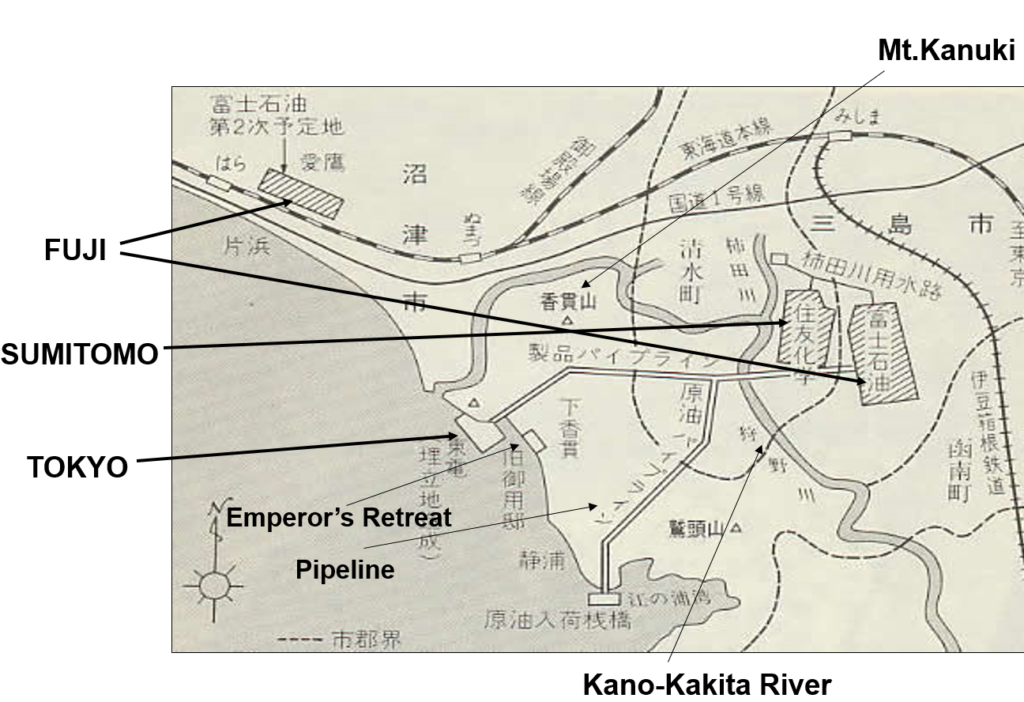
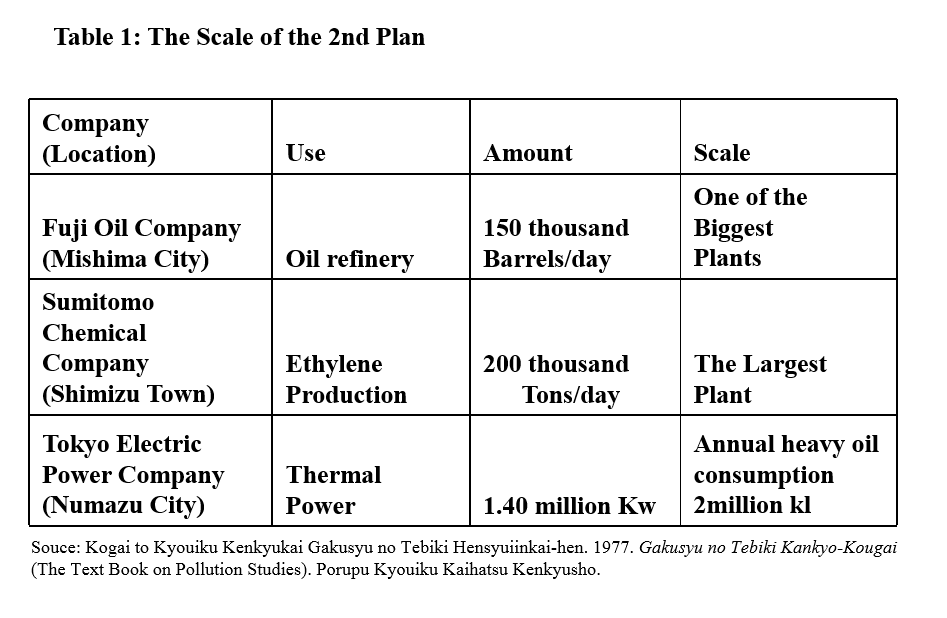
The below Figure 1 and Table 1 indicate the proposed development plan. These are the companies which had planned to come to the area. You can also see the scale of the plan.
planned project MNS
Figure 1  Proposed an Industrial Complex Plan

Table 1 The Scale of the Plan
The planned MNS

What is the MNS Movement?
The following two factors can be highlighted to explain the MNS movement. The first, the survey carried out by students (KOINOBORI research). The second, a few hundred education programs (mainly for local citizens)

In regard to the student survey, the survey carried out by students of Numazu Technical High School consists of three types by using local materials which were KOINOBORI, empty bottles and thermometers. The KOINOBORI were used in the air current survey that was conducted by about 300 students. The students made some air current maps that showed that the government’s appraisal of wind direction was incorrect. These maps gave decisive data to the Matsumura research group. Empty bottles were used for the water current survey. Thermometers enabled the students to make some maps showing the variation of temperatures.

On the other hand, the results of the survey reported by students of East Numazu High School which were called “Petrochemical Complex Project in Numazu and Mishima Area” was conducted by a Local Research Club. They researched it by using social scientific methods (including the survey in Yokkaichi City). The MNS activists use this report.

With reference to the education programs, many education programs were conducted by Numazu Technical High School teachers. They were held at schools, at the town halls and in the streets. Because of the programs, local citizens (including farmers and fishermen) became eager to learn. Local citizens wanted to know what was going on in their locality.

The Students Participatory Survey

The following Figure 2  shows the wind directions are from the sea to the land. This map was created by the students during the Koinobori time. This means the local people would be influenced by the pollutions from the planned factories. However, the government survey appealed the different ways.
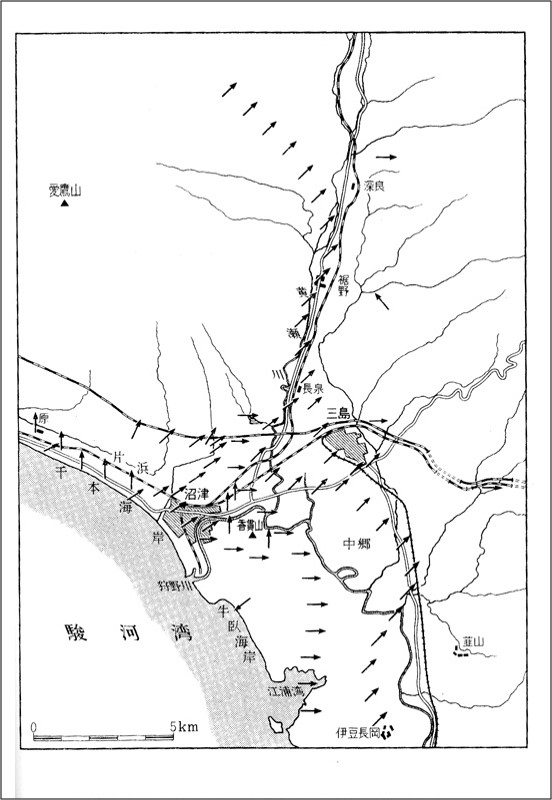
Wind directions student survey
Figure2  Wind directions survey conducted by high school students
(Source :  Mitsuo Taketani, 1967)

The Kurokawa Research Group (Gov. Research group) carried out the first largest ever Environmental Impact Assessment (EIA) by the Japanese government in 1964. The representative was Dr.Masatake Kurokawa and the staff consisted of national academics. The budget was about 20 million yen (about 180,000 USD) at that time. The research was carried out by using helicopters and high-tech machines. The Kurokawa Research Group was nominated by the Minister of International Trade and Industry and the Minister of Public Health.

On the other hand, the Matsumura Research Group carried out the EIA by getting the cooperation of local people, including high school students. The representative was Dr.Seiji Matsumura and the staff consisted of two researchers with international experience and local high school teachers (Table 2). The budget was about 100 thousand yen (about 900 USD) at that time. The research was conducted using readily available materials and low-tech manpower (for example, Koinobori research). It meant that research people, as well as the local people and high school students, used their own ideas. The Matsumura research group was nominated by the Mayor of Mishima city, Mr.Taizo Hasegawa. They use students, local materials, and Japanese culture.

Table 2 Matsumura Research Group

local research group members
* I have life stories about them by interview surveys

The Formation of the Matsumura Research Group

The following is the formation process of the Matsumura Research Group. The National Institute and the Local high school have bonded together. These make ‘Think globally, act locally’.

  1. Education Seminar about Pollution Held by Two High School Teachers and a Professor
  2. Explanation of the Estimated Pollution Levels Given to the NIG (National Institute of Genetics) by Mr.Nagaoka and Mr.Nishioka (Teachers)
  3. Decided by the NIG Members to Refuse the Petrochemical Complex Plan
  4. Advice Given to Mishima City’s Mayor (Hasegawa) from the NIG Members to Establish the Research Committee for EIA
  5. Decision by Hasegawa to Reject the Proposed Petrochemical Complex
  6. Acceptance of Numazu Technical High School and NIG to do EIA in the Area

To be continued.

Day_96 : Lessons from a Japanese Environmental Movement- The Matsumura Research Group (1)

Mishima Numazu Shimizu (MNS) environmental movement in 1963-1964 is the turning point of a Japanese environmental history. The core of the movement is the science-based issues, especially, Environmental Impact Assessmentsconducted by the Government Research Group and the Local Research Group.

They fought the results and local people finally assisted the local research group research findings and explanations to choose their future.

Actually, this is the first national EIA (Environmental Impact Assessment) in Japan, which failed and almost all Japanese do not know.

I conducted field research on the local research group for a long time. I stayed local member’s house for over 1 week and collected the documents, for example. Unfortunately, almost all members have passed away now. The followings are the outlines.

Background
In 1963, the national government and local councils proposed the one large industrial complex in Mishima city, Numazu town, and Shimizu town area in Shizuoka prefecture near to the Mt.Fuji.This was one of the largest development projects in Japan at that time. After this announcement, the MNS environmental movement was started with the local people. Local high school teachers and national research institute researchers led this movement with their scientific and local knowledge.

Revolutionary Events in the MNS Movement
– The survey carried out by high school students (KOINOBORI research)
because it happened  in a KOINOBORI time (Japanese culture)
→A high school teacher (The Matsumura Research Group member) led this survey.
→These results were accurate in the local wind direction which was against governmental research findings with explanations. Gov. research group had a huge budget, they used a helicopter to check the wind directions

koinobori
Figure 1 Koinobori   (Source: Wikipedia)

– A few hundred education programs (mainly for local citizens)

The Main Impact of the MNS movement
Former high-ranking officer confessed:
“We (the government) thought we had lost when the Numazu citizens flew those KOINOBORI (carp-shaped streamers) for research purpose. Besides that we also realized that we needed to make laws governing pollution. If we had not done it, we could not have been able to set up any MNS type projects”

The Main Impact of the MNS movement
Prevention Movement against Pollution
Local Government Reform Movement
Legal Action in the Movement
Conducting Independent Research
Implementing Environmental Education Programs

After the movement, Kawasaki City, Tokyo Metropolitan Area,
and Kyoto City became reformist local governments, which
control pollution more seriously than the national government.

Matsumura Research Group
Outcome: “Self Assessment” by the local research group overcome
the “Official Assessment” by the national research group

Mr. Shiramatsu (LDP) criticized during the time in the assembly:
“The Kurokawa Research Group (the national research group) is reliable.
It consists of the country’s most respected specialists in various fields.
They could be called the nation’s best brain. On the other hand, the
Matsumura Research Group (the local research group) is unreliable.
The member are 2 doctorates of Agriculture and 4 high school teachers.
How could they carry out reliable research?
In addition, I heard the budget
of the Matsumura Research Group is about 100 thousand yen. So the research
could be regarded a non-scientific thing”.

To be continued・・・・・

sponsored link

Day_81 : Earthquake disasters in Asia (1) – Iran

Iran is the one of the most earthquake vulnerable countries in Asia. The following is the high death tolls earthquakes in the country:

2003 Bam Earthquake (M6.8) Death Toll approx.43,000
1990 Majil Earthquake (M7.4) Death Toll approx.50,000
1978 Tabas Earthquake (M7.4) Death Toll approx.18000

Death toll numbers are totally different from the sources.The above death toll data from NIED DIL (National Research Institute for Earth Science and Disaster Prevention, Disaster Information Laboratory) Website**.These gaps tell us a lot of things. This will be explained later.

Especially, the Bam was an ancient city which has many historical buildings and 90% of them were destroyed.

One of the main causes of the casualties is the house building structures, adobe (mud brick). The Adobe is good for thermal mass, however bad for earthquakes. This is very embedded in their culture.
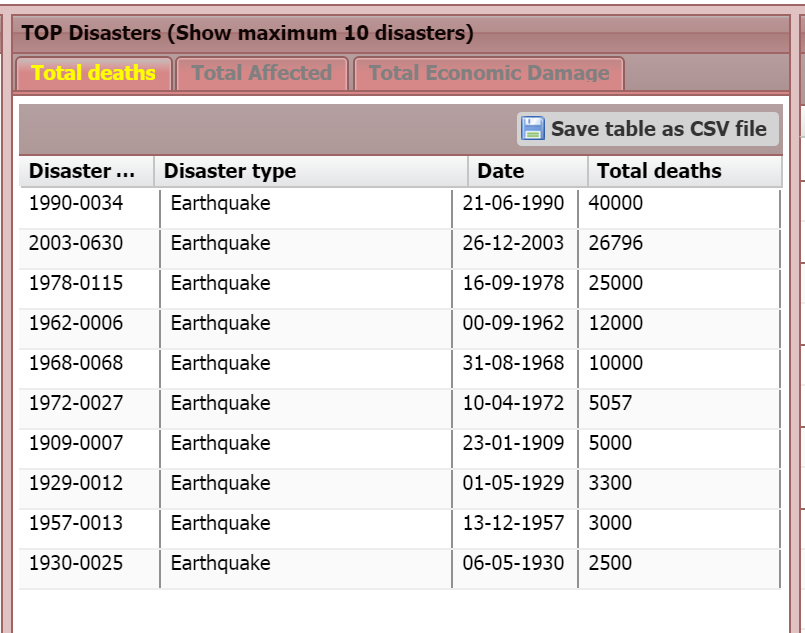
EM-DAT* indicates the Iran’s historical disasters since 1900. We can confirm the Iran is the earthquake prone country as shown in the below table.
Iran

*D. Guha-Sapir, R. Below, Ph. Hoyois – EM-DAT: The CRED/OFDA International Disaster Database –www.emdat.be – Université Catholique de Louvain – Brussels – Belgium.

**http://dil.bosai.go.jp/workshop/05kouza_chiiki/00toppage/index.htm

Day_70 :災害対応と文化 [Japanese]

防災科学技術研究所 自然災害情報室のメールマガジン*第7号の記事を転載致します。
ーーーーーーーーーーーーーーーーーーーーーーーーーーーーーーーーーーーーーーーーー
先日、文化と災害対応について、面白い論文を見つけました。それは、オハイオ大学のロバート・ロス氏による論考です。1970年のかなり古い研究ですが、大変興味深く感じました。ロス氏は、自然災害の対応に影響を与える要因として地域の、宗教、技術、そして、特に自然に対する文化的価値観をあげ、それらが、その国々の制度のより中央集権型か地方分権型かという部分と相互作用するとしています。具体的には、東アジア、西欧、ラテンの国々の比較を行っています。
 例えば、東アジアの国々の災害対応は、西欧、ラテンアメリカに比べて宗教や技術の部分は相対的に低く、自然と調和することに重きをおく文化的価値観が大きく作用する。また中央集権的であまり分権化していないことも影響するとしています。一方、西欧の国々の災害対応は、ラテンアメリカや東アジアに比べて宗教的影響、技術は高く、自然を征服するという文化的価値観が働いているとし、それらが、地方分権型システムに作用するとしています。最後に、ラテンアメリカの国々の災害対応は、宗教的影響及び技術は中間とし、自然に対しては服従する文化的価値観が働くとし、比較的中央集権型システムと相互作用するとしています。
 かなり大雑把な分析で、現在に当てはまらないと思われる部分も多くありますが、解釈の仕方によっては、いろいろと考えるヒントを与えてくれます。例えば、2005年に起こったハリケーン・カトリーナ災害では、政府の対応が、うまくいかなかったと批判されていますが逆に、そのことが、コミュニティの災害対応の差を際立たせた側面があるようです。特に、ニューオリンズのアジア系コミュニティ、ラテンアメリカ系コミュニティ、そして西欧系コミュニティの災害前後の災害対応の違いがはっきりしたといわれています。
 コミュニティ単位で、ロス氏の考察を当てはめて考えると興味深いものがあります。
*防災科学技術研究所 自然災害情報室メールマガジン
自然災害情報室