Balancing Continuity and Survival: Lessons for Overseas Manufacturers from Thailand’s 2001 Flood
Growing up, many of us were taught that natural disasters are inevitable acts of nature beyond human control. This perspective changed dramatically for me when I started working at a research institute. My senior researcher emphatically told me, “The natural disaster is not natural.” This profound statement transformed my approach to disaster research, helping me understand that human decisions often determine whether natural hazards become catastrophic disasters.
The Forgotten Tragedy of Armero
On November 13, 1985, the Nevado del Ruiz volcano in Colombia erupted after 69 years of dormancy. The eruption triggered massive mudflows (lahars) that rushed down the volcano’s slopes, burying the town of Armero and claiming over 23,000 lives. This catastrophe stands as Colombia’s worst natural hazard-induced disaster and the deadliest lahar ever recorded.
What makes this tragedy particularly heartbreaking is its preventability. Scientists had observed warning signs for months, with seismic activity beginning as early as November 1984. By March 1985, a UN seismologist had observed a 150-meter vapor column erupting from the mountain and concluded that a major eruption was likely.
Despite these warnings, effective action to protect the vulnerable population never materialized. The devastation of Armero wasn’t simply the result of volcanic activity but the culmination of multiple human failures in risk communication, historical memory, and emergency response.
When Warning Systems Fail: Communication Breakdown
The Armero disaster epitomizes what disaster researchers call “cascading failures” in warning systems. Scientists had created hazard maps showing the potential danger to Armero in October 1985, just weeks before the eruption. However, these maps suffered from critical design flaws that rendered them ineffective.
One version lacked a clear legend to interpret the colored zones, making it incomprehensible to the general public. Devastatingly, Armero was placed within a green zone on some maps, which many residents misinterpreted as indicating safety rather than danger. According to reports, many survivors later recounted they had never even heard of the hazard maps before the eruption, despite their publication in several major newspapers.
As a disaster researcher, I’ve seen this pattern repeatedly: scientific knowledge fails to translate into public understanding and action. When I conducted fieldwork in flood-prone regions in Thailand, I discovered a similar disconnect between technical risk assessments and public perception. Effective disaster mitigation requires not just accurate information but information that is accessible and actionable for those at risk.
The Cultural Blindspots of Risk Perception
The tragedy of Armero illustrates how cultural and historical factors shape how communities perceive risk. Despite previous eruptions destroying the town in 1595 and 1845, causing approximately 636 and 1,000 deaths respectively, collective memory of these disasters had seemingly faded as the town was rebuilt in the same location.
In the hours before the disaster, when ash began falling around 3:00 PM, local leaders, including the town priest, reportedly advised people to “stay calm” and remain indoors. Some residents recall a priest encouraging them to “enjoy this beautiful show” of ashfall, suggesting it was harmless. These reassurances from trusted community figures likely discouraged self-evacuation that might have saved lives.
My research in disaster-prone communities has consistently shown that risk perception is heavily influenced by cultural factors, including trust in authority figures and historical experience with hazards. In Japan, for instance, the tsunami markers that indicate historic high-water levels serve as constant physical reminders of past disasters, helping to maintain community awareness across generations.
Systemic Failures and Institutional Response
The Armero tragedy wasn’t just a failure of risk communication or cultural blind spots—it revealed systemic weaknesses in disaster governance. Colombia was grappling with significant political instability due to years of civil war, potentially diverting governmental resources from disaster preparedness. Just a week before the eruption, the government was heavily focused on a guerrilla siege at the Palace of Justice in Bogotá.
Reports suggest there was reluctance on the part of the government to bear the potential economic and political repercussions of ordering an evacuation that might have proven unnecessary. This hesitation proved fatal when communication systems failed on the night of the eruption due to a severe storm, preventing warnings from reaching residents even after the lahars were already descending toward the town.
In my research examining large-scale flood disasters, I’ve found that effective disaster governance requires robust institutions that prioritize public safety over short-term economic or political considerations. My 2021 comparative analysis of major flood events demonstrated that preemptive protective actions consistently save more lives than reactive emergency responses, even when accounting for false alarms.
Learning from Tragedy: The Path Forward
The Armero disaster, while devastating, catalyzed significant advancements in volcano monitoring and disaster risk reduction globally. Colombia established specialized disaster management agencies with greater emphasis on proactive preparedness. The
Colombian Geological Service expanded from limited capacity to a network of 600 stations monitoring 23 active volcanoes.
The contrast with the 1991 eruption of Mount Pinatubo in the Philippines demonstrates the impact of these lessons. There, timely forecasts and effective evacuation procedures saved thousands of lives. The memory of Armero remains a powerful reminder of the consequences of inadequate disaster preparedness.
As I’ve emphasized in my own research on disaster resilience in industrial complex areas, building sustainable communities requires integrating technical knowledge with social systems. My work developing social vulnerability indices demonstrates that effective disaster risk reduction must address both physical hazards and social vulnerabilities.
Remember, disasters may be triggered by natural events, but their impact is determined by human decisions. By learning from tragedies like Armero, we can create more resilient communities prepared to face future challenges.
One of the most significant volcanic disasters we must know about is the 1985 Nevado del Ruiz volcano eruption. Approx.23000 citizens in Armero city were dead. The cultural aspects were embedded in this disaster. The disaster was predicted. The hazard maps indicate that the city will be affected by a volcanic eruption and lahars. Both priest and mayor told the citizens to stay in the same place because they were afraid of panic before the time, but did not tell them to evacuate. That made tragedy. The people in the city tended to follow both persons because of the culture, which is a religious and vertically structured society. There were also other factors*.
*https://en.wikipedia.org/wiki/Nevado_del_Ruiz#Eruption_and_lahars


The picture was taken in Mississippi on December 3, 2005.
Nearly two decades have passed since Hurricane Katrina devastated the Gulf Coast, particularly New Orleans, in 2005. As we reflect on this catastrophic event, it’s crucial to reassess our understanding of the disaster, its impacts, and the lessons learned for future disaster risk reduction efforts. This updated analysis incorporates new research, recent case studies, and current best practices in disaster management to provide a comprehensive view of Hurricane Katrina’s long-lasting effects and implications for disaster preparedness.
Revisiting the Data: The Importance of Pre-Disaster Information
One of the most valuable resources for understanding the pre-Katrina landscape was the Greater New Orleans Community Data Center (GNOCDC) website. This data repository provided detailed demographic and socioeconomic information at the parish and ward levels, offering crucial insights into the social fabric of affected areas.
Key Findings from Pre-Katrina Data
The Victimization Process: A Multi-Stage Analysis
Understanding the disaster’s impact requires examining multiple stages of the event and its aftermath. Building on the original five-stage model (Pre-disaster, Direct Damage, Social Disorder, Life Environment, and Reconstruction and Recovery), recent research has emphasized the interconnectedness of these stages and their long-term implications.
Updated Insights on Disaster Stages
Emerging Trends in Disaster Risk Reduction
Since Hurricane Katrina, several key trends have emerged in the field of Disaster Risk Reduction:
Actionable Recommendations
Based on lessons learned from Katrina and subsequent disasters, here are key recommendations for enhancing disaster resilience:
The tragedy of Hurricane Katrina continues to offer valuable lessons for disaster risk reduction. By combining data-driven analysis with a nuanced understanding of social and environmental factors, we can work towards creating more resilient communities. As we face increasing challenges from climate change and urban growth, the insights gained from studying Katrina’s impact remain crucial for shaping effective disaster management strategies worldwide.
Hurricane Katrina Disaster Research conducted by NIED(in Japanese)
I will update a column of the NIED e-mail magazine I wrote long ago because the content does not fade with time. (I will do this step by step in Japanese and English.) I will also add comments to update the situation.
Sorry, I am now revising this post because of the translation difficulties. This post will be revised again. Thank you.
Published May 6, 2010
NIED-DIL e-mail magazine: Disaster Warning (1)
■ Disaster Warning (1) ■
In February 2008, a survey provided an opportunity to visit Hawaii’s Pacific Tsunami Warning Center (PTWC). In a study, I interviewed the director of the PTWC, and the first thing that caught my attention was the role of the media. The director told me that a public tsunami evacuation alert was required three hours before the event, which was too time-sensitive, but the press was an advantage to do this. However, there were various restrictions for the government organization, such as warnings in an international framework. I remembered the Chilean Navy’s disaster response to the damage caused by the earthquake and tsunami in Chile in February this year.
Next, I was interested in science, technology, and data, which are the basis of alarm decisions. I think regular (flood, etc.) warnings will be judged based on current and past data, but especially for tsunami warnings, there were errors in the original earthquake and the tide gauge data. To judge, we should know that 99.99 percent of the errors could be caused by error. The fact that past data is not very useful because the devices to figure out the data are changing daily, making it difficult to rely on it.
From these facts, it was generally noticed that the disaster warning was based on the combination of the progress of science and technology and the competence of the person in charge. The actual warning also relies on the institution belonging to it. For example, variables such as the recipient of the alert, the psychology of the local people, the social situation, and various systems also needed to be added.
Issued May 6, 2010 No. 4
In most cases, when a strong earthquake occurs, many people die as buildings collapse. For example, in the Kobe earthquake, more than 90% of the 5,000 people who died lost their lives within 15 minutes immediately after the quake. For this reason, it is essential to build buildings well to reduce the number of people who die in earthquakes. This will prevent fires, make it less likely that people will lose their homes and become permanent refugees, and reduce the problems of relief and rebuilding.
In developing countries, especially in arid and semi-arid regions, earthquakes cause many deaths. In such areas, sun-dried bricks called “adobe” are common building materials, and buildings made of these bricks often collapse easily in earthquakes, burying many people alive. In developing countries, for economic reasons, standards for building earthquake-resistant buildings are usually low, and construction is often inadequate. Therefore, even earthquakes that are not strong can easily cause severe damage. In addition, in regions with many wooden houses, such as Central America and Southeast Asia, buildings can collapse and catch fire.
>>>>>>>>>>>>>>>>>>>>>>>>>>>>
Date and time
7 May 2006
Visit
New Orleans Homeland Security and Public Safety Office
(New Orleans City Office of Homeland Security and Public Safety )
Interviewee
Colonel and Director
Subject
Hurricane Katrina Disaster Response
>>>>>>>>>>>>>>>>>>>>>>>>>>>>>>>
https://disasterresearchnotes.site/archives/3002
There are three drainage canals in New Orleans. There is also a pump station for each. Since New Orleans is below sea level, water is constantly pumped from these pump stations and drained into Lake Pontchartrain.
The breakwater was corrupted by the storm surge. The water was flowing into the canal from the lake, and at the same time, the pump station had the maximum pressure with the water. The pumps were broken and became not-functioned.
After the hurricane, there was only one evacuation route that crossed the bridge over Mississippi. However, the route had been blocked. These also affected support activities.
<Measures for breakwater>
At present, the Corps of Engineers will set a lock at the entrance of the canal and close them to prevent water from flowing into the canal since this year.
The challenge from this year is the evacuation of West Bank citizens. Because the levees are weak, hurricanes can easily break them.
The levee can be effective this year, but the problem is that in the next two years, the pump station will have insufficient capacity to pump water.
< Future measures of the city >
The following three goals are set as future measures. First, leave no one in the shelter. Second, the city will assist those who have no access to evacuation. Third, improve the safety of city facilities and property before and after the disaster.
Another important point this year is to let all citizens evacuate two days before Hurricane hit. The challenge is the reality that many people would not try to evacuate. As a background, the levee is to be broken, needs to have a terrible situation imagination.
There is a plan to install floodgates in a wide range of wetlands in eastern New Orleans to prevent storm surges.
Political challenge, New Orleans, including the peripheral has originally 100 million people, was an energy supply base, there is a tremendous national influence, the people here have to work.
As a countermeasure, the city has provided a wireless system. The system had been unavailable after the Hurricane.
A radio station in City Hall as a countermeasure against rumors which had become a social issue during Katrina was set up to keep media members staying and unifying the correct information.
Related information
The NIED team went to New Orleans and Missippi coastal areas to investigate.
Characteristics of the 2005 Hurricane Katrina Disasters
The community data center is the best to investigate to grasp the trend by using stats.
https://disasterresearchnotes.site/archives/2975
>>>>>>>>>>>>>>>>>>>>>>>>>>>>>>>>>
Date and time
7 May 2006
Visit
New Orleans Homeland Security and Public Safety Office
(New Orleans City Office of Homeland Security and Public Safety )
Interviewee
Colonel and Director
Subject
Hurricane Katrina Disaster Response
>>>>>>>>>>>>>>>>>>>>>>>>>>>>>>
https://disasterresearchnotes.site/archives/4059
<Contents>
The following situations were going on to make a decision; one is for the residents who have no means to evacuate and do not have the supply transportation means from the city. The other is for the people who have the means to evacuate but do not do that.
Under these circumstances, a federal rescue bus arrived six days later.
The city has been flooded for two days since the water entered New Orleans. Specifically, the city hall had no water shortly after passing the hurricane, but two days later, it was almost breast-high water level inundation.
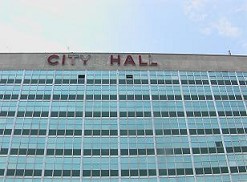
Picture: New Orleans City Hall (7 May 2006)
<Current Social Situation>
New Orleans was the only city in the United States to lose its school system, the justice system, home, and tax system. This week, the first trial has been held since last August.
In terms of the school system, only 4 out of 140 schools are open.
The water supply system has lost 80 %.
There is a nuclear power plant near New Orleans. Entergy Corporation is the operating company. However, the company was bankrupted. There are only 10 out of 400 staff members at present.
The natural gas pipeline has been damaged, making gas supply impossible. There are these energy supply problems.
As mentioned, the Entergy Corporation, which is supplying the gas, has been bankrupted, the Entergy Corporation has no support measures from the government.
<New Orleans Society and Geographical Background>
Hurricane Katrina is a human-made disaster. Concerning the background, levees were built in the early 1800s and have worked to prevent annual floods. However, the wetlands had been overlooked. In this area, they dug up the route, so this may cause the storm surge, and also oil drilling reduces the wetlands, weakened resistance to hurricanes.
Katrina disaster is also a national issue. The background of southeastern Louisiana, 40 % of the country’s oil is supplied from here. At the same time, 60 percent natural gas supply of the country is from here. Also, it has 135 chemical and petroleum refineries along the Mississippi River. These are unlikely to create a similar zone in the United States, where environmental pollution becomes a social problem. The Port of New Orleans (New Orleans harbor) can have the giant scale oil tanker in the port. Moreover, the New Orleans area is also a freight rail hub.
To be continued…
I will update a column of the NIED e-mail magazine which I wrote a long time ago because the content is not faded with time. (I will do this step by step in Japanese and English) I will also add comments to update the situation.
Sorry, now I am revising this post because of the difficulties of the translation. This post will be revised again. Thank you.
Published June 4, 2010
NIED-DIL e-mail magazine: Disaster Warning (2)
■ Disaster Warning (2) ■
Following the tornado that hit Saroma in Hokkaido in November 2006, I was given the opportunity to visit Oklahoma in the United States in February 2007 for a survey on tornado disaster response, especially tornado disaster alerts. In particular, I visited mainly the NWC (National Weather Center) built inside the University of Oklahoma. At there, Professor Emeritus Yoshikazu Sasaki helped us. He is very famous for being a model of the Hollywood movie “Twister.” I learned that U of Oklahoma, especially a climatological course rapidly became competitive in the U.S. after the movie was released. In the movie “Twister,” there was a scene where cows were flying in the air, at NWC, there was a coffee shop called Flying Cow.
The most impressive thing about the visit was the recognition that the NWC needed a wide range of cooperation on tornado response and put emphasis on community awareness. Regarding multi-disciplinary collaboration, the reason behind this is that even if we increase the accuracy and speed from tornado prediction to warning by science and technology, it will be human beings that will respond to it. Also, there is an organization called the Warning Decision Training Branch (WDTB) <Warning Judgment Training Center> inside the university. The existence is based on the fact that the decision of warning (Warning Decision) is not only radar data, but also specialized in model guidance and mesoscale analysis in combination with the human mind. People, the Emergency Manager, make decisions based on a variety of factors, including technical knowledge and reports from spotters (registered volunteers who inform the situation on the spot). The local factors and political conditions are also overlapped. The knowledge of meteorology expertise alone could not attain the purpose.
As for local enlightenment activities, as a contribution to the community, create and publicize many brochures, open a center, for example, tie-up with McDonald’s in a program called McLeady and give educational advertisements was doing. In this way, the NWC recognizes that disaster alerts are based on various factors such as understanding of human behavior, bonding with society, and political situations, and it is common sense that meteorology alone cannot respond. It was impressive that it was done.
Issued June 4, 2010-Issue 5
https://disasterresearchnotes.site/archives/2553
You cannot copy content of this page