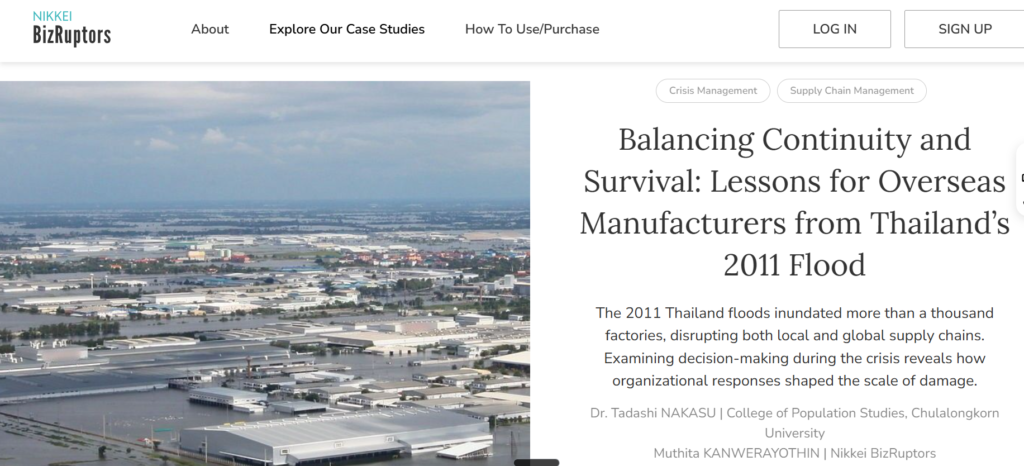
Balancing Continuity and Survival: Lessons for Overseas Manufacturers from Thailand’s 2001 Flood
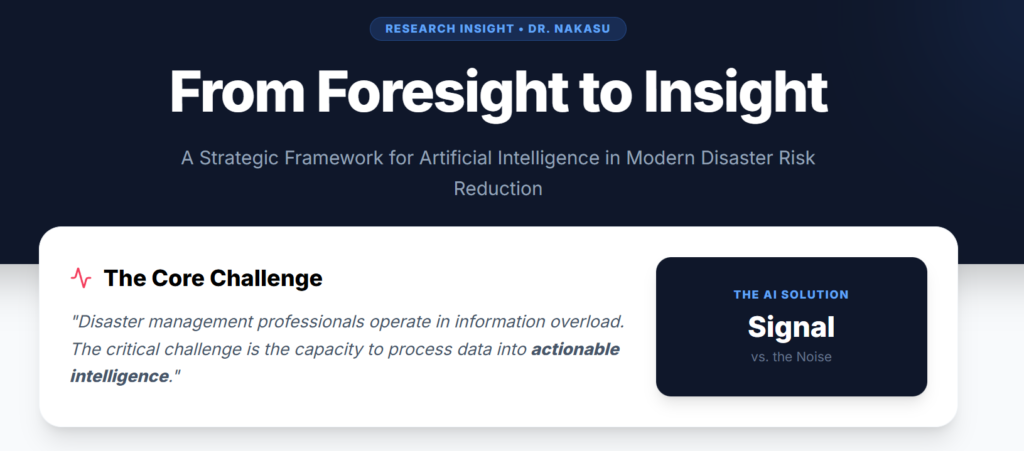
The infographic of the AI-Integrated Disaster Preparedness Platforms is shown as an infographic: AI-Integrated Disaster Preparedness Platforms

Imagine 3
Did you know natural disasters drained over $400 billion from the global economy last year? Your wallet might be next.
2024 was the hottest year since 1850, with catastrophic consequences. We faced 21 separate billion-dollar disasters worldwide, with insurers covering only $154 billion of the total $417 billion in damages.
Hurricanes Helene and Milton were the costliest events, each causing about $20 billion in insured losses alone. Meanwhile, severe thunderstorms and hail contributed a staggering $64 billion to the insurance bill.
As a disaster management expert, I’ve watched climate patterns shift dramatically in recent years. What’s truly alarming is how wildfire and storm seasons are becoming increasingly unpredictable – like the January fires we saw in Los Angeles, completely outside the traditional season.
Our old preparedness playbooks are becoming obsolete. In my experience, communities that adapt now with flexible emergency plans will save both lives and money when – not if – disasters strike.
Source: Wall Street Journal

Imagine 3
Don’t overlook this crucial tip: fill your bathtubs with water before the storm hits. I understand that as a disaster management expert, I’ve seen countless families struggle when water supplies fail – this simple step ensures you can flush toilets and maintain basic hygiene during extended outages.
Today, I gonna talk about the coming cyclone to Queensland, Australia on the individual disaster countermeasures.
A monster cyclone is barreling toward Queensland, threatening 1.8 million homes – but there’s still time to protect yourself and your family!
Cyclone Alfred is set to make landfall by Friday, bringing destructive winds and potential flooding across Queensland. Authorities are urging immediate action: secure loose outdoor items, assemble emergency kits with food, water, and medications, and document your valuables for insurance claims.
Queensland officials are emphasizing preparation over panic. Moving valuables to higher ground and using sandbags can significantly reduce property damage during severe flooding.
Stay tuned to official weather updates and evacuation notices. Remember, proper preparation today could save your life tomorrow. Stay safe, Queensland!
Source: news.com.au

DALLE 2025.03.05
Did you know that 80% of Americans have faced extreme weather recently? And most blame climate change!
Today, I gonna talk about America’s risk perception on climate change.
A new AP poll reveals 3 in 4 Americans who’ve experienced severe winter weather believe climate change played a role. While only 25% feel personally impacted today, 40% expect climate change to affect their lives in the future – especially younger people.
About 70% of Americans now recognize climate change as real with potentially major consequences. This awareness has grown through increased media coverage and political discussions.
People are particularly worried about rising insurance premiums and energy costs tied to climate change. Most Americans support helping communities prone to disasters, though they’re split on whether to restrict building in vulnerable areas.
As extreme weather becomes more common, Americans are connecting the dots to climate change – the message is clear: it’s not just about heat waves anymore.
I feel the same!
Souce: AP (Associate Press)

DALLE 20250304
Today, I gonna talk about the FEMA cost cuts.
Hurricane season is just 3 months away, but FEMA just lost 200 employees. Should you be worried?
The Trump administration has made major budget cuts to FEMA and other disaster agencies as part of a government streamlining effort guided by Elon Musk.
These cuts don’t just affect FEMA – they’ve also hit HUD and NOAA, agencies crucial for weather forecasting and housing recovery after disasters.
States like Texas, which depend heavily on federal disaster funds, could face delayed or reduced assistance during emergencies.
Local officials in Houston, still rebuilding from past storms, now question how these changes will impact their disaster preparations.
Some Republicans argue these cuts eliminate waste, while critics warn they’ll cripple response times when disasters strike – especially with storms becoming more frequent and severe.
If you live in a disaster-prone area, now might be the time to strengthen your personal emergency plans before hurricane season arrives.


The picture was taken in Mississippi on December 3, 2005.
Nearly two decades have passed since Hurricane Katrina devastated the Gulf Coast, particularly New Orleans, in 2005. As we reflect on this catastrophic event, it’s crucial to reassess our understanding of the disaster, its impacts, and the lessons learned for future disaster risk reduction efforts. This updated analysis incorporates new research, recent case studies, and current best practices in disaster management to provide a comprehensive view of Hurricane Katrina’s long-lasting effects and implications for disaster preparedness.
Revisiting the Data: The Importance of Pre-Disaster Information
One of the most valuable resources for understanding the pre-Katrina landscape was the Greater New Orleans Community Data Center (GNOCDC) website. This data repository provided detailed demographic and socioeconomic information at the parish and ward levels, offering crucial insights into the social fabric of affected areas.
Key Findings from Pre-Katrina Data
The Victimization Process: A Multi-Stage Analysis
Understanding the disaster’s impact requires examining multiple stages of the event and its aftermath. Building on the original five-stage model (Pre-disaster, Direct Damage, Social Disorder, Life Environment, and Reconstruction and Recovery), recent research has emphasized the interconnectedness of these stages and their long-term implications.
Updated Insights on Disaster Stages
Emerging Trends in Disaster Risk Reduction
Since Hurricane Katrina, several key trends have emerged in the field of Disaster Risk Reduction:
Actionable Recommendations
Based on lessons learned from Katrina and subsequent disasters, here are key recommendations for enhancing disaster resilience:
The tragedy of Hurricane Katrina continues to offer valuable lessons for disaster risk reduction. By combining data-driven analysis with a nuanced understanding of social and environmental factors, we can work towards creating more resilient communities. As we face increasing challenges from climate change and urban growth, the insights gained from studying Katrina’s impact remain crucial for shaping effective disaster management strategies worldwide.
Hurricane Katrina Disaster Research conducted by NIED(in Japanese)
On that day… “A big typhoon is coming,” my father declared, returning home early from work. “If it takes the worst possible path, we’ll be on the right side of the typhoon, so it’s going to be bad,” he said as he nailed wood to reinforce the window glass, preparing for the typhoon as we always did.
By just after 8 PM (?), we had finished dinner and were getting ready for the typhoon. “The wind is getting incredibly strong. The house might collapse,” he worried more than usual about the house falling apart and started to prepare. He stacked futons about a meter high in a U-shape in front of the dresser to create a bunker-like structure, and all five of us got inside.
My brother and I had packed our clothes in plastic bags and were wearing our backpacks. My father, preparing for the house to collapse, had a hammer hanging from his waist. My mother had a flashlight at her waist. The wind grew stronger, and when my father went around the house to check, he called me to help hold the windows.
“For the first time, I understood the ‘breath’ of a typhoon. As the typhoon ‘exhaled’—’Whooosh’—the window glass bulged outward, looking like it might shatter at any moment. Rather than holding it down, it felt more like we were pulling on the window muntins to prevent them from flying away, which was extremely difficult due to the ferocious wind.
“It’s no use. The house is going to collapse. Get under the futons,” he said, and I quickly returned to where my grandmother and brother were. Right after that, “What’s that noise?”… “It’s water!” my father exclaimed. At the front door, water began trickling in through the threshold, dribbling onto the earthen floor.
“We can’t stay in the house with the water. Let’s escape to Akiba Shrine at the back,” he decided.
As he lifted my bent-backed grandmother onto the top tier of the closet, my mother carried my first-grade brother on her back, and my father led me by the hand to the front door. When he opened the sliding door, the murky water reached up to his chest in an instant. “Oh!” was all he could say as he grabbed the post of the sliding door to support himself. The current swept me to the right; only my fingertips managed to cling to either his collar or shoulder blade. At that moment, I saw my mother and brother on the tatami at the front of the house, but I don’t remember anything from then until we got on the roof of the kitchen.
During this time, my mother and brother heard my repeated cries of “My hands are slipping! Help!” And at that same moment, the wooden fence outside the house washed past between my father and the post he was holding, and the muddy water rushed into the house. My father thought he had lost me when my hands slipped from his neck.
My father and I were likely pushed inside by the current. I’m not sure… From then on, my mother and brother only remember fragments. Unable to escape outside, we took refuge in the attic. As the water rose, the tatami mats began to float, and I saw the TV sinking into the water as we fled. The fear of that moment is unforgettable, my mother says. “Even though it was dark due to the power outage, something was still bright,” my father and I said as we clung to the pillars and crossbeams in the courtyard, trying not to float on the rising tatami. The kitchen wall was there, so the water reached the eaves of the roof, which were quite deep, but the force seemed a bit diminished. My father managed to get onto the roof first, holding onto the gutter and then pulling me up onto the roof.
When we crossed the roof, my foot slipped. It was a tin roof. “Don’t slip! Don’t fall! The sea is to the right,” my father’s loud voice I remember well. The stormy weather was intense; looking to the right, the water was a vast expanse, moving incredibly fast and shining brilliantly. I can’t forget the depth of the water and its swift flow.
My mother, carrying my brother, was also swept by the water while clinging to a post between the veranda and the courtyard. My brother recalled, “At that time, I was really uncomfortable squeezed between Kamo-san and our mother’s shoulders.” After seeing me on the roof, my mother managed to get there, clinging to something until my father pulled her up. My father told her to get on the roof too, but she said, “It’s okay. I’m fine here. I can’t go on.” I thought I heard my mother say she was going to die from that moment
on, and I kept screaming, “Help! Help!” but I don’t remember anything after that. Later, my father also pulled her onto the roof.
My father was breaking the tiles on the main roof with a hammer to create an opening to the attic. I don’t remember how I got there, but I found myself near my father on the tin roof, and he was tossing the broken tiles aside and digging into the dirt beneath them. Suddenly, the wind and rain stopped. Looking up, the sky was full of stars. I clearly remember that. Later, I learned that we had been in the eye of the typhoon. Eventually, our family of four entered the attic through this opening in the roof about the size of four tiles. When we got into the attic, I noticed my fingertips were muddy and slightly bleeding.
My father warned my brother, “Be careful with the thin ceiling boards. If you step through, there’s the sea below.” My brother and I sat on a thick beam in the attic and changed into dry underwear and clothes from our backpacks. We didn’t know how high the water would rise, and since the roof might float if the water reached the eaves, we were tied to the beam and utterly exhausted.
Our parents were worried about our grandmother, who was in the closet with the water up to her legs, and considered bringing her into the attic. At that moment, my grandmother reported, “It seems like the water has stopped!” In the middle of the night, the fire brigade came around to check on us. At that time, my parents couldn’t help but shout, “We’re okay. We’re in the attic!”
As dawn broke and the voices outside exclaimed, “The water has receded!” we also came down from the closet.
I am a fourth-grader. My brother is a first-grader.
This time, due to a curious fate, I had the chance to talk about the Isewan Typhoon for the first time in 50 years, remembering “that time” with my mother and brother. Our memories are all fragmented. The fear started “when the water trickled in,” and we can’t be sure about the passage of time or even how deep the water was—maybe about two meters. But it’s certain that all five of us survived.
“Carried by the water, pushed by the water, floating in the water, it was just good luck moment by moment.”
“It’s good that the kitchen roof didn’t get carried away. The four of us were saved because of this roof.”
These are the real feelings of my mother, brother, and me. I am grateful for this opportunity to share.
Acknowledgement: We are deeply grateful to the anonymous interviewee for sharing her harrowing experience. We strive to honor her precious time and valuable contribution.
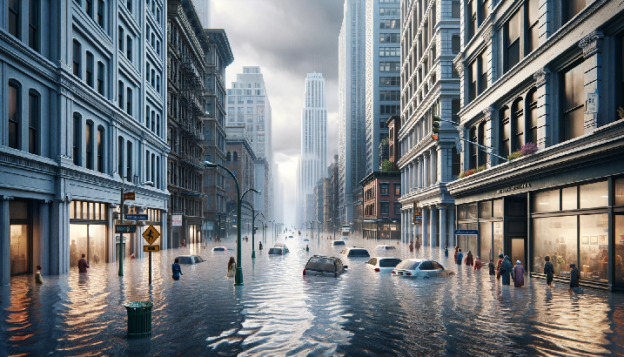
When it rains heavily on a flat area, the rainwater does not drain away and accumulates on the ground. Water flows into low areas from surrounding small elevations. Drainage canals and small rivers are the first to overflow as water levels rise. Floods that occur in this way are called internal floods and are distinguished from external floods that occur when the levees of main rivers break or overflow. In general, internal floods include the overflows of relatively large drainage rivers that have their source in the plain and the overflows of small rivers on plateaus and hillsides into lowlands at the bottom of valleys. Floods caused by internal flooding are particularly problematic in cities and surrounding newly developed urbanized areas. What is called “urban flooding” is the flooding of urban areas, which is intensified by the structure of the city and creates new types of damage, such as the inundation of underground malls.
You cannot copy content of this page