Day_169: The 2011 Chao Phraya River Flood Literature Reviews

Regarding the published literature, there are several approaches to investigate the 2011 flood.
Mark and Lebel (Mark and Lebel, 2016) describe how Thailand’s incomplete decentralization and administrative fragmentation has created numerous barriers to polycentric disaster governance.

Hagiwara et al. (2014) explained the chain reactions of the economic damage mainly derived from the experience of Japanese enterprises and points out issues that disrupted their businesses. That paper focused on the risk management changes of the firms after the 2011 flood, indicating they have strengthened their flood countermeasures as a whole, but points to the need to consider more about the collaborations with business partners or other entities.

Okazumi and Nakasu (2013) (2015) examined the devastating exacerbation of economic damage through a social background perspective and enterprise inter-relationships.

Nakasu (2017) clarified the reasons why so many Japanese companies moved to the potential risk area in Thailand. The reasons are from the perspective of both the country’s social factors through decentralization policies facilitated by the Thai government and also yen appreciation triggered by the Plaza agreement (1985) and the Lehman Brother’s bankruptcy (2008) to propel Japanese enterprise relocation and advancement.

Haraguch and L. Upmanu (2015) emphasized the decision-making process of enterprises to clarify the trigger of economic damage. That paper proposed measures for related supply chain risk through setting research questions such as private investment decision-making, the diversified sources of procurement, emergent assistance from other partner companies in the same supply chain, and the degree of the recovery of customers.

Tamada et al. (2013) approached the subject mainly from economic, political, hydrological, and technological perspectives with various authors. That book clarified the complexity of the 2011 flood and overviewed how human interventions affect the disaster, such as local people’s lifestyle changes before the disaster, the establishment of the industrial complexes in the area, government agency conflicts, dam operation impacts, unexpected rainfall, and private company reactions.

Singkran (2017) reviewed the 2011 flood from disaster management views and emphasized the need for more non-structural countermeasures and participatory collaboration among stakeholders for effective disaster management.

Reference
Hagiwara, Y, Kuribayashi, D, Okazumi, T, Nakasu, T. (2014). Characteristics of the Chain-Reaction Damage of the Japanese Firms Affected by the 2011 Thai Flood, Advances in River Engineering Vol.20, pp.397 – 402(in Japanese)


Haraguchi, M and Upmanu, L. (2015). Flood risks and impacts: A Case Study of Thailand’s Floods in 2011 and Research Questions for Supply Chain Decision Making, International Journal of Disaster Risk  Reduction, 14:256-272.


Japanese Chamber of Commerce, Bangkok. (2012). 2011 Economic Overview of Thailand(2011/2012). Japanese Chamber of Commerce, Bangkok.

Japan Science and Technology Agency (JST). (2019). Regional Resilience Enhancement through Establishment of Area-BCM at Industry Complexes in Thailand: Enhance regional resilience through visualization of disaster risks with industry, government and academia collaboration. SATREPS (Science and Technology Research Partnership for Sustainable Development) Project https://www.jst.go.jp/global/english/kadai/h2908_thailand.html accessed March 20, 2019

JETRO. (2012). Special Topics: Information on Thai Flood Disaster Recovery, Tokyo (in Japanese). http://www.jetro.go.jp/world/asia/th/flood/ accessed June 20, 2012.

Marks D and Lebel L. (2016). Disaster governance and the scalar politics of incomplete decentralization: fragmented and contested responses to the 2011 floods in Central Thailand. Habitat Int Decentralizing Disaster Gov Spec Issue 52:57–66.

Marks, D. (2019). Assembling the 2011 Thailand floods: Protecting farmers and inundating high-value industrial estates in a fragmented hydro-social territory. Political Geography, 68, 66-76.

Nakasu, T, Okazumi, T. and Shimizu, Y. (2013). Establishment of Industrial Areas and New Risk Management: Chain Reactions of Economic Damage caused by 2011 Thailand Chao Phraya River Flood Disasters and Local Societies. The Journal of Urban Social Studies,No.5, 2013, 159-169.

Nakasu, T. (2017). Natural Disasters and Disaster Management in Thailand: Status, Risks, and Trends.13th International Conference on Thai Studies.

Office of the National Economic and Social Development Boad (NESDB). (2016). The National Economic and Social Development Plan.Retrieved May 4, 2017.

Okazumi, T. and Nakasu, T. (2015). Lessons learned from two unprecedented disasters in 2011–Great East Japan Earthquake and Tsunami in Japan and Chao Phraya River flood in Thailand. International journal of disaster risk reduction, 13, 200-206.

Singkran, N. (2017). Flood risk management in Thailand: Shifting from a passive to a progressive paradigm. International journal of disaster risk reduction, 25, 92-100.

Sukekawa, S.(2013). Impacts on Industries and Enterprises Caused by the Thai 2011 Great Flood. In Thai 2011 Great Flood. Chiba: IDE-JETRO. (in Japanese)

Tamada, Y.Hoshikawa, K. Funatsu, T. ed. (2013). The 2011 Great Flood: Records and Lessons. In Thai 2011 Great Flood. Chiba: IDE-JETRO(in Japanese).

Tokyo Marine & Nichido Fire Insurance Co.,Ltd.(2011). Lessons Learned from the 2011 Thailand Flood Disaster: Points of flood risk countermeasures in overseas bases.
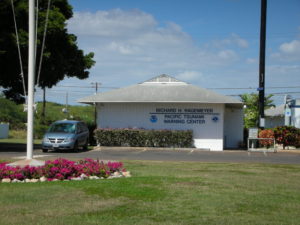
Day_168 : Past Interview Records – PTWC (Pacific Tsunami Warning Center) in Hawaii (1)

Continue to the past New Orleans Interview Records, I would like to open the memo about the interview to PTWC. It was a great time and I learned a lot from the interviews.  So I would like to share this fact to let you know their efforts to tackle the tsunami disasters in the world.

PTWC is the core center for tsunami warning and is well known to the world.

2008.2.26 (Tue.) at 1000 am
15 staff: director, deputy director
Information Technician, including nine scientists
16-hour shift on 8-4-4; homes are next to the center

The records from the interview survey are shown below.

■ Evacuation
There is no international standard in terminology. Terminology varies by country/region. The words sometimes make me confused. Also, in the past, it was either an evacuation or no evacuation.

■ Warning Error
It is challenging to give a warning. There are errors in the original earthquake and the tide data. There is an error in the gauge also.
To judge them is too hard. So, it can be said that 99.99% is an error.

In Hawaii, only a quarter of evacuation were actually damaged in the past. It is not unusual that, although there were evacuations, there were no damages at all.

■ Past data and warning judgment
Only use a few. Because how to put out the past data, equipment, etc. is hard to do. The numerical model used to determine if the earthquake becomes a tsunami is complicated. There are more things to do.

■ Relationship with other countries
The countries that are most focused on warning about tsunami in the Pacific are Japan, America, Australia, Chile, Canada, and Russia. Also, it is not possible to evaluate the inspection records of other countries. This should be noted.

■ At the time of the 2004 tsunami
Most of the records before the Indian Ocean Tsunami were reported hourly, so judge the event was tough. Every 15 minutes, now every 6 minutes, is normal and very good.

■ Conditions for cancellation
Make a comprehensive decision. The problem of reflections adds to the complexity. Not only direct waves but also indirect waves should be considered.

Day_167: Imagine from Disaster Damage Statistics

NIED-DIL mail magazine: 6
Imagine from disaster damage statistics
Contribution day and time: 2013/08/19

There is an index called the World Risk Index. The world risk report ranks Bangladesh as one of the high-risk countries in the world in 2019.

Indonesia and Haiti were easy to imagine, linked to the damages caused by recent earthquakes. Previously, there was an opportunity to learn from a land environment perspective about the past major disasters that struck Bangladesh, especially the large-scale cyclone disasters in 1970 and 1991. During a study session at the institution, I leaned the reported number of the casualties caused by the disasters was 500,000 and 140,000 people each. I was surprised to see the large numbers, but I was wondering why these numbers are so rough. When I looked at the table showing the breakdown numbers, I felt, “Oh!”

Building damage, human suffering, and livestock damage are listed. For example, the cyclone disaster in 1991 resulted in 1,630,543 house damage, 140,000 human suffering (dead or missing), and 584,471 livestock damage.

Yes, human suffering seemed to be a rough figure, while house damage and livestock damage were written down to one digit. And when we looked at what kind of country Bangladesh was like such as caste, religion, and livestock.

The background of the numbers, such as meaning, etc., has come into view. Regarding the number of dead and missing people in 1970, there are no accurate figures, and reports from 200,000 to 550,000 people have been reported in various fields.

https://disasterresearchnotes.site/archives/3224

When there is a disaster, numbers about the damage come out, but I thought it was a very important viewpoint to think about where the numbers came out and what you can imagine from those numbers.

By the way, the web site is
https://reliefweb.int/sites/reliefweb.int/files/resources/WorldRiskReport-2019_Online_english.pdf
Issued July 5, 2010 No. 6

Related Books and Info. for Further Understanding

sponsored link

Day_166: Interview Report: Hurricane Katrina Response (3)

>>>>>>>>>>>>>>>>>>>>>>>>>>>>
Date and time
7 May 2006

Visit
New Orleans Homeland Security and Public Safety Office
(New Orleans City Office of Homeland Security and Public Safety )

Interviewee
Colonel and Director

Subject
Hurricane Katrina Disaster Response
>>>>>>>>>>>>>>>>>>>>>>>>>>>>>>>

https://disasterresearchnotes.site/archives/3002

There are three drainage canals in New Orleans. There is also a pump station for each. Since New Orleans is below sea level, water is constantly pumped from these pump stations and drained into Lake Pontchartrain.

The breakwater was corrupted by the storm surge. The water was flowing into the canal from the lake, and at the same time, the pump station had the maximum pressure with the water. The pumps were broken and became not-functioned.

After the hurricane, there was only one evacuation route that crossed the bridge over Mississippi. However, the route had been blocked. These also affected support activities.

<Measures for breakwater>
At present, the Corps of Engineers will set a lock at the entrance of the canal and close them to prevent water from flowing into the canal since this year.

The challenge from this year is the evacuation of West Bank citizens. Because the levees are weak, hurricanes can easily break them.

The levee can be effective this year, but the problem is that in the next two years, the pump station will have insufficient capacity to pump water.

< Future measures of the city >
The following three goals are set as future measures. First, leave no one in the shelter. Second, the city will assist those who have no access to evacuation. Third, improve the safety of city facilities and property before and after the disaster.

Another important point this year is to let all citizens evacuate two days before Hurricane hit. The challenge is the reality that many people would not try to evacuate. As a background, the levee is to be broken, needs to have a terrible situation imagination.

There is a plan to install floodgates in a wide range of wetlands in eastern New Orleans to prevent storm surges.

Political challenge, New Orleans, including the peripheral has originally 100 million people, was an energy supply base, there is a tremendous national influence, the people here have to work.

As a countermeasure, the city has provided a wireless system. The system had been unavailable after the Hurricane.

A radio station in City Hall as a countermeasure against rumors which had become a social issue during Katrina was set up to keep media members staying and unifying the correct information.

Related information

The NIED team went to New Orleans and Missippi coastal areas to investigate.
Characteristics of the 2005 Hurricane Katrina Disasters

The community data center is the best to investigate to grasp the trend by using stats.

https://disasterresearchnotes.site/archives/2975

Day_165: Capacity, Coping Capacity, and Capacity Assessment

Based on the UNDRR, capacity, coping capacity, and capacity assessment are defined as follows:

Capacity is “the combination of all the strengths, attributes and resources available within an organization, community or society to manage and reduce disaster risks and strengthen resilience.” and also annotated, “capacity may include infrastructure, institutions, human knowledge and skills, and collective attributes such as social relationships, leadership and management”

Coping capacity is “the ability of people, organizations and systems, using available skills and resources, to manage adverse conditions, risk or disasters. The capacity to cope requires continuing awareness, resources and good management, both in normal times as well as during disasters or adverse conditions. Coping capacities contribute to the reduction of disaster risks.”

Capacity assessment is “the process by which the capacity of a group, organization or society is reviewed against desired goals, where existing capacities are identified for maintenance or strengthening and capacity gaps are identified for further action.”

We consider the capacity as a part of the vulnerability mentioned in the Press and Release (PAR) model. The capacity is examined as a coping capacity in the context of the disaster.

This means capacity is more changing, human-centered, government-related, and has timely measurement aspects compared to the other vulnerability factors.

As mentioned above, capacity is considered one of the vulnerability factors, and the vulnerability index can be analyzed based on the statistical data. However, the applicable capacity statistical data is difficult to determine and also difficult to obtain in Thailand. In addition, capacity cannot be measured well by the statistical data. They could be greatly influenced by social networks, past experience, and other factors. With this situation, the capacity assessment can be utilized not only to measure social vulnerability but also to visualize the risk by overlapping with hazard risk on the GIS. Also, capacity can be considered to be the key to examining resilience.

Day_164 : Development Environment Disaster Cycle Model

As mentioned before in Day_56, it is clear the model, development-environment-disaster cycle model is an analyzer that can be considered in a wide range of areas. In other words, this analysis perspective raises the sociological position of natural disasters, and the stepping stone of their historical and geographical connections become clearer. We believe that it will even be possible to provide various perspectives to prevent it from being guided.

https://disasterresearchnotes.site/archives/2598

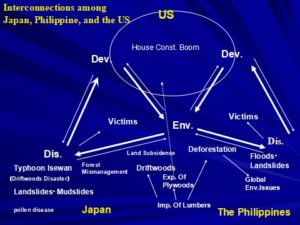
Analytical Viewing Angle by Causal Cycle Model: Case of Isewan Typhoon Disaster and Indian Ocean Tsunami Disaster

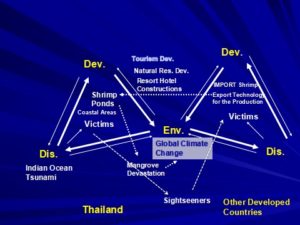
In this section, Isewan typhoon disaster and Indian Ocean tsunami disaster are specifically analyzed using the analysis view angle, the causal cycle model of development, environment, and disaster. The first is the Isewan Typhoon that hit Nagoya on September 26, 1959. The disaster was a turning point of disaster management in postwar Japan, but focusing on driftwood damage, which is one of the important aspects of the disaster, the economic recovery of postwar Japan, trade with the United States, and Japan. Forest management, natural disasters such as landslides, the problem of hay fever, which is also called national illness, and the inter-relationship between deforestation and natural disasters in the Philippines, which becomes today, will become clear. Second, regarding the Indian Ocean Tsunami that caused enormous damage on December 26, 2004, mainly in the countries around the Indian Ocean, the damage in Thailand will be analyzed. This analysis reveals the development-environment-disaster in Thailand and its relationship with Japan and Western countries.

The figures are shown as follows:

Figure 1: Interconnections of Typhoon Isewan Disaster

Figure 2: Interconnections of Indian Ocean Tsunami Disasters in Thailand

sponsored link

Day_163: PAR model : Hazard and Vulnerability (3)

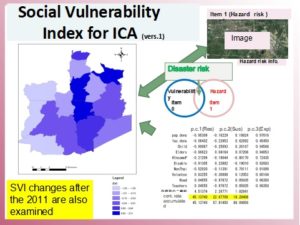
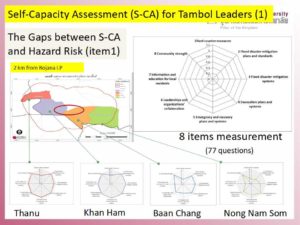
As discussed on Day 147, now we are investing the social vulnerability index of the district, sub-district, and village levels in Ayutthaya. To calculate the social vulnerability index, exposure, susceptibility, and capacity data are examined. Notably, the district level of the index is figured out, as shown in Figure 1, using principal component analysis.

(Please enlarge the screen to see the figure well. Darker blue means more vulnerable. The detailed factors of PCA will be explained later. )

Figure 1: Social Vulnerability Index Industrial Complex Area(SVI-ICA) Ref. 1)

https://disasterresearchnotes.site/archives/3746

As mentioned above, the district level of the social vulnerability index can be figured out by statistical data. However, sub-district and village levels data are challenging to collect. We also need to understand the capacity is a factor that includes not only hard but also soft countermeasures against natural disasters, as discussed before. Especially, capacity-soft is not stable by time with circumstances and could be changing from time to time. The stats data is not enough to indicate their actual capacities.

Based on the above fact, the capacity assessment is considered to fill the gaps. The capacity assessment method was based on the FDPI project experience.

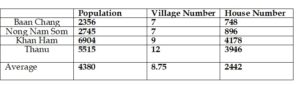
The population of the target areas is indicated below:

Table 1:  The Population of the Tambons (Source: registration office 2019)

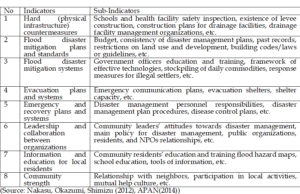
Below is the category (indicators) to measure the capacity.

Table 2: Indicators and Sub-Indicators for Capacity Assessment

The results are as indicated in Figure 2.

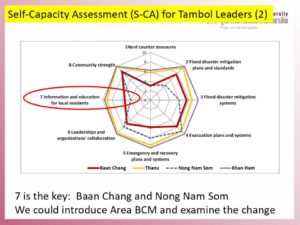
Figure 2: Four Sub-District Capacity Assessment 

The findings show the western side and eastern side have a big gap, as you can see in Figure 2.

Figure 3 explains the education and training part is much different among the four target sub-district. The results mean we can monitor and evaluate their progress after we provide education, training, system, or so on there.

Figure 3: Capacity Assessment Analyses

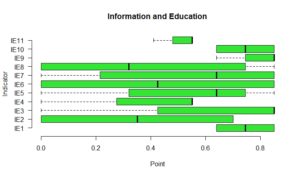
For example, each sub-indicators are examined as follows:

Figure 4: Information and Education Sub-Indicators Gaps 

The analyses (the detailed sub-indicators from IE1 to IE11) will be explained later.

Related Book and Info.

At Risk: Natural Hazards, People’s Vulnerability and Disasters

*This is the baseline research for the SATREPS project.

Day_162: Disaster Links Library

As mentioned below, the Disaster Links Library has been created. The first draft is attached to this menu as “Disaster Links Library”. There are still many challenges ahead, however, the page will be completed step by step with adding more info.

If you have some excellent links, please let me know.

https://disasterresearchnotes.site/archives/3793

sponsored link

Day_161: Interview Report: Hurricane Katrina Response (2)

>>>>>>>>>>>>>>>>>>>>>>>>>>>>>>>>>
Date and time
7 May 2006
Visit
New Orleans Homeland Security and Public Safety Office
(New Orleans City Office of Homeland Security and Public Safety )

Interviewee
Colonel and Director

Subject
Hurricane Katrina Disaster Response

>>>>>>>>>>>>>>>>>>>>>>>>>>>>>>

https://disasterresearchnotes.site/archives/4059

<Contents>

The following situations were going on to make a decision; one is for the residents who have no means to evacuate and do not have the supply transportation means from the city. The other is for the people who have the means to evacuate but do not do that.

Under these circumstances, a federal rescue bus arrived six days later.

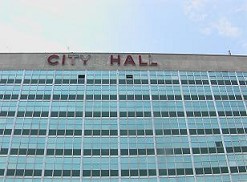
The city ​​has been flooded for two days since the water entered New Orleans. Specifically, the city hall had no water shortly after passing the hurricane, but two days later, it was almost breast-high water level inundation.


Picture: New Orleans City Hall (7 May 2006)

<Current Social Situation>

New Orleans was the only city in the United States to lose its school system, the justice system, home, and tax system. This week, the first trial has been held since last August.

In terms of the school system, only 4 out of 140 schools are open.

The water supply system has lost 80 %.

There is a nuclear power plant near New Orleans. Entergy Corporation is the operating company. However, the company was bankrupted. There are only 10 out of 400 staff members at present.

The natural gas pipeline has been damaged, making gas supply impossible. There are these energy supply problems.

As mentioned, the Entergy Corporation, which is supplying the gas, has been bankrupted, the Entergy Corporation has no support measures from the government.

<New Orleans Society and Geographical Background>

Hurricane Katrina is a human-made disaster. Concerning the background, levees were built in the early 1800s and have worked to prevent annual floods. However, the wetlands had been overlooked. In this area, they dug up the route, so this may cause the storm surge, and also oil drilling reduces the wetlands, weakened resistance to hurricanes.

Katrina disaster is also a national issue. The background of southeastern Louisiana, 40 % of the country’s oil is supplied from here. At the same time, 60 percent natural gas supply of the country is from here. Also, it has 135 chemical and petroleum refineries along the Mississippi River. These are unlikely to create a similar zone in the United States, where environmental pollution becomes a social problem. The Port of New Orleans (New Orleans harbor) can have the giant scale oil tanker in the port. Moreover, the New Orleans area is also a freight rail hub.

To be continued…

Day_160: Interview Report: Hurricane Katrina Response (1)

Now I am digging up my past experience. The report is a part of the project.

The below past article can be checked for your reference.

https://disasterresearchnotes.site/archives/2975

>>>>>>>>>>>>>>>>>>>>>>>>>>>>>>>>>>>>>>>>>>>>>>>>>>>

Date and time
7 May 2006

Visit
New Orleans Homeland Security and Public Safety Office
(New Orleans City Office of Homeland Security and Public Safety )

Interviewee
Colonel and Director

Subject
Hurricane Katrina Disaster Response

>>>>>>>>>>>>>>>>>>>>>>>>>>>>>>>>>>>>>>>>>>>>>>>>>>

<Contents>
< Work >
The interviewee: Responsible for the Police, fire, EMS (emergency medical services),
and crisis management of cooperation with state, federal and city

< The lessons of Katrina >
The lesson learned is, “We can not rely on external resources. Without relying on the federal (country) government, each person should think they need to protect themselves.” (This is the interview record.)

<Hurricane Katrina-What Happened>
Before Friday (8/26), all the state government was setting evacuation preparation. FEMA staff deployed throughout the city. Eighty percent of citizens evacuated on their own, but many of the rest were unable to evacuate with no means.

The city, about 15,000 civilians, were provided transportation means to be saved in the shelter. Besides, before hurricane landfall on Sunday(8/28), the people in the city who can not evacuate evacuated to Super Dome.

Since the federal government does not permit having a shelter in New Orleans, New Orleans is the only city ​​in the U.S. that does not have a shelter. The Federation and the Red Cross had considered the situation as a dangerous task because of this.

When the hurricane comes, Super Dome became a temporary shelter.

Picture: New Orleans City Hall (on 7 May 2006)

After the hurricane, we had a tough week. After all, approximately 700 people of citizens lost their lives.