Category Archives: Disaster Risk Reduction

Day_195 : Scientists and Disaster Management Controversy issues with a L’Aquila Earthquake Case

The L’Aquila earthquake, which struck the Abruzzo region of Italy on April 6, 2009, was a significant case study for both scientists and disaster risk management professionals for several reasons. With a magnitude of 6.3, this earthquake caused extensive damage to the medieval city of L’Aquila, resulting in the deaths of more than 300 people, injuring over a thousand, and leaving tens of thousands of people homeless. Beyond the immediate physical damage and tragic loss of life, the L’Aquila earthquake raised important issues related to earthquake prediction, risk communication, and the responsibilities of scientists and authorities in disaster risk management.

Scientific Aspects and Controversies

The occurrence of earthquakes sparked a controversial debate over the ability to predict earthquakes and the communication of seismic risks to the public. Before the earthquake, a series of tremors were felt in the region, leading to heightened public concern. A week before the major earthquake, a meeting of the Major Risks Committee, which included government officials and scientists, was held to assess the situation. The committee concluded that it was not possible to predict whether a stronger earthquake would occur but reassured the public, suggesting a low likelihood of a major event. Unfortunately, the devastating earthquake struck shortly thereafter.

This situation has led to significant controversy, particularly regarding the role and communication strategies of scientists and government officials in disaster risk management. Critics argued that reassurances were misleading and contributed to a false sense of security among the population.

Legal and Ethical Issues

In a highly controversial decision, six Italian scientists and one government official were initially found guilty of manslaughter in 2012 for underestimating the risks and failing to adequately warn the population. This verdict was widely criticized by the international scientific community, which argued that it was unreasonable to expect scientists to accurately predict earthquakes. The verdict was largely overturned in 2014, with the convictions of scientists being annulled and the sentence of the government official being reduced.

Disaster Risk Management Implications

The L’Aquila earthquake underscored the importance of effective disaster-risk management and communication strategies. Key lessons include:

  1. Communication of Uncertainty: It highlighted the need for clear communication of scientific uncertainty to the public. Conveying the inherent uncertainties in earthquake prediction is crucial for helping individuals and communities make informed decisions about risk reduction and preparedness.
  2. Public Education and Preparedness: The tragedy reinforced the need for ongoing public education on disaster preparedness and the importance of building earthquake-resilient communities.
  3. Building Codes and Urban Planning: Ensuring strict adherence to earthquake-resistant building codes and urban planning practices is vital in reducing the vulnerability of buildings and infrastructure.
  4. Multi-disciplinary Approach: The event demonstrated the importance of a multi-disciplinary approach that includes not only seismologists but also engineers, urban planners, emergency management professionals, and policymakers in disaster risk management planning and response.
  5. Ethical Responsibilities: The aftermath raised questions about the ethical responsibilities of scientists and the balance between preventing public panic and ensuring preparedness.

The L’Aquila earthquake remains a case study of the complex interplay among science, policy, ethics, and public communication in the context of natural disaster risk management.

Day_85 : Shingen Embarkment: SAMURAI Disaster Risk Management

Those who can rule the water can also rule the country. This proverb became a reality, especially during the Sengoku period (Warring States Period) in Japan.

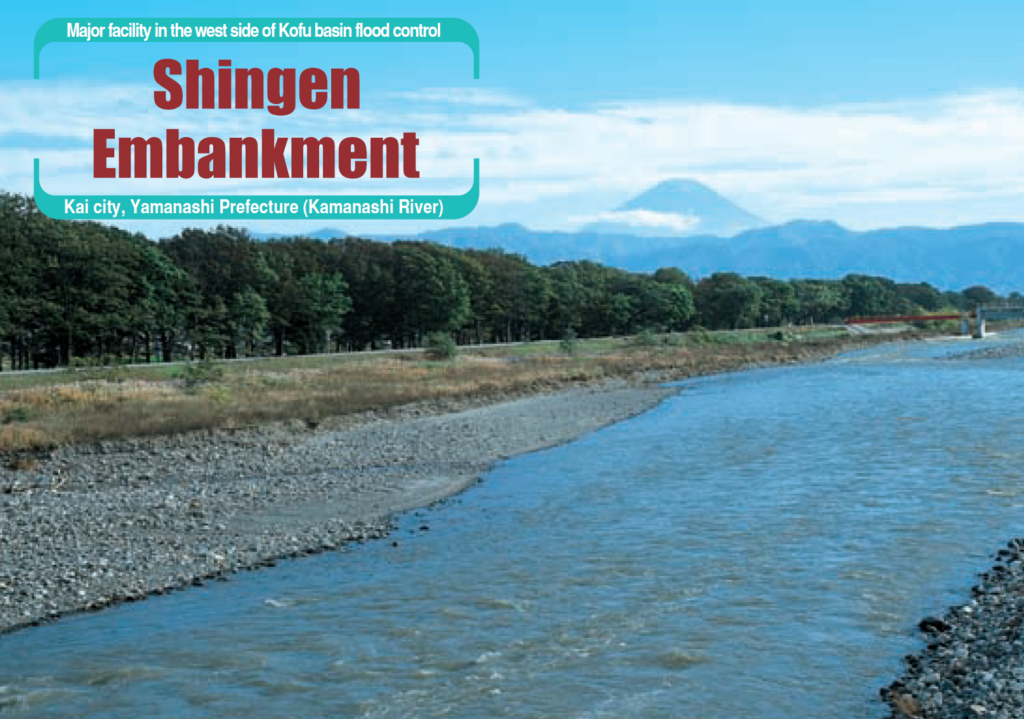
Shingen embankment was a flood control system built over 400 years ago to protect the northern part of the Kofu Basin, the rich rice paddy areas of Kai Province, then under the rule of Daimyo (District Lord) Shingen Takeda. The main problem is that the Midai River, a left branch of the Kamanashi River, is the major branch of the Fuji River, Once the Midai River flow increases and broke the bank protecting the Kofu Basin at its confluence with the Kamanashi River, the flood damage to the paddy fields was extensive. Such floods were known even in prehistoric times. Towards AD 1500, Shingen Takeda, the Daimyo (District Lord) of Kai country, directed that flood control works be made to protect the rice paddy area of his country (Takeuchi, 2003*).

Shingen Takeda was one of the strongest Samurai Daimyo (District Lord). He controlled his soldiers well and so did the floods.

shingenFigure: Shingen Embarkment**

*The Basis of Civilization: Water Science? (Proceedings of theUNESCO/IAMS/IWHA symposium held in Rome, December 2003). AI IS I’ubl. 286, 2004

**Brochure (Information about Fuji river Flood Control)

Day_53 : Disaster Information : Desinventar

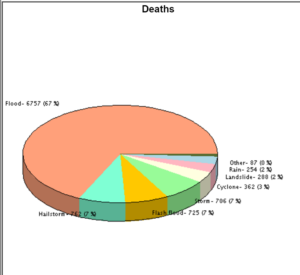
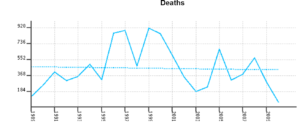
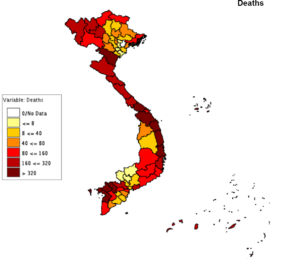
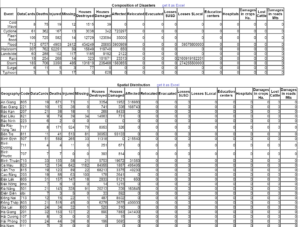
Even though the countries are limited, UN Desinventar has really detailed disaster information. Let me share an example: Vietnam’s data.
Just click the target country (Vietnam), and you can see the different types of data, such as pie charts (disaster type), polygonal lines (trend), spatial (geographical distribution), and statistical (regional data).

The following are the screen shots:.

VietNam_pie VietNam_plot VietNam_spacial VietNam_stat


* UN Desinventar
http://www.desinventar.net/index_www.html

Day_36 : Disaster Scenario

A Disaster Scenario is one way to improve our disaster management skills. It is a kind of role-playing or simulation. Science can be applied to make the scenario more realistic. Disaster scenarios can be used at the personal or national level. We usually tend to have a normalcy bias; however, well-planned disaster scenarios can break such bias.

* Normalcy bias (Wikipedia)
We tend not to want to accept abnormal situations.

Day_182: The Prospects of “Natural” Disasters and Worldwide Readiness

Various strategies can be implemented to alleviate the impact of natural calamities. These encompass measures for reducing the impact of disasters, such as enhancing the ability of infrastructure to withstand damage, establishing systems that provide advance notice of potential disasters, and fostering education and knowledge about disasters.
Furthermore, implementing sustainable development strategies can also contribute to the mitigation of susceptibility to catastrophes. This includes the safeguarding and rejuvenation of natural ecosystems, which can function as innate safeguards against calamities.
The trajectory of natural calamities remains unpredictable. As climate change intensifies, we can anticipate a rise in the frequency and intensity of weather-related catastrophes. Nevertheless, by enhancing comprehension and preparedness we may alleviate their effects and construct a more robust environment.
Addressing natural disasters necessitates a synchronized, worldwide effort due to their global nature. Through comprehending the origins and consequences of disasters, as well as applying efficient solutions for disaster management, we may mitigate the effects and guarantee a more secure and adaptable future for everyone.

Day_176: Empowering Pacific Island Countries: Innovative Strategies for a Disaster-Resilient Future


Let’s learn about disaster risk reduction in Pacific Island countries.

For Pacific Island countries (PICs), which are vulnerable to climate change and natural disasters, including tropical cyclones, earthquakes, tsunamis, and volcanic eruptions, disaster risk reduction (DRR) is a crucial part of sustainable development. These occurrences could severely impact the environment, the local economy, and the local communities. It is now more crucial than ever for PICs to concentrate on improving their capacity for disaster risk reduction and resilience.

The concept and practice of disaster risk reduction (DRR) are described by the United Nations Office for Disaster Risk Reduction (UNDRR) as “the concept and practice of reducing disaster risks through systematic efforts to analyze and manage the causal factors of disasters, including through reduced exposure to hazards, lessened vulnerability of people and property, wise management of land and the environment, and improved preparedness for adverse events.” This entails comprehending the particular difficulties that PICs confront in the Pacific region, figuring out the best ways to deal with these difficulties, and cooperating to secure a more resilient future for everyone.

This article discusses how crucial disaster risk reduction is for the Pacific region, looks at essential tactics for improving DRR, looks at examples of effective programs, and thinks about how local knowledge and global cooperation may help create a resilient culture. Pacific Island countries may lessen their susceptibility, promote sustainable development, and be better prepared for future calamities by implementing these measures.

Pacific Island countries face distinct challenges that are unique to their region.

Pacific Island countries have many specific difficulties when it comes to reducing the risk of disasters. First and foremost, they are particularly vulnerable to disasters because of their location. PICs are vulnerable to volcanic eruptions, earthquakes, and tsunamis because of their location along the Pacific Ring of Fire. The area is also frequently affected by tropical cyclones, which can result in extensive harm and destruction.

PICs’ low resources, disaster preparedness, and response capacity present another critical obstacle. Many of these nations’ inhabitants, infrastructure, and financial resources are modest. As a result, they frequently struggle to create and keep up with the required structures and methods for efficient disaster risk reduction.

Additionally, the effects of climate change are increasing already-existing threats and developing new ones for Pacific Island nations. Natural disasters are becoming more frequent and severe in the area due to rising sea levels, rising temperatures, and altering weather patterns. This makes improving disaster risk reduction in the Pacific much more complex and urgent.

Reducing the risk of disasters in the Pacific region is paramount.

It is impossible to exaggerate the significance of disaster risk reduction in the region of the Pacific. Natural disasters can wreak havoc and create great destruction, affecting the environment, the economy, and communities that persist for years. The Pacific island countries can lessen these effects, save lives, and safeguard their development achievements by investing in disaster risk reduction.

The Pacific region’s Sustainable Development Goals (SDGs) are also strongly related to disaster risk reduction. Natural disasters can directly influence many SDGs, including eradicating poverty, ensuring health and well-being, and fostering sustainable cities and communities. Pacific Island countries may advance toward these objectives and guarantee a more sustainable future for all by improving their capacity for disaster risk reduction.

Finally, reducing the risk of disasters is essential to helping Pacific Island communities become resilient. Communities’ capacity to resist shocks and pressures like disasters, recover from them, and adapt to them is called resilience. By implementing efficient disaster risk reduction initiatives, PICs may empower their communities to increase their resilience and preparedness for future catastrophes.

Discover some highly effective techniques to enhance disaster risk reduction with the following suggestions:.

Climate change adaptation

The effects of climate change are one of the biggest obstacles to disaster risk reduction that Pacific Island countries must overcome. As a result, any DRR strategy in the area must include adaptation to climate change as a critical element. Some examples of adaptation methods are enhancing coastal defenses, implementing sustainable land- and water-management practices, and creating climate-resilient agriculture and fisheries.

Climate factors must be incorporated into development planning and decision-making processes as part of climate change adaptation. This can help ensure that investments and development initiatives are created to resist climate change’s effects and not unintentionally raise the risk of disaster.

Infrastructure resilience

Improving infrastructure resilience is crucial for boosting disaster risk reduction in the Pacific. This entails ensuring that critical infrastructure, such as transportation networks, energy production facilities, and water and sanitation systems, is planned, constructed, and maintained to withstand the effects of natural disasters and climate change.

Developing and enforcing construction rules and standards, using cutting-edge technologies and materials, and integrating risk assessments and management strategies into the planning and design processes for infrastructure are all ways to increase its resilience. Pacific Island countries can lessen the potential harm brought on by disasters and assure the ongoing provision of critical services both during and after disasters by investing in resilient infrastructure.

Early warning systems

Implementing efficient early warning systems is paramount in enhancing disaster risk reduction efforts in the Pacific region. The aforementioned systems can provide precise and prompt data regarding imminent perils, enabling communities and governing bodies to undertake suitable measures to mitigate the consequences of disasters.

Early warning systems encompass a variety of technologies and methodologies, including but not limited to satellite-based monitoring, seismometers, and community-based observation networks. Apart from the development and execution of stated systems, it is crucial to guarantee that communities possess the ability and knowledge to understand and respond to early warning information.

Community engagement and Preparedness

Any practical disaster risk reduction approach must include community involvement and preparedness. Pacific Island countries may ensure that local needs and views are considered and that communities have a greater capacity to respond to and recover from disasters by involving communities in designing, implementing, and monitoring DRR programs.

Creating community early warning systems and carrying out of regular disaster exercises are examples of community-based disaster preparedness initiatives. Additionally, community participation can increase the efficacy and support for DRR activities by fostering trust between citizens and authorities.

Case studies of successful disaster risk reduction initiatives

The successful implementation of various disaster risk reduction efforts in Pacific Island countries has shed light on practical methods for strengthening DRR in the area. The Pacific Catastrophe Risk Assessment and finance project (PCRAFI), which emerged in response to the expanding demand for disaster risk finance in the Pacific, is one such project.

Participating countries have access to catastrophe risk models, financial safety nets, and technical assistance for disaster risk management through PCRAFI. With the tools and resources it offers, the project has proven to be a highly successful means of assisting Pacific Island countries to identify and manage their disaster risk.

The Pacific Climate Change and Migration (PCCM) project, which intends to raise the resilience of vulnerable populations in Fiji and Tuvalu to the effects of climate change, including displacement and migration, is another effective program. The project has concentrated on a variety of interventions, such as the building of climate-resilient infrastructure, the promotion of community-based disaster risk reduction, and the development of sustainable methods for livelihood.

The PCCM project highlights the value of tackling the underlying factors that increase disaster risk, such as climate change and incorporating disaster risk reduction (DRR) into larger development projects. Pacific Island countries may create more resilient and sustainable populations by approaching disaster risk reduction strategically.

The Role of international cooperation in disaster risk reduction

Effective disaster risk reduction in the Pacific region requires global cooperation. International cooperation and support are crucial because many Pacific Island countries lack the resources and capacity to manage their disaster risk independently.

International cooperation can take many forms, including knowledge sharing, capacity building, and financial and technical support. For instance, the United Nations Development Programme (UNDP) has generously supported initiatives in the Pacific to reduce disaster risk, such as creating early warning systems, establishing community-based disaster preparedness programs, and promoting climate change adaptation.

Incorporating regional expertise and customs into DRR activities can be significantly aided by international cooperation. International partners can contribute to ensuring that DRR strategies are practical and culturally appropriate by collaborating closely with local communities and traditional leaders.

Incorporating local knowledge and traditional practices

Initiatives for reducing the risk of disaster must incorporate local expertise and customs to be effective and long-lasting. The inhabitants of the Pacific Islands have abundant knowledge and experience in dealing with natural disasters, and their customs and traditions can offer essential insights into efficient DRR techniques.

Many Pacific Island societies, for instance, have created complex early warning systems using their understanding of the environment and natural occurrences. Countries in the Pacific Islands can improve their capacity for disaster preparedness and response by integrating these systems into more comprehensive DRR policies.

Culturing climate-resilient crops and constructing cyclone-resistant homes are examples of traditional practices that can offer important insights into effective adaptation strategies. Pacific Islander countries may create more resilient and sustainable communities by recognizing and adopting these practices into DRR projects.

Building a Culture of Resilience in Pacific Island Communities

Effective disaster risk reduction in Pacific Island communities depends on fostering a culture of resilience. This entails implementing efficient DRR measures and giving communities the tools they need to manage their risk of disasters and increase their resilience.

Communities can be empowered to actively participate in disaster preparedness and response through community-based approaches to disaster risk reduction, such as those used in the PCCM project. These techniques can also assist in fostering trust and collaboration between communities and authorities.

Furthermore, building a culture of resilience in Pacific Island communities can be facilitated by raising awareness and educating people about disaster risk reduction. Pacific Island countries may create more resilient communities and lessen the potential effect of natural disasters by giving populations the expertise and skills they need to understand and handle their disaster risk.

Monitoring and evaluating disaster risk reduction progress

Monitoring and assessing their progress is crucial for disaster risk reduction strategies to be effective and persistent. Pacific Island countries can continuously hone and enhance their DRR strategies, enhancing their capacity for resilience over time by monitoring progress and identifying areas for improvement.

The development of data management systems, setting up surveys and evaluations, and establishing performance indicators are just a few examples of the various ways that monitoring and evaluation can be carried out. Pacific Island governments may ensure that their DRR projects are based on evidence and successful by investing in these tools and procedures.

Envisioning a Robust and Sustainable Future for Pacific Island Nations through Collaborative Endeavors and Holistic Strategies

It takes a variety of tactics and approaches to effectively increase disaster risk reduction in Pacific Island countries. Pacific Island countries may build a more robust future for all people by emphasizing infrastructure resilience, early warning systems, community participation and preparedness, and incorporating indigenous knowledge and traditional practices.

Effective disaster risk reduction in the Pacific requires global cooperation and encouraging a resilient culture. Pacific Island nations can lessen their susceptibility to natural disasters and promote sustainable development by cooperating and strengthening local populations.

Monitoring and evaluation will be crucial to ensuring that DRR projects in the area are successful and long-lasting. By continuously enhancing and upgrading our methods, we can create a more resilient and prosperous future for Pacific Island nations and their populations.

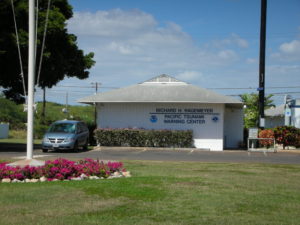
Day_168 : Past Interview Records – PTWC (Pacific Tsunami Warning Center) in Hawaii (1)

Continue to the past New Orleans Interview Records, I would like to open the memo about the interview to PTWC. It was a great time and I learned a lot from the interviews.  So I would like to share this fact to let you know their efforts to tackle the tsunami disasters in the world.

PTWC is the core center for tsunami warning and is well known to the world.

2008.2.26 (Tue.) at 1000 am
15 staff: director, deputy director
Information Technician, including nine scientists
16-hour shift on 8-4-4; homes are next to the center

The records from the interview survey are shown below.

■ Evacuation
There is no international standard in terminology. Terminology varies by country/region. The words sometimes make me confused. Also, in the past, it was either an evacuation or no evacuation.

■ Warning Error
It is challenging to give a warning. There are errors in the original earthquake and the tide data. There is an error in the gauge also.
To judge them is too hard. So, it can be said that 99.99% is an error.

In Hawaii, only a quarter of evacuation were actually damaged in the past. It is not unusual that, although there were evacuations, there were no damages at all.

■ Past data and warning judgment
Only use a few. Because how to put out the past data, equipment, etc. is hard to do. The numerical model used to determine if the earthquake becomes a tsunami is complicated. There are more things to do.

■ Relationship with other countries
The countries that are most focused on warning about tsunami in the Pacific are Japan, America, Australia, Chile, Canada, and Russia. Also, it is not possible to evaluate the inspection records of other countries. This should be noted.

■ At the time of the 2004 tsunami
Most of the records before the Indian Ocean Tsunami were reported hourly, so judge the event was tough. Every 15 minutes, now every 6 minutes, is normal and very good.

■ Conditions for cancellation
Make a comprehensive decision. The problem of reflections adds to the complexity. Not only direct waves but also indirect waves should be considered.

Day_165: Capacity, Coping Capacity, and Capacity Assessment

Based on the UNDRR, capacity, coping capacity, and capacity assessment are defined as follows:

Capacity is “the combination of all the strengths, attributes and resources available within an organization, community or society to manage and reduce disaster risks and strengthen resilience.” and also annotated, “capacity may include infrastructure, institutions, human knowledge and skills, and collective attributes such as social relationships, leadership and management”

Coping capacity is “the ability of people, organizations and systems, using available skills and resources, to manage adverse conditions, risk or disasters. The capacity to cope requires continuing awareness, resources and good management, both in normal times as well as during disasters or adverse conditions. Coping capacities contribute to the reduction of disaster risks.”

Capacity assessment is “the process by which the capacity of a group, organization or society is reviewed against desired goals, where existing capacities are identified for maintenance or strengthening and capacity gaps are identified for further action.”

We consider the capacity as a part of the vulnerability mentioned in the Press and Release (PAR) model. The capacity is examined as a coping capacity in the context of the disaster.

This means capacity is more changing, human-centered, government-related, and has timely measurement aspects compared to the other vulnerability factors.

As mentioned above, capacity is considered one of the vulnerability factors, and the vulnerability index can be analyzed based on the statistical data. However, the applicable capacity statistical data is difficult to determine and also difficult to obtain in Thailand. In addition, capacity cannot be measured well by the statistical data. They could be greatly influenced by social networks, past experience, and other factors. With this situation, the capacity assessment can be utilized not only to measure social vulnerability but also to visualize the risk by overlapping with hazard risk on the GIS. Also, capacity can be considered to be the key to examining resilience.

Day_162: Disaster Links Library

As mentioned below, the Disaster Links Library has been created. The first draft is attached to this menu as “Disaster Links Library”. There are still many challenges ahead, however, the page will be completed step by step with adding more info.

If you have some excellent links, please let me know.

https://disasterresearchnotes.site/archives/3793

sponsored link

Day_160: Interview Report: Hurricane Katrina Response (1)

Now I am digging up my past experience. The report is a part of the project.

The below past article can be checked for your reference.

https://disasterresearchnotes.site/archives/2975

>>>>>>>>>>>>>>>>>>>>>>>>>>>>>>>>>>>>>>>>>>>>>>>>>>>

Date and time
7 May 2006

Visit
New Orleans Homeland Security and Public Safety Office
(New Orleans City Office of Homeland Security and Public Safety )

Interviewee
Colonel and Director

Subject
Hurricane Katrina Disaster Response

>>>>>>>>>>>>>>>>>>>>>>>>>>>>>>>>>>>>>>>>>>>>>>>>>>

<Contents>
< Work >
The interviewee: Responsible for the Police, fire, EMS (emergency medical services),
and crisis management of cooperation with state, federal and city

< The lessons of Katrina >
The lesson learned is, “We can not rely on external resources. Without relying on the federal (country) government, each person should think they need to protect themselves.” (This is the interview record.)

<Hurricane Katrina-What Happened>
Before Friday (8/26), all the state government was setting evacuation preparation. FEMA staff deployed throughout the city. Eighty percent of citizens evacuated on their own, but many of the rest were unable to evacuate with no means.

The city, about 15,000 civilians, were provided transportation means to be saved in the shelter. Besides, before hurricane landfall on Sunday(8/28), the people in the city who can not evacuate evacuated to Super Dome.

Since the federal government does not permit having a shelter in New Orleans, New Orleans is the only city ​​in the U.S. that does not have a shelter. The Federation and the Red Cross had considered the situation as a dangerous task because of this.

When the hurricane comes, Super Dome became a temporary shelter.

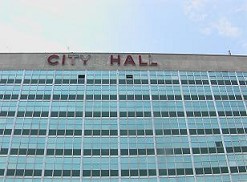
Picture: New Orleans City Hall (on 7 May 2006)

After the hurricane, we had a tough week. After all, approximately 700 people of citizens lost their lives.