Category Archives: Disaster Information

Day_58: Asian Disaster Reduction Center (ADRC) and Kobe Earthquake

ADRC is established in 1998 after the Kobe Earthquake. Kobe city’s population had caught up the same level before the disaster in 9 years. Kobe reinvents itself as a center of disaster reduction policies and activities in the world. There are so many disaster-related organizations in HAT Kobe. The HAT means “Happy and Active” and also “surprised” in Japanese. This is a good example to refer to for the disaster recovery process. We can learn the lessons from Kobe. ADRC contributes to disaster reduction policies and activities for member countries in Asia. We can check member countries disaster management systems, country reports, and others. We can also confirm the updated disasters on the ADRC’s website.

*ADRC member countries information site.

http://www.adrc.asia/disaster/index.php

** Disaster Information
http://www.adrc.asia/latest/index.php

Day_157: Disaster Warning (1)

I will update a column of the NIED e-mail magazine I wrote long ago because the content does not fade with time. (I will do this step by step in Japanese and English.) I will also add comments to update the situation.

Sorry, I am now revising this post because of the translation difficulties. This post will be revised again. Thank you.

Published May 6, 2010
NIED-DIL e-mail magazine: Disaster Warning (1)

■ Disaster Warning (1) ■

In February 2008, a survey provided an opportunity to visit Hawaii’s Pacific Tsunami Warning Center (PTWC). In a study, I interviewed the director of the PTWC, and the first thing that caught my attention was the role of the media. The director told me that a public tsunami evacuation alert was required three hours before the event, which was too time-sensitive, but the press was an advantage to do this. However, there were various restrictions for the government organization, such as warnings in an international framework. I remembered the Chilean Navy’s disaster response to the damage caused by the earthquake and tsunami in Chile in February this year.

Next, I was interested in science, technology, and data, which are the basis of alarm decisions. I think regular (flood, etc.) warnings will be judged based on current and past data, but especially for tsunami warnings, there were errors in the original earthquake and the tide gauge data. To judge, we should know that 99.99 percent of the errors could be caused by error. The fact that past data is not very useful because the devices to figure out the data are changing daily, making it difficult to rely on it.

From these facts, it was generally noticed that the disaster warning was based on the combination of the progress of science and technology and the competence of the person in charge. The actual warning also relies on the institution belonging to it. For example, variables such as the recipient of the alert, the psychology of the local people, the social situation, and various systems also needed to be added.

Issued May 6, 2010 No. 4

Day_34 : The meanings of the Typhoon Makurazaki in 1945

Japan was vulnerable after the Second World War, so we had many natural disasters, especially Typhoon disasters, from 1945 to 1959. Some call this 15 years a great flood and storm era. The first hit was Typhoon Makurazaki on September 15, 1945*. The typhoon hit Hiroshima city. There were 1229 casualties in the city. This fact reminds us of what happened in Hiroshima in the same year. The atomic bomb hit Hiroshima city this August. We had no weather forecast system during the war because of military reasons. The people in Hiroshima were living in vulnerable houses because the bomb hardly hit them. They did not have enough information about the typhoon’s coming, either. Therefore, this typhoon disaster is a complex disaster consisting of natural, technological, and human-made disasters.

*Hiroshima Pref. Website:
http://www.bousai.pref.hiroshima.jp.e.bq.hp.transer.com/www/contents/1318849427179/index.html
http://www.pref.hiroshima.lg.jp.e.bq.hp.transer.com/soshiki/100/makurazaki.html

**A Blank in the Weather Map by Kunio Yanagida

https://en.wikipedia.org/wiki/A_Blank_in_the_Weather_Map


Day_129 : Natural Disasters in China (1) – Two Earthquake Disasters

Overviews

The overviews of Natural Disasters in China are the followings:

1) Death numbers
death_china2
Source: EM-DAT

2) Affected numbers
affected_china
Source: EM-DAT

3) Damage costs
damage_china
Source: EM-DAT

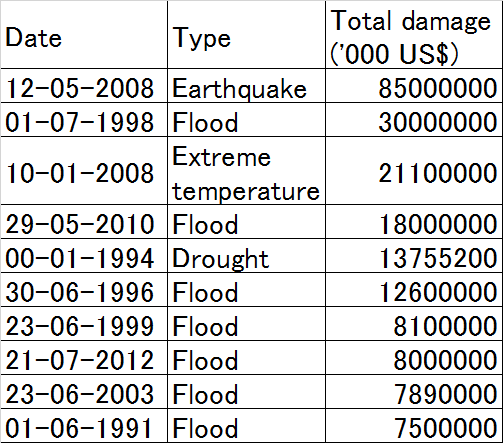
Natural disasters in China are very large scales, reflecting country’s population and geographical size. Also, we need to know that China has a rapidly growing economy. We can confirm the normal historical trends of natural disasters, from human sufferings to economic damages, which this note already mentioned (Day 77). For instance, the top 10 deadliest natural disasters in China are all before 1970s. On the contrary, the top 10 costliest natural disasters in China all occurred after 1990s.

Two Earthquakes
Yang Zhang William Drake et al. (2016)* indicate interesting views on two earthquake disaster recoveries: the 1976 Tangshan earthquake and the 2008 Wenchuan earthquake. The point is why the 2008 Wenchuan earthquake recovery was so rapid compared to the 1976 earthquake.
However, the paper could add the total background changes in China, such as the economy and politics. China has changed dramatically since 1976, from historical viewpoints.

A comparison of the two earthquakes will be explained.

Yang Zhang William Drake et al. (2016), Disaster Recovery Planning after Two Catastrophes: The 1976 Tangshan Earthquake and the 2008 Wenchuan Earthquake, International Journal of Mass Emergencies and Disasters, 34(2):174–200.

Day_199 : Early Signs of Geological Changes Before Landslides

Before significant landslides occur, various clear natural changes are often observed. Notable incidents include the 1963 Vajont Dam landslide in Italy and the 2006 Leyte Island landslide in the Philippines.

On the evening of October 9, 1963, a massive landslide took place near the Vajont Dam in the Alps of northern Italy. The dam, standing at 262 meters, was completed just three years prior. The landslide dislodged approximately 260 million cubic meters of earth, thrusting up the waters of the dam’s lake. The displaced water surged over the dam, rising more than 100 meters before rushing down into the valley below, resulting in approximately 2,000 fatalities. The geological layers in the area were unstable, compounded by the increased water levels from the dam. A minor landslide had previously occurred in 1960, and the landslide’s progress accelerated to several tens of centimeters per day just before the disaster. Despite ongoing monitoring, the catastrophic damage could not be prevented.

Day_140 : Natural Disasters in Europe (2) Vajont Dam Collapse


On February 17, 2006, a mountain 800 meters tall on the Philippine island of Leyte succumbed to a vast landslide, displacing around 20 million cubic meters of soil and claiming 1,144 lives. Before the collapse, cracks had appeared on the mountain’s ridge, and rainfall had begun to seep into the ground.

Identifying these early signs of geological change is crucial. By monitoring their progression and predicting potential danger zones, we can enhance our preparedness and safeguard our lives against such devastating natural disasters.

Contents (in Japanese)
Source: URL:https://dil.bosai.go.jp/workshop/2006workshop/gakusyukai21.html


What causes a landslide?


Day_197 : The Science of Lightning: A Fascinating Force of Nature

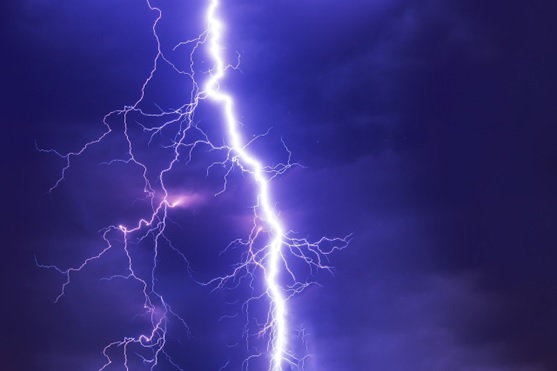
Ever caught yourself staring at the sky, mesmerized by lightning during a storm? This natural marvel is not only captivating but also perilous. Despite centuries of study, the intricacies of lightning strikes continue to be a field of active research. In this exploration, we delve into how lightning forms, its types, associated dangers, and the science of thunder, providing insights for both enthusiasts and the casually curious.

Formation of Lightning

Lightning originates from electric charges accumulating in the atmosphere. This process begins as the sun warms the Earth, causing air to rise, cool, and form clouds. Inside these clouds, the movement of water droplets and ice particles generates an electrical charge. A significant charge difference between parts of the cloud or between the cloud and the ground can ignite a spark—lightning. The intense heat from a lightning strike causes air to expand, creating thunder.

Types of Lightning

Lightning manifests in various forms, including:

Cloud-to-Ground Lightning: The most familiar type, where a bolt strikes from the cloud to the Earth.

Intra-Cloud and Cloud-to-Cloud Lightning: Occurring within or between clouds, respectively.

Ball Lightning: A rare phenomenon of a glowing orb appearing during storms, whose origin remains a mystery.

The Thunder Phenomenon

Thunder is the sound produced by the rapid expansion of air around a lightning bolt. Timing the gap between seeing lightning and hearing thunder can estimate the distance of the strike—every five seconds equals approximately one mile.

Dispelling Lightning Myths

Contrary to popular belief, lightning can strike the same place more than once, especially if it’s a tall structure. Also, while buildings offer better protection than being outdoors, they are not entirely safe from lightning strikes.

Staying Safe During Storms

To minimize risk during thunderstorms:

Stay indoors and unplug electronics.

Seek shelter in a vehicle or sturdy building if outside.

Keep away from tall objects like trees and poles.

Spread out if in a group to reduce the risk of multiple injuries.

Tracking and Protecting Against Lightning

Modern technology, including lightning detectors and mappers, helps track and analyze lightning activity. For protection, lightning rods and surge protectors can safeguard buildings and electronics from strike-induced damages.

Lightning and Climate Change

There’s growing evidence that climate change may increase lightning frequency by creating more thunderstorm conditions. However, further research is needed to understand this relationship fully.

In Conclusion

Lightning, a compelling display of nature’s might, offers much to learn and appreciate. Understanding its science not only enhances our wonder but can also guide us in safeguarding against its dangers. So next time a storm lights up the sky, remember the fascinating science behind each bolt.
Day_112 : The 1923 Great Kanto Earthquake and Disaster Prevention Day(Tentative)

September 1 is Disaster Prevention Day in Japan. This is because of the 1923 Great Kanto Earthquake. This quake caused over 105,000 casualties and had huge impacts on Japanese society. The Great Kanto Earthquake is the worst disaster in Japanese history. Here, some points are picked up. First, the quake directly attacks the capital city, Tokyo. Second, the disaster killed so many people mainly by fire, not objects falling. Third, rumors made the disaster worse. Fourth, Tokyo has recovered first and strongly.
With regard to the devastated areas, Tokyo and Kanagawa (Yokohama) populated areas were severely affected by the quake. The epicenter was located near Oshima Island in Sagami Bay, south of Tokyo. In Yokohama, 90 percent of all homes were damaged or destroyed. 60 percent of the city’s population became homeless (Brown University).
Concerning the fire, the time at which the earthquake hit was 11:58, so the families had prepared for their lunches. Many families’ cooking stoves were overturned by the quake, causing fires. The fire spread out with strong winds.
In respect of the rumors, the rumors, especially about Koreans, such as “Koreans do criminal activities and cause social confusion,” make the disaster more political. The Home Ministry declared martial law and ordered all sectional police chiefs to make maintenance of order and security top priorities. After the disaster, the radio became popular all over Japan. This is because of the disaster’s lessons.
Concerning the recovery, Shinpei Goto, Mayor of Tokyo, created and proceeded with a reconstruction plan for Tokyo to rebuild better. The basic infrastructure of today’s Tokyo was built during that time. 

*Death numbers were revised after the recent research from over 140,000 to 105,000 because there were several double countings.

Day_41: disaster vulnerabilities by regions

I just used 1980–2008 natural disaster data (ADRC 2009) and calculated the numbers of fatalities divided by the number of disasters to know the vulnerabilities. The regions mean Asia, the Americas, Africa, Europe, and Oceania.

The following is the order. Sorry, just order; however, we can learn something from the order.

The number of fatalities
1. Asia
2. Americas
3. Africa
4. Europe
5. Oceania

The number of fatalities divided by the numbers of disasters
1. Asia
2. Africa
3. Oceania
3. Americas
4. Europe

The above indicates the vulnerabilities of regions. For example, people in Africa tend to die easily by natural disasters; on the contrary, people in America tend not.

Day_53 : Disaster Information : Desinventar

Even though the countries are limited, UN Desinventar has really detailed disaster information. Let me share an example: Vietnam’s data.
Just click the target country (Vietnam), and you can see the different types of data, such as pie charts (disaster type), polygonal lines (trend), spatial (geographical distribution), and statistical (regional data).

The following are the screen shots:.

VietNam_pie VietNam_plot VietNam_spacial VietNam_stat


* UN Desinventar
http://www.desinventar.net/index_www.html

Day_193 : Plates and Earthquakes

Earthquakes are caused by the cracking of the plates of rock (bedrock) that lie beneath the earth. Over time, forces build up on these rock plates and eventually they break. The force produced at that time is felt as an earthquake. The main reason for the plates to break is the movement of several large plates that cover the earth. These plates cover the surface of the earth and come in various sizes and shapes. When these plates collide or pass each other, earthquakes are likely to occur.

The Pacific Rim Seismic Zone, which encircles the Pacific Ocean, and the Himalayan-Alpine Seismic Zone, which extends from Indonesia through the Himalayas to the Mediterranean Sea. Japan is in the Pacific Rim seismic zone, and earthquakes occur frequently because of the movement of multiple plates beneath the ground. Depending on how these plates move, large and small earthquakes occur. Large earthquakes are especially likely to occur near deep ocean bottoms (ocean trenches). As the plates move, forces build up on land, which can also cause earthquakes.