Day_126 : World Disaster Chronology-1989

The accuracy will be improved with citing some data sources.

Date Place Disaster Type Situations
1989.01 USSR, Central (Tajikistan Inland Earthquake M5.3, Over 270(DM)
1989.04.20 China Hail Damage Over 150(DM)
1989.04.26 Bangladesh Tornado The Daulatpur–Saturia Bangladesh tornado*.1300(D)The deadliest tornado disaster in history. 
1989.05- Viet Nam Tropical Storm, Flood Over 740(DM), Tropical Storm Cecil
1989.05- Bangladesh Cyclone, Flood Over 200(DM)
1989.06- China Sichuan Torrential Rains, Flood Over 1,300(DM)
1989.06- Sri Lanka Torrential Rains, Flood 300-500(DM) 
1989.07- India Cyclone, Flood Over 2,700(DM)
1989.07- China Torrential Rains, Flood Over 1,500(DM)
1989.07- Bangladesh Torrential Rains, Flood Over 200(DM)
1989.07- Viet Nam Typhoon, Flood Over 200(DM)
1989.08.01 Iran, West Inland Earthquake M5.8, 120(DM)
1989.09- China Typhoon, Flood Over 520(DM)
1989.10.17 US, West (Calfornia) Inland Earthquake Loma Prieta earthquake **(M7.1) 62(DM), Damage cost 7bill.US

DM: The number of dead and missing.

*The Daulatpur–Saturia, Bangladesh tornado occurred in the Manikganj District, Bangladesh on April 26, 1989. There is great uncertainty about the death toll, but estimates indicate that it killed around 1,300 people, which would make it the deadliest tornado in history. The disasters in Bangladesh indicate natural disaster is not natural.                        Can refer Day_117.

http://disasters.weblike.jp/disasters/archives/3224

**The 1989 Loma Prieta earthquake occurred in Northern California on October 17 at 5:04 p.m. local time. This earthquake happened in the northeast of Santa Cruz on a section of the San Andreas Fault.The death toll was relatively not high compared to the economic damage. This can be explained with developed countries, especially US disasters characteristics.  Can refer to The Day_119.

http://disasters.weblike.jp/disasters/archives/3248


Day_125 : Shingen(-Zutsumi) Embarkment (2)

Those who can rule the water can also rule the country. This proverb became a reality, especially during the Sengoku period (Warring States Period) in Japan.

https://disasterresearchnotes.site/archives/2837

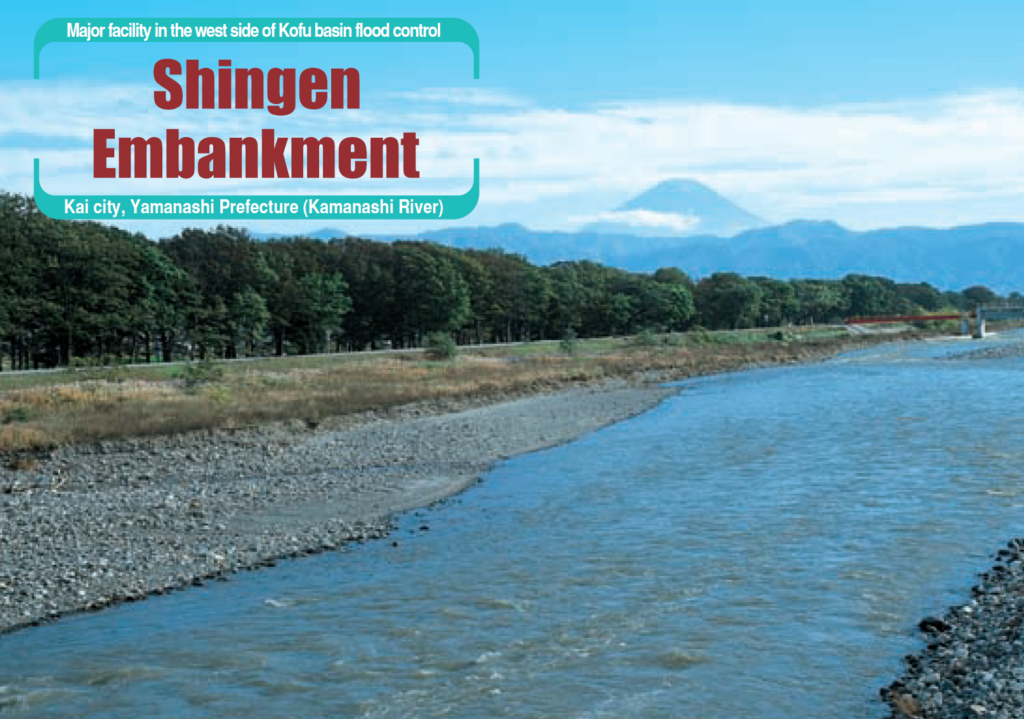
Shingen(-Zutsumi) embankment is a flood control system which was built over 400 years ago to protect the northern part of the Kofu Basin, the rich rice paddy areas of Kai Province. The name comes from the Daimyo (District Lord) Shingen Takeda. Shingen Takeda was one of the strongest Samurai Daimyo during the period. He controlled his soldiers well and so the floods.

shingenFigure: Shingen Embarkment**
In addition to Shingen-Zutsumi Embankment, there are also Bunroku-Zutsumi and Taiko-Zutsumi Embankments established by Shogun (Hideyoshi Toyotomi). The Circle Levee in Nobi Plain is also called that it was built during the time. However, there are still arguments that Samurai Daimyo could built such embankments or not because they required high technologies and a huge amount of human resources during the periods.

To be continued……

**Brochure (Information about Fuji river Flood Control)

Day_124 : Chain Reactions of Economic Damage- 2011 Chao Phraya River Flood in Thailand (3) Horizontal and Vertical Damage Exacerbations

Continue to explain the chain reactions of economic damage caused by Chao Phraya river flood. There were horizontal and vertical damage exacerbations types.

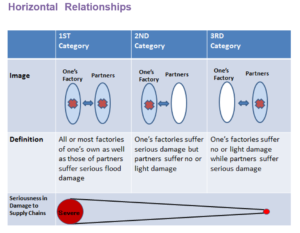
Concerning the horizontal damage exacerbations, we sometimes neglect indirect severe impacts caused by disasters. However, in this global world, economic activities are connected each other and so do the impacts. The following Figure 1 shows the three types of disaster exacerbations for example. The first category is “All or most factories of one’s own as well as those of partners suffer serious flood damage”. This category is the severest. The second category is “One’s factories suffer serious damage, but partners suffer no or light damage”. The third category is “One’s factories suffer no or light damage while partners suffer serious damage”. However, if the one’s factory totally relies on the partners which are affected by the disaster could have a very serious impact.

supply_holizontal
Figure 1  Damage types and severities (Horizontal)

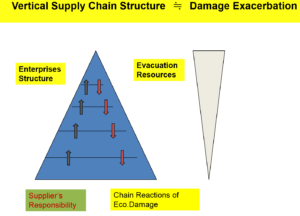
With respect to the vertical damage exacerbation, the key word is the suppliers’ responsibility. For example, a big major car company has the responsibility for customers to supply cars, subcontractors have the responsibility for the car company to supply the parts,  sub-subcontractors have the responsibility for the subcontractors to supply the parts of the parts, sub-sub-subcontractors have the responsibility for the sub-subcontractors to supply the parts of the parts of the parts, and so on. The numbers of the companies become larger along with this vertical pyramidal structure. However, their resources are opposite as mentioned in Figure 2. Industrial estates and parks ordered the evacuation for the companies very slowly at that time of the flood because of some reasons (The reasons will be explained). However, the big companies continued their activities until the time, so sub and sub-sub and sub-sub-sub contractors could not evacuate until the bigger (upstream) companies’ evacuation decision making because of the supplier’s responsibilities. The big companies could evacuate so fast and effectively. They have the resources to do so. However, smaller companies could not evacuate so fast because they needed to wait until the bigger company’s evacuation decision and they tended to have limited resources along with the structure. They, for instance, could not move heavy machines to the upper floors. They did not have enough employees, systems, or plans to do so.

supply_vertical
Figure 2  Damage types and severities (Vertical)

These are the outlines of the disaster damage exacerbation of the supply chains.  These are presented at several meetings in Japan.

Day_122 : Japanese Disaster History after the Second World War (2)

Japanese disaster history has three turning points. The first is the Typhoon Isewan (Vera) in 1959. The second is the Kobe earthquake disaster in 1995, the third is the Great East Japan Earthquake and Tsunami (GEJET) disaster in 2011(Day_33).

https://disasterresearchnotes.site/archives/2439

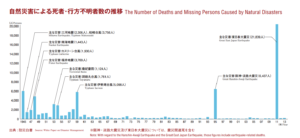
You can see the following figure 1 which displays the dead and missing numbers caused by natural disasters in Japan.

deathtollafterww2
Figure 1 The dead and missing numbers caused by natural disasters in Japan

After the second world war, Japan was vulnerable, so we had a lot of natural disasters, especially Typhoon disasters from 1945 to 1959. We call this 15 years a great flood and storm era. The first hit was Typhoon Makurazaki on Sep. 1945.The typhoon disrupted Hiroshima city. There were 1229 casualties in the city. This fact reminds us what happened in Hiroshima in the same year (Day_34(Re)).

https://disasterresearchnotes.site/archives/2866

The Isewan Typhoon has the following aspects: 1) Physical damages were tremendous 2) Lack of consideration of disaster prevention 3) Inadequate flood defense system 4) Inadequate warning and evacuation system ( The details will be explained later) After the Typhoon Isewan, disaster countermeasures basic act was enacted in 1961. The act combined many disasters related laws into one. After the Isewan Typhoon, we Japanese had thought we were successfully mitigating natural disasters.  You can see the dead and missing numbers were dropped right after the Isewan Typhoon by Figure 1.  This is mainly because of infrastructures and the development of science and technologies such as warning systems along with Japanese rapid economic growth. In addition, we had, fortunately, no huge natural hazards until the Kobe earthquake in 1995.

After the period of1960-1994, we have faced the Kobe Earthquake in 1995. Then, we realized that we could not prevent natural disasters, however, we could mitigate natural disasters after the earthquake. We also learned the importance of soft countermeasures as well as hard countermeasures. The Japanese Government had changed the policies again. The Kobe earthquake facilitated volunteer activities. Many social scientists started to investigate disasters. Before the disaster, natural scientists and engineers are the main players to do disaster-related research along with Japanese infrastructure centered policies. After that, we had confidence again and we thought we could be a model for other countries. The World Conference on Disaster Reduction was held in Kobe in 2005. Kobe city tried to be a center of world disaster-related organizations. (This Kobe earthquake disaster will be explained later)

However, we faced the Great East Japan Earthquake and Tsunami (GEJET) disaster in 2011. The GEJET disaster became the worst ever disaster in Japan after the second world war. The GEJET broke the Japanese confidence again and reconsider our strategies.

To be continued

*Disaster countermeasures basic act:
http://www.preventionweb.net/english/policies/v.php?id=30940&cid=87

sponsored link

Day_121 : Chain Reactions of Economic Damage- 2011 Chao Phraya River Flood in Thailand (2)

Continue the last topic.

http://disasters.weblike.jp/disasters/archives/3257

There were three inquiries to ponder as follows:
1) Why were so many foreign companies coming and making supply chains?
2) What kinds of damage types could be analyzed and how about the influences?
3) How did companies respond?

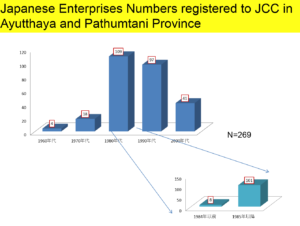
Concerning the 1) Why were so many foreign companies, especially Japanese companies coming and making supply chains? There are reasons from Thailand and Japan sides. The first, Thai national government tried to de-centralize to narrow the gaps between Bangkok and other regions because so many things concentrated in Bangkok. To do this, establishing industrial estates and parks is the one of the effective ways to mobilize the people, things, and investments from Bangkok to the regions. The national government also had set some tax incentives to motivate foreign companies to come. Thailand is the very nice place for Japanese to stay because of the education systems, medical services, abundant labor force, people’s character, safety, and so on. The second, Japan had faced the problems of the rising yen after the Plaza agreement in 1985. Big companies, especially manufacturers, which had international businesses decided to move to Thailand to produce their products. After the bankruptcy of Lehman Brothers in 2008, the world economic climate became worse and the yen’s price was getting higher and higher again. Small companies, this time, could not endure the situations and moved to Thailand to deal with the big companies which already transferred in Thailand. Again, the attached graph (Figure 4) indicates so many Japanese companies came these areas after 1985, the year of the Plaza Agreement.  A number of  the JCC (The Japanese Chamber of Commerce) BKK member reflects the situations.

japanese-companies
Figure 4  Japanese enterprises coming to Thailand

To be continued…………..

Day_120 : Chain Reactions of Economic Damage- 2011 Chao Phraya River Flood in Thailand (1)

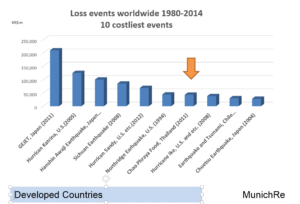
2011 Chao Praya river flood gives us a lot of lessons. The disaster is the 7th costliest disaster worldwide since 1980 to 2014 (Figure 1).

deadliest
Figure 1  10 Costliest events

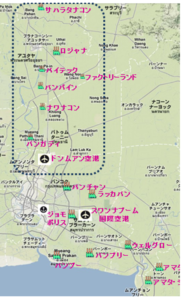
From economic damage points of views, the below is the industrial estates and parks which were affected. 7 estates and parks were inundated. 804 companies were affected and among those, 449 were Japanese related companies in these estates and parks(Figure 2).

pic_industrial-estates-and-parks
Figure 2 7 Inundated industrial estates and parks

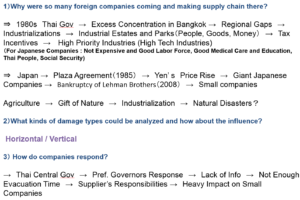
Can show you a brief outlines of the chain reactions of economic damage caused by 2011 Chao Phraya river flood. There are three main inquiries to ponder (Figure 3) : 1) Why were so many foreign companies coming and making supply chain? 2) What kinds of damage types could be analyzed and how about the influence? 3) How did companies respond?

3questions
Figure 3  3 Research Questions (rough skech)

These will be explained later. The attached graph (Figure 4) indicates so many Japanese companies came these areas after 1985, the year of the Plaza Agreement.

japanese-companies
Figure 4  Japanese enterprises coming to Thailand

Horizontal and vertical damage exacerbations types can be shown in the following figures.

supply_holizontal
Figure 5  Damage types and severities (Horizontal)

supply_vertical
Figure 5  Damage types and severities (Vertical)

To be continued…………..

Day_119 : Disaster Trends and Incomes

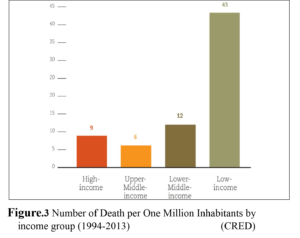
Asia is the most vulnerable in terms of natural disasters, for example, 7 of 10 of the deadliest natural disasters (1980-2014) took place in this region. The damage trend from natural disasters is from human sufferings to economic damage along with countries’ developing process. This trend is also the same with world views, developing countries to developed ones.

The following figure indicates low-income countries tend to produce a huge number of casualties.

income

The past posts assists the above explanation.
Concerning the trends:

http://disasters.weblike.jp/disasters/archives/2490

Regional characteristics:

http://disasters.weblike.jp/disasters/archives/2785

Day_118 : World Disaster Chronology-1982-1988


Date Place Disaster Type Situations
1982.01- US and Europe Cold Wave Over 350(DM)
1982.01- Columbia Heavy Rain, Flood 90(DM)
1982.01- Peru Heavy Rain, Flood Over 3,000(DM)
1982.03- Philippines Typhoon Over 90(DM)
1982.03- Mexico, South Volcano  Mt. El Chichon Volcano Eruption, Over 150(DM)
1982.04- Peru Heavy Rain, Flood Over 200(DM)
1982.05- China Heavy Rain, Flood Over 430(DM)
1982 Nicaragua and others Heavy Rain, Flood 180(DM)
1982.06- Indonesia, WestSmatra Heavy Rain, Flood Over200(DM)
1982.06- India, Southeastern Heavy Rain, Flood 200-1,000(DM) Orissa
1982.07- Japan, Kyusyu Heavy Rain, Flood 1982 Nagasaki Heavy Rain Disaster,345(DM), Injured 660, Destroyed approx.850, Inundation over 52,000
1982.08- South Korea Typhoon, Flood Over 60(DM)
1982.08- Japan, Central Typhoon, Flood 95(DM), Injured170, Destroyed approx.5,300, Inundation over 113,000
1982.09- Japan, Central Typhoon, Flood 38(DM),Injured 170, Destroyed approx.600, Inundation over136,000
1982 Guatemala and others Heavy Rain, Flood Over 1,500(DM)
1982.10.06 Liberia  Landslide Over 200(DM)
1982.11- India Typhoon, Flood Over 270(DM)
1982.12.13 Yemen Inland Earthquake 1982 North Yemen earthquake, M5.8, 2,800-5,000(DM)
1983 Turkey, East Inland Earthquake Over 1,000(DM)
1983.02- Australia, Southeastern Forest Fire 75(DM)
1983.05.26- Japan, Northeastern Submarine Earthquake 1983 Sea of Japan Earthquake*,M7.7 104(DM), Injured160, Half Destroyed or more, over3,000
1983.07- Japan, Central Heavy Rain, Flood 1983 Heavy Rain,117(DM), Injured 160, Destroyed approx. 3,600, Inundation over 17,000, Damaged over 1.3mil yen
1983.09- Japan, Central Typhoon 44(DM), Injured 120, Destroyed approx. 600, Inundation over 56,000
1983.12- Japan Heavy Snow 96(DM), Destroyed approx. 900
1984.03.28 US Tornado The 1984 Carolinas tornado outbreak, 57(D)
1984.06.09 USSR Tornado The 1984 Soviet Union tornado outbreak. Over 400(D)
1985.03.03 Chile, Central Submarine Earthquake M7.8-7.9, 180(DM)
1985.08.23 China, Xinjiang autonomous region Inland Earthquake M7.3, Over 80(DM)
1985.09.19 Mexico, Southwestern sea (Mexico city) Submarine Earthquake 1985 Mexico city earthquake, M8.1,9,500-35,000(DM)
1986.08- Japan, Kyusyu and others Typhoon, Flood 21(DM), Injured100, Destroyed approx.2,600, Inundation over 105,000
1986 El Salvador Inland Earthquake 1986 San Salvador earthquake M5.5-5.8, Over1,000(DM)
1986.10.20 Kermadec Islands Submarine Earthquake M7.7-8.2
1987.03.06 Ecuador, South Inland Earthquake Ecuador Earthquake (M6.7-7.1) 1,000~5,000 (DM)
1987.10- Japan, West Typhoon, Flood 9(DM), Destroyed approx.200, Inundation over 24,000
1987.12.17 Japan, East Submarine Earthquake Chiba Ken Toho Oki Earthquake,M6.7,2(D), Injured 160
1988.02- Mozambique Cyclone, Flood Cyclone Filao, approx.100(D)
1988.07- Japan, Kyusyu and others Heavy Rain, Flood 27 (DM), Injured 60, Destroyed approx.600, Inuncation over 10,000
1988.08.21 Nepal   1988 Nepal earthquake M6.9,  killing at least 709 persons and injuring thousands.
1988.11- Bangladesh Cyclone, Flood 6240(D) One of the worst tropical cyclones in Bangladeshi history. 
1988.09- Mexico, and others Hurricane Hurricane Gilbert, 318(D)
1988.10- Caribbean and Central America Hurricane Hurricane Joan–Miriam, 216-334(D)
1988.10- Guam, Marianas Islands, Philippines, China Typhoon Typhoon Ruby, Over 300(D)
1988.11.06 China and Myanmar Inland Earthquake M7.0-7.3, Over 700(DM)
1988.11.28 US, North Carolina and  Virginia  Tornado 1988 Raleigh tornado outbreak, 4(D),Injured 154
1988.12.07 USSR, South (Armenia) Inland Earthquake 1988 Armenian earthquake,M6.7-6.9, 25,000-45,000(DM)
Economic damage is 140 million dollar , worst earthquake disaster in USSR history

D: The number of Death M: Missing number DM: The dead and missing number

1983 Sea of Japan Earthquake*

https://disasterresearchnotes.site/archives/2722

Day_117 : Bangladesh-Disasters, Lands, and Statistics (2)

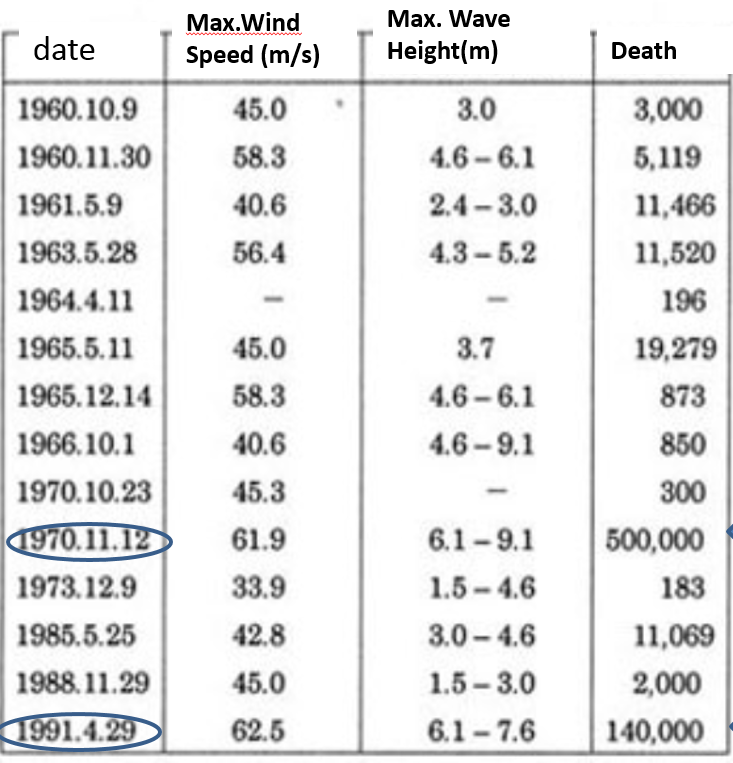
Bangladesh has had a lot of cyclone disasters in the history. Table 1 indicates
the past cyclone disasters. Especially, we can see the 1970 and 1991’s cyclone
disasters are severe and caused many casualties. The bellows are some reviews
of Day_110 contents.

Table 1 Cyclone disasters in Bangladesh

banglacyclonehistory.

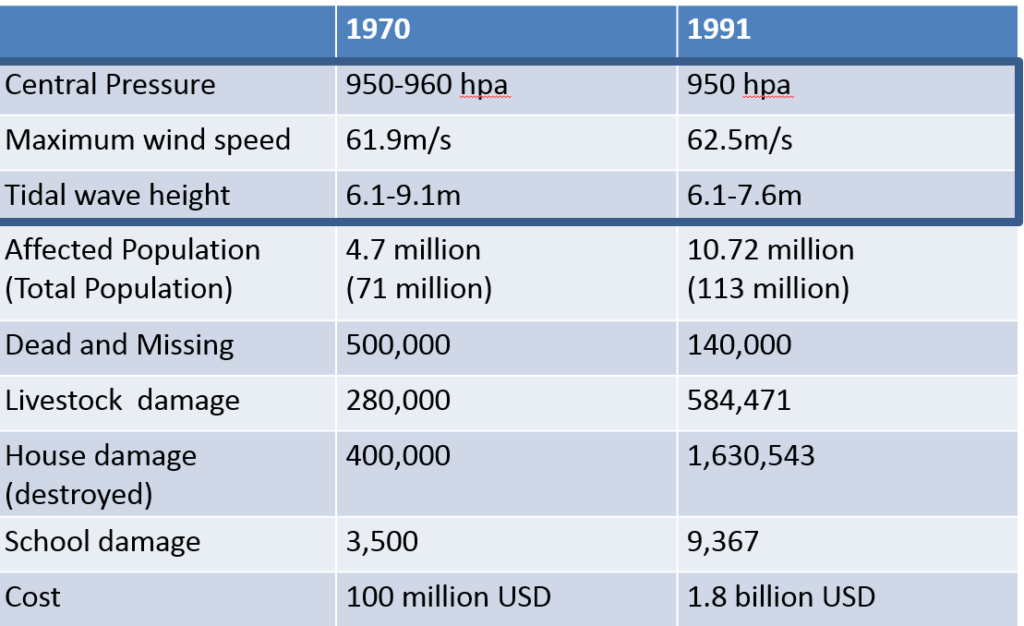
Table 2 picked up two disasters. We can compare the two. What can we say about this? Affected population was tremendously increased from 1970 to 1991. On the contrary,
the dead and missing number was decreasing. How about 1991’s cyclone disaster?

Table 2  1970 and 1991’s cyclone disasters*
banglacyclone19701991

Please check the dead and missing number and livestock damage.
You may have a strange feeling. The dead and missing number is
so rough.  However, livestock damage number is so precise. This
could reflect the cultural and social backgrounds.

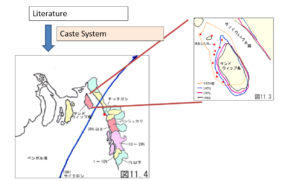
banglasand
Figure 1 Sandwip Island History

We can consider a caste system somehow to understand the number.
The Brahmaputra river from the east and the Ganges river from the west bring a lot of sand to make lands in the Bay of Bengal. The people had a low status tended to live there actually.
They are easily influenced by the cyclones. In other words, they tended to die by the events.
Figure 1 shows the land, such as a Sandwip island was changing its shape by cyclones.

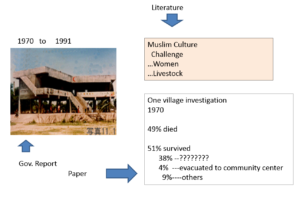
banglashelter
Figure 2   1970 and 1991 cyclones

Figure 2 indicates the shelter which was built after the 1970’s cyclone (with JICA’s  scheme)
saved a lot of people’s lives. However, there were some cultural issues. For example, the shelter’s number was limited, so it was crowded in the shelter.  This situation made females difficult to evacuate to the shelter. They tended to avoid to stay with males in the crowded situation. The livestocks are treated as their important assets. This also reflects their culture.

The one of the research findings after the 1970’s cyclone show the  38% of the survivors were survived by climbing trees (Figure 3).

evacuationsbangla
Figure 3 A shelter and a people climbing the tree

* The sources(Figures) will be added later.

Day_116 : World Disaster Chronology-1981

Date Place Disaster Type Situations
1981.01- Philippines (Mindanao) Heavy Rain, Flood 200 (DM)
1981.01.19 Indonesia, East (Irian Jaya) Inland Earthquake M6.8, 1,4002,000 (DM)
1981.01- South Africa Heavy Rain, Flood 200 (DM)
1981 India, North Cold Wave 270 (DM)
1981 China, Central Inland Earthquake M unknown, 100 (DM)
1981 Pakistan Inland Earthquake M unknown, 210 (DM)
1981.04.17 India, East Tornado Over 120 (DM)
1981.05.14 Indonesia, SouthJava Volcano 325 (DM)
1981.06- India Cyclone, Flood 500-3,000 (DM)
1981.06.11 Iran, East Inland Earthquake 1981 Golbaf Earthquake*, M6.73,000 (DM)Kerman Province
1981.07.01 Philippines Mudslide 120(DM)
1981.07.12 Sichuan Province** Heavy Rain, Flood (unknown), 1,600 (DM)
1981.07- India/Nepal Heavy Rain, Flood Over 100 (DM)
1981.07.28 Iran, East Inland Earthquake 1981 Sirch earthquake* M7.2, Kerman Province, 1,500-8,000(DM)
1981.08- China, North Heavy Rain, Flood Over 800 (DM), Yellow river
1981.08- Colombia Heavy Rain, Flood 150 (DM)
1981.08- Japan Typhoon, Flood 43 (DM),Injured 170, Destroyed approx.4,400, Inundation over31,000
1981.09- Nepal Heavy Rain, Flood Over 500 (DM)
1981.10.09 Philippines Mindanao Landslide Over 200 (DM)
1981.10- Sichuan Landslide 240 (DM)
1981.11- Philippines Typhoon, Flood 270 (DM)
1981.12- India, North Cold Wave Over 130 (DM)

D : The number of death     DM : Dead and missing number

* Kerman province in Iran has two huge earthquake disasters in this year, the 1981 Golbaf earthquake and the 1981 Sirch earthquake. The 2003 Bam earthquake also hit this province and the Bam earthquake disaster was the worst  earthquake disaster which caused over 26000 casualties in Iran.

** Sichuan Province in China also experienced the 2008 Situan earthquake disaster which made approx.69000 fatalities.