Category Archives: Disaster Reponse

Day_151 : Disaster Information 5

I had a query on historical earthquake information in Japan. Therefore, I update the new useful disaster information especially historical data in Japan.

The following is the archive of disasters (can select disaster type, year, and area) all over Japan but only in Japanese.
The archive was created to collect all local government data in Japan.
The best book to know the historical earthquake disaster record is the following book. This is also only in Japanese.


The followings are the same as the disaster information 4.

Flood list: an excellent source of flood disasters
floodlist.com/tag/thailand
AHA center- adinet: disasters in ASEAN countries can be browsed and also checked in detail.

DRH-Asia: cases on local knowledge and their applications related to the technologies in Asian countries can be found.
http://drh.bosai.go.jp/
The post of the disaster information 3 is the followings:
https://disasterresearchnotes.site/archives/3171
——

Introduced you to the following disaster information.
1) General info. 2) Database 3) Update info

1) General info is the first website to check.
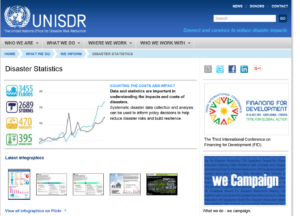
1. UNISDR

unisdr

2) Database is the base to analyze the target disasters.
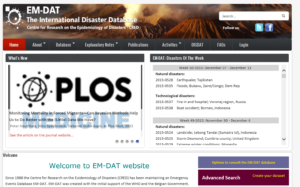
1. EM-DAT

emdat

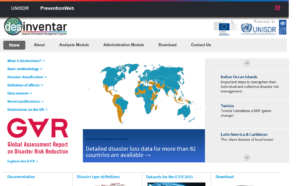
2. Desinventar

disinventar

The disinventar is very accurate and detailed, however, the listed
countries are limited.

3) Update info. Is the website, we can check on a daily basis.
These are also useful to overview of the recent disasters.
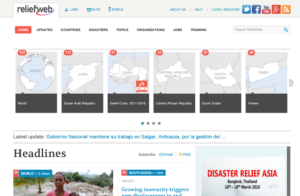
1. ReliefWeb

reliefweb

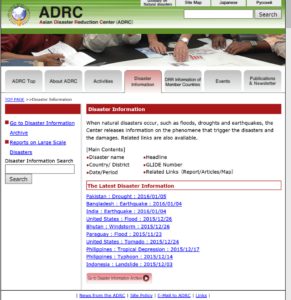
2. ADRC

adrc

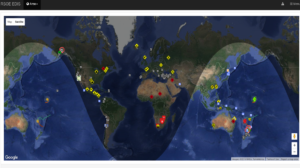
3. ROSE

ROSE

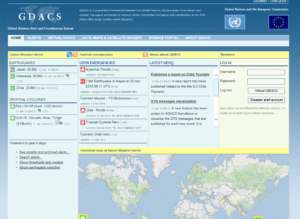
4. GDACS

GDACS

Concerning, data on demographic, socioeconomic, and others, we should
clarify the levels from national to local.

County Level
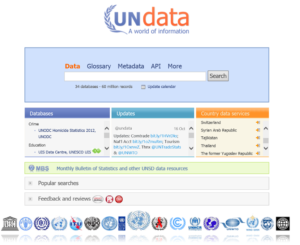
1. UN data

undata

2. World Bank open data

world bank data

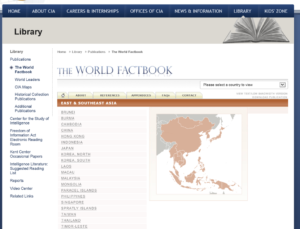
3. CIA world factbook

world fact book

Provincial (States) Level
1. Government Office (National Statistics Office,etc.)

Community Level
1. Local Government Office
When we investigate the disasters, we first go to the ADRC (if the country is Asia) and Relief Web to see some significant numbers such as the death toll and affected numbers. Then, check the disaster history of the target areas by EM-DAT and Desinventar (if the country is listed). We also overview the county’s background by CIA world fact book and check some socio-economic data by UN or World bank open data. In addition, the local government or community data of the target area are significant to be accessed. These are the primary action to grasp the whole picture of the disaster.

Day_149: Flood Disaster Preparedness Indices (FDPI)

ICHARM (International Centre for Water Hazard and Risk Management) allowed me to engage in the project on the development of Flood Disaster Preparedness Indices (FDPI). This project is also linked to one of the projects of the Typhoon Committee (World Meteorological Organization/United Nations ESCAP).

You can see the outline of the project on the following website:.

http://www.apan-gan.net/adaptation-technologies/database/flood-disaster-preparedness-indices-fdpi

The established site is the self-evaluation system for local disaster managers around the world, especially in developing countries. Therefore, we have prepared the multi-language (16 languages) versions. You can evaluate your community’s preparedness ability by yourself, and experience can also be shared depending on your situation.  You can easily see your results on the website. The results are automatically sent to the administrator to check on the situation. If the administrator understands the severity, he or she can communicate with the international aid agencies.

http://www.fdpi.jp/fdpi/

To be continued…

Day_148: The World Largest Disaster Links

Below is the disaster links site, which was created a long time ago. I will renew this site step-by-step. In addition, some are still only in Japanese, and original disaster-related pictures are omitted, so I will also consider these.

http://disasters.weblike.jp/linklibrary.html

The below disaster-related world organization’s link site is the one that was built when I was working at NIED DIL and is still working as one of the products there. I am very happy to know that, but I would also like to renew this to contribute to the institute with my gratitude in the near future, I hope.

https://dil.bosai.go.jp/link/world/english/index.html

Day_146 (Rev): A Text Mining : Trends of disaster research on aging

Have just conducted a text mining as follows:

Overviews of the Literature concerning elderly and disasters by text mining.
<Method>
1. Search the keywords in Web of Science (Core Collection)
2. Selected Information (Titles and Abstracts) was gathered into one text file.
3.1st contents analysis has been carried out and omitted the unnecessary words.
4. Cleaning process
5. 2nd contents analysis has been carried out. >>This process was repeated
6. Research findings are examined.
7. Examine the extracted words and phrases by reaching to the original abstracts and original papers.

*To do the text mining, KH Corder was used.

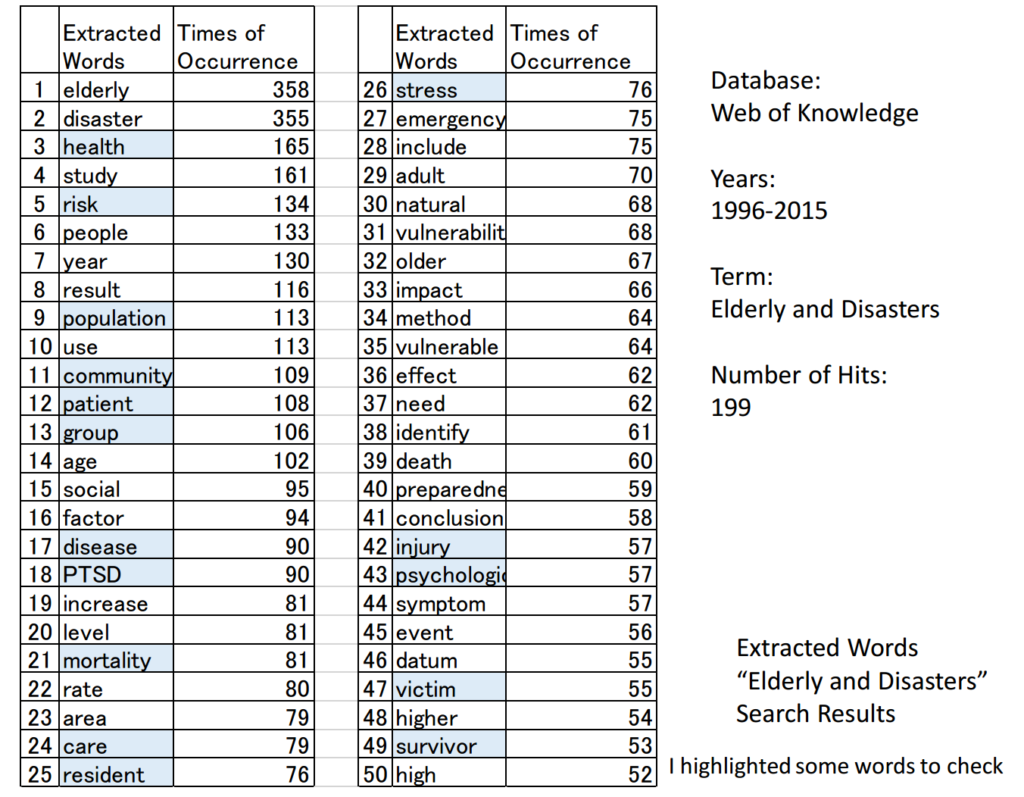
Table 1 Keywords

Keywords_elderly

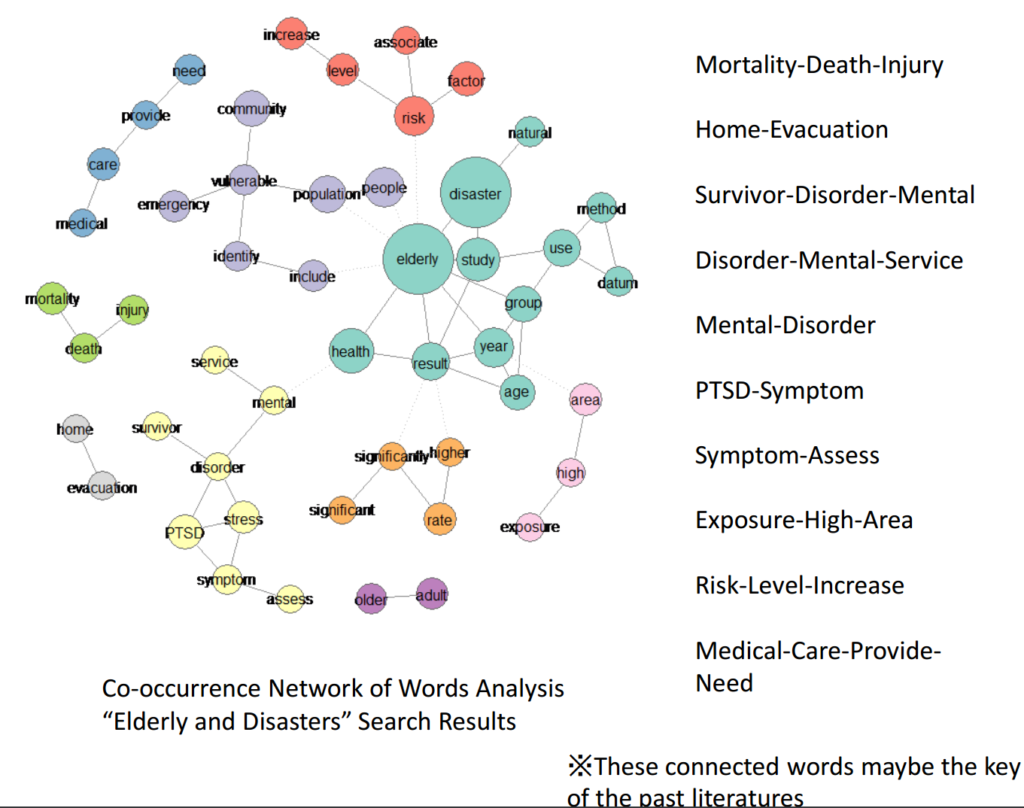
Co-occurrence network_elderly
Figure 1 A co-occurrence network analysis

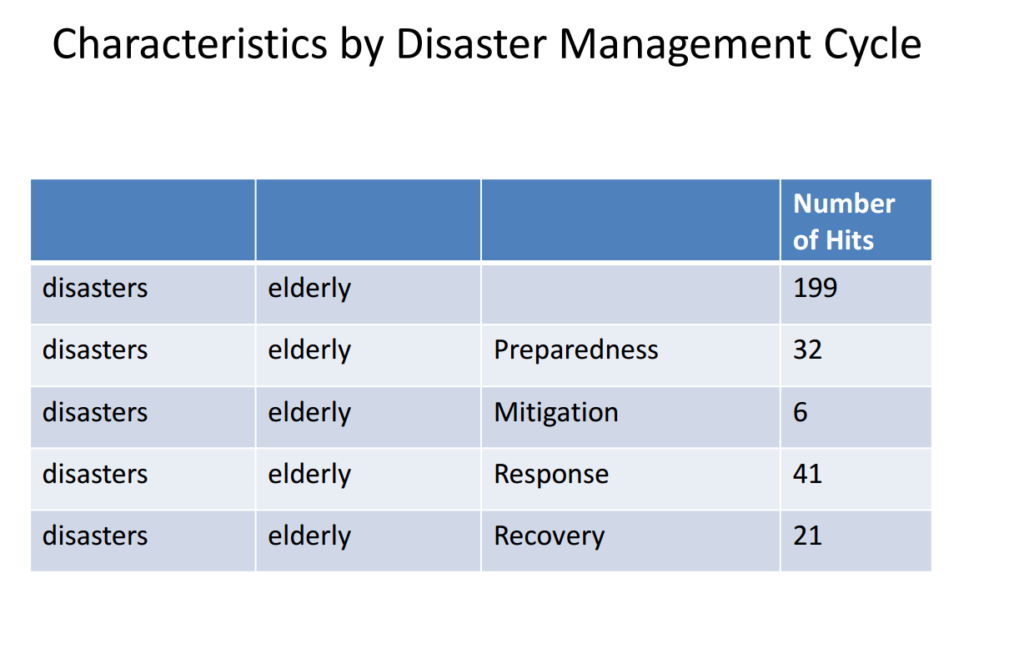
Table 2  The hit numbers with disaster management cycles’ stages

disaster management cycle elderly

Table 2 indicates that elderly issues on disasters are more discussed in relation to “response” and “preparedness” than “recovery” and “mitigation” in the disaster management cycles’ stage.

correspond analysis elderly
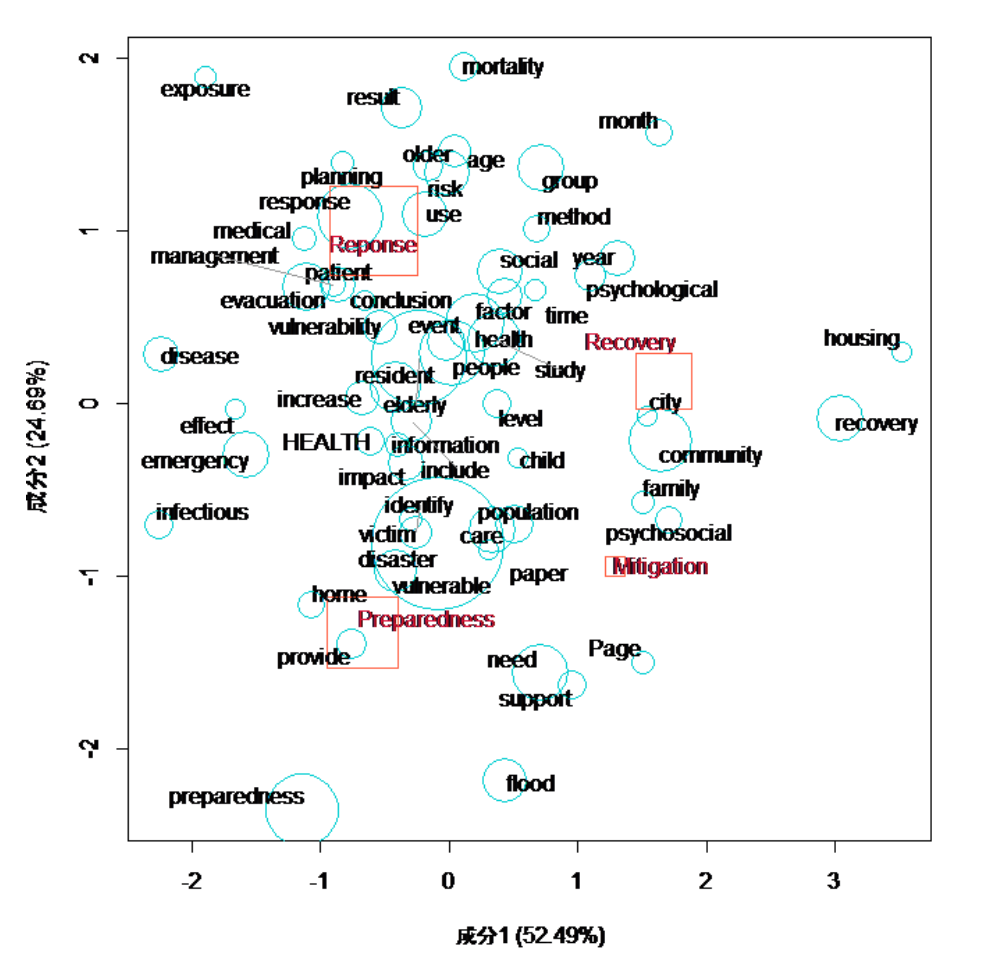
Figure2 Correspond analysis (The related words with disaster management cycles’ stages)

For example, Figure 2 suggests the close relationship between response and related words such as planning, management, medical, evacuation, vulnerability, and patient. This suggests the elderly’s difficulties for evacuation because of their physical conditions.

**This article is a revised version of Day_26(rev)

Reference:

Collection and Analysis of Overseas Disaster Evacuation Related Papers and Documents(in Japanese)

Day_144 : Disaster Information 4


The update of some useful disaster information websites are as follows:

Flood list: an excellent source of flood disasters

floodlist.com/tag/thailand

AHA center- adinet: disasters in ASEAN countries can be browsed and also checked in detail.


DRH-Asia: cases on local knowledge and their applications related to the technologies in Asian countries can be found.

http://drh.bosai.go.jp/

The post of the disaster information 3 is the followings:

https://disasterresearchnotes.site/archives/3171

——

Introduced you the following disaster information.
1) General info. 2) Database 3) Update info

1) General info is the first website to check.
1. UNISDR

unisdr

2) Database is the base to analyze the target disasters.
1. EM-DAT

emdat

2. Desinventar

disinventar

The disinventar is very accurate and detailed, however, the listed
countries are limited.

3) Update info. Is the website, we can check on a daily basis.
These are also useful to overview of the recent disasters.
1. ReliefWeb

reliefweb

2. ADRC

adrc

3. ROSE

ROSE

4. GDACS

GDACS

Concerning, data on demographic, socioeconomic, and others, we should
clarify the levels from national to local.

County Level
1. UN data

undata

2. World Bank open data

world bank data

3. CIA world factbook

world fact book

Provincial (States) Level
1. Government Office (National Statistics Office,etc.)

Community Level
1. Local Government Office
When we investigate the disasters, we firstly go to the ADRC (if the country is Asia) and Relief Web to see some significant numbers such as the death toll and affected numbers. Then, check the disaster history of the target areas by EM-DAT and Desinventar (if the country is listed). We also overview the county’s background by CIA world fact book and check some socio-economic data by UN or World bank open data. In addition, the local government or community data of the target area are significant to be accessed. These are the primary action to grasp the whole picture of the disaster.

Day_133 : Science, Technology, Population, and Lessons for DRR

Japanese people have tended to trust the government and science & technology so much.
These are one of what we learned from recent disasters. After the second world war, Japanese gov. has built high sea walls along the coastline especially potential risk areas all over Japan. We have also developed warning systems along with rapid economic growth. Not only those, but we have also developed soft countermeasures such as disaster education and training, especially after the 1995 Kobe Earthquake. After the Great East Japan Earthquake and Tsunami (GEJET) disaster, we have realized what has happened because of our over trust to the government and science&technology. This is why Japanese gov. has particularly focused on the community since the disaster, establishing a new frame on the community disaster planning in the disaster countermeasure basic act. The recovery plans on the affected coastal communities tended to change more integrated manners and so did disaster countermeasures than before, looks like turning back to the time when we did not have advanced science and technologies.

We need to know the limitations of the gov. and science&technology’s roles. We also can consider the demographic change to do the job for disaster risk reductions. For example, Japan is facing a severe aging society, so our government resources will be decreasing to cover the situations. We need to have more self-help and mutual help than public help.

Learning from the lessons and past wisdom with those considerations is also very important. “Inamura no Hi” is one of the important lessons we can learn from the past.

http://disasterresearchnotes.site/archives/2720

“Inamura no Hi” is a story of a man who noticed a precursor of a large tsunami at the earliest stage and led village inhabitants to a higher ground by burning harvested rice sheaves. This story was based on a true story at the time of Ansei-Nankai Tsunami (1854), which claimed around 3,000 lives in the coastal areas of Western Japan (ADRC).

Hirokawa Town’s video well explains the background of the story in short and their tsunami disaster education.


Day_132_Area BCM (1)

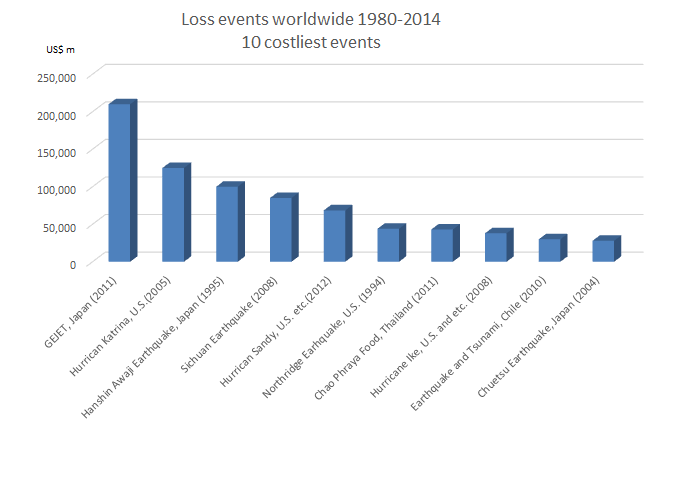
In 2011, Great East Japan Earthquake and Tsunami (GEJET) disaster and the Chao Phraya River flood disaster made huge economic damages. They are in the top 10 costliest natural disasters (The very top and the 7th) in the world as you can see the following table.

top10costliest_natdisasters

Source: NatCatSERVICE/Munich RE 2016

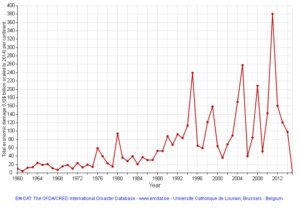
From the historical point of views, the disaster trends from human sufferings to economic damages. The following figure shows the economic damage tendency is increasing with time and we can see the year of 2011 was an outstanding.

disaster-trends-cost

Source: EM-DAT

Especially, the globalization of the economic activities reflect these damages.In the event of large-scale disaster, a business sector is limited in its abilities to cope with disaster without the cooperative approach taken by the stakeholders of the public and private sectors in those areas.

With this situation, the concept of the Area Business Continuity Management (Area BCM) was revealed. This is a cooperative approach by those who wish to improve capacity for continuity and/or early recovery of business in their area in the event of disasters that affect the entire area(AHA CENTRE et al., 2015).

[Reference]
AHA CENTRE, JICA, et al., (2015) Planning Guide for Area Business Continuity: Area BCM Toolkits Version 2

sponsored link

Day_69(rev) : Disaster Information 3

Introduced you the following disaster information.
1) General info. 2) Database 3) Update info

1) General info is the first website to check.
1. UNISDR

unisdr

2) Database is the base to analyze the target disasters.
1. EM-DAT

emdat

2. Desinventar

disinventar

The disinventar is very accurate and detailed, however, the listed
countries are limited.

3) Update info. Is the website, we can check on a daily basis.
These are also useful to overview of the recent disasters.
1. ReliefWeb

reliefweb

2. ADRC

adrc

3. ROSE

ROSE

4. GDACS

GDACS

Concerning, data on demographic, socioeconomic, and others, we should
clarify the levels from national to local.

sponsored link

County Level
1. UN data

undata

2. World Bank open data

world bank data

3. CIA world factbook

world fact book

Provincial (States) Level
1. Government Office (National Statistics Office,etc.)

Community Level
1. Local Government Office
When we investigate the disasters, we firstly go to the ADRC (if the country is Asia) and Relief Web to see some significant numbers such as the death toll and affected numbers. Then, check the disaster history of the target areas by EM-DAT and Desinventar (if the country is listed). We also overview the county’s background by CIA world fact book and check some socio-economic data by UN or World bank open data. In addition, the local government or community data of the target area are significant to be accessed. These are the primary action to grasp the whole picture of the disaster.