Category Archives: Asia

Day_120 : Chain Reactions of Economic Damage- 2011 Chao Phraya River Flood in Thailand (1)

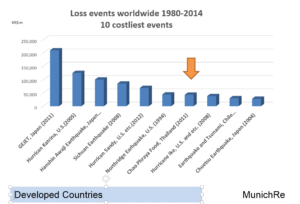
2011 Chao Praya river flood gives us a lot of lessons. The disaster is the 7th costliest disaster worldwide since 1980 to 2014 (Figure 1).

deadliest
Figure 1  10 Costliest events

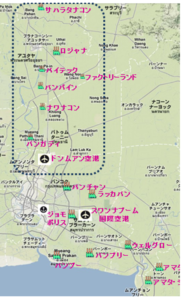
From economic damage points of views, the below is the industrial estates and parks which were affected. 7 estates and parks were inundated. 804 companies were affected and among those, 449 were Japanese related companies in these estates and parks(Figure 2).

pic_industrial-estates-and-parks
Figure 2 7 Inundated industrial estates and parks

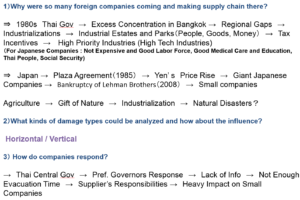
Can show you a brief outlines of the chain reactions of economic damage caused by 2011 Chao Phraya river flood. There are three main inquiries to ponder (Figure 3) : 1) Why were so many foreign companies coming and making supply chain? 2) What kinds of damage types could be analyzed and how about the influence? 3) How did companies respond?

3questions
Figure 3  3 Research Questions (rough skech)

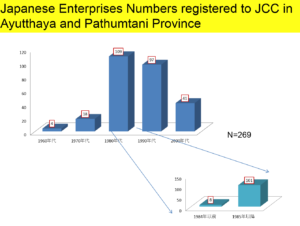
These will be explained later. The attached graph (Figure 4) indicates so many Japanese companies came these areas after 1985, the year of the Plaza Agreement.

japanese-companies
Figure 4  Japanese enterprises coming to Thailand

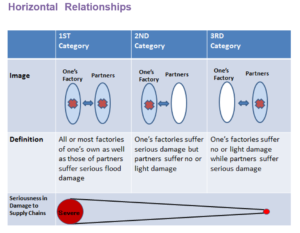
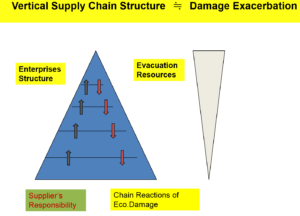
Horizontal and vertical damage exacerbations types can be shown in the following figures.

supply_holizontal
Figure 5  Damage types and severities (Horizontal)

supply_vertical
Figure 5  Damage types and severities (Vertical)

To be continued…………..

Day_119 : Disaster Trends and Incomes

Asia is the most vulnerable in terms of natural disasters, for example, 7 of 10 of the deadliest natural disasters (1980-2014) took place in this region. The damage trend from natural disasters is from human sufferings to economic damage along with countries’ developing process. This trend is also the same with world views, developing countries to developed ones.

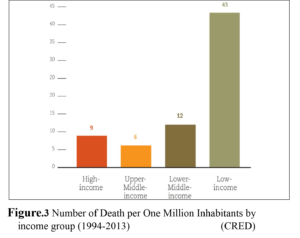
The following figure indicates low-income countries tend to produce a huge number of casualties.

income

The past posts assists the above explanation.
Concerning the trends:

http://disasters.weblike.jp/disasters/archives/2490

Regional characteristics:

http://disasters.weblike.jp/disasters/archives/2785

Day_117 : Bangladesh-Disasters, Lands, and Statistics (2)

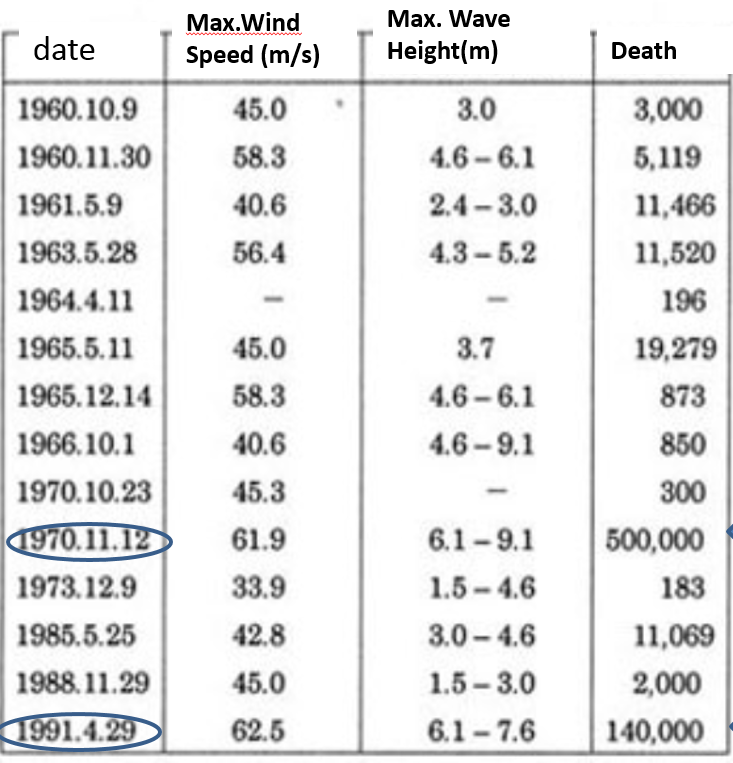
Bangladesh has had a lot of cyclone disasters in the history. Table 1 indicates
the past cyclone disasters. Especially, we can see the 1970 and 1991’s cyclone
disasters are severe and caused many casualties. The bellows are some reviews
of Day_110 contents.

Table 1 Cyclone disasters in Bangladesh

banglacyclonehistory.

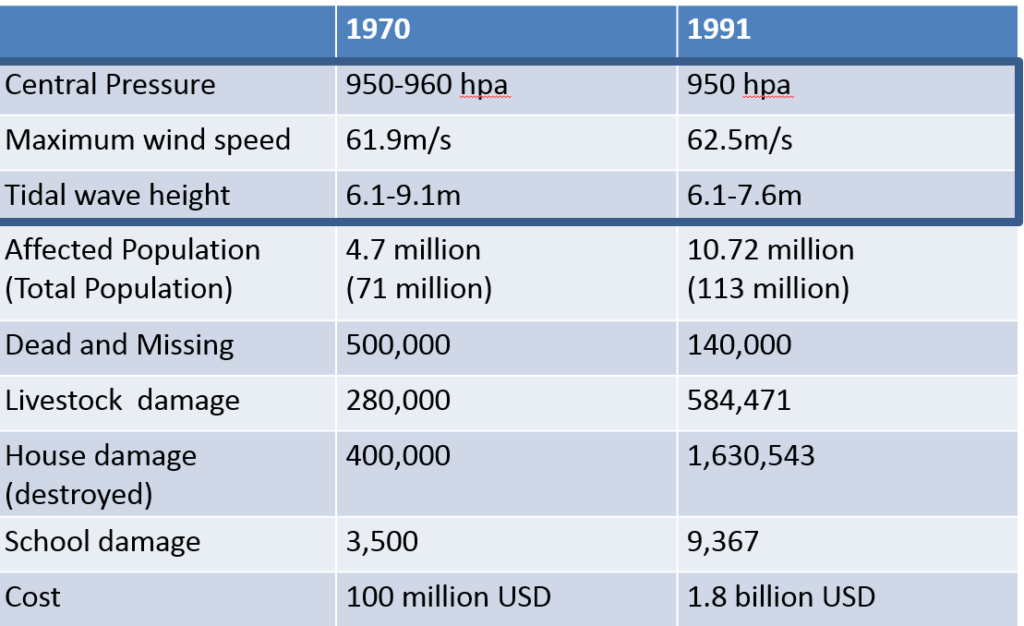
Table 2 picked up two disasters. We can compare the two. What can we say about this? Affected population was tremendously increased from 1970 to 1991. On the contrary,
the dead and missing number was decreasing. How about 1991’s cyclone disaster?

Table 2  1970 and 1991’s cyclone disasters*
banglacyclone19701991

Please check the dead and missing number and livestock damage.
You may have a strange feeling. The dead and missing number is
so rough.  However, livestock damage number is so precise. This
could reflect the cultural and social backgrounds.

banglasand
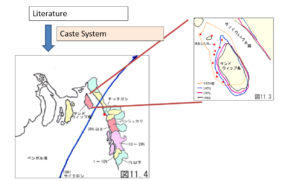
Figure 1 Sandwip Island History

We can consider a caste system somehow to understand the number.
The Brahmaputra river from the east and the Ganges river from the west bring a lot of sand to make lands in the Bay of Bengal. The people had a low status tended to live there actually.
They are easily influenced by the cyclones. In other words, they tended to die by the events.
Figure 1 shows the land, such as a Sandwip island was changing its shape by cyclones.

banglashelter
Figure 2   1970 and 1991 cyclones

Figure 2 indicates the shelter which was built after the 1970’s cyclone (with JICA’s  scheme)
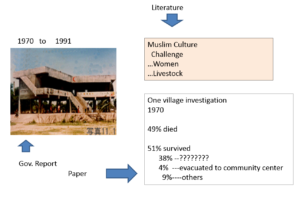
saved a lot of people’s lives. However, there were some cultural issues. For example, the shelter’s number was limited, so it was crowded in the shelter.  This situation made females difficult to evacuate to the shelter. They tended to avoid to stay with males in the crowded situation. The livestocks are treated as their important assets. This also reflects their culture.

The one of the research findings after the 1970’s cyclone show the  38% of the survivors were survived by climbing trees (Figure 3).

evacuationsbangla
Figure 3 A shelter and a people climbing the tree

* The sources(Figures) will be added later.

Day_110 : Bangladesh-Disasters, Lands, and Statistics (1)

Bangladesh has had a lot of cyclone disasters in the history. Table 1 indicates
the past cyclone disasters. Especially, we can see the 1970 and 1991’s cyclone
disasters are severe and caused many casualties.

Table 1 Cyclone disasters in Bangladesh*

banglacyclonehistory.

Table 2 picked up two disasters. We can compare the two. What can we say about this? The affected population was tremendously increased from 1970 to 1991. On the contrary,
the dead and missing number was decreasing. How about 1991’s cyclone disaster?

Table 2  1970 and 1991’s cyclone disasters*
banglacyclone19701991

Please check the dead and missing number and livestock damage.
You may have a strange feeling. The dead and missing number is
so rough.  However, livestock damage number is so precise. This
could reflect the cultural and social backgrounds.

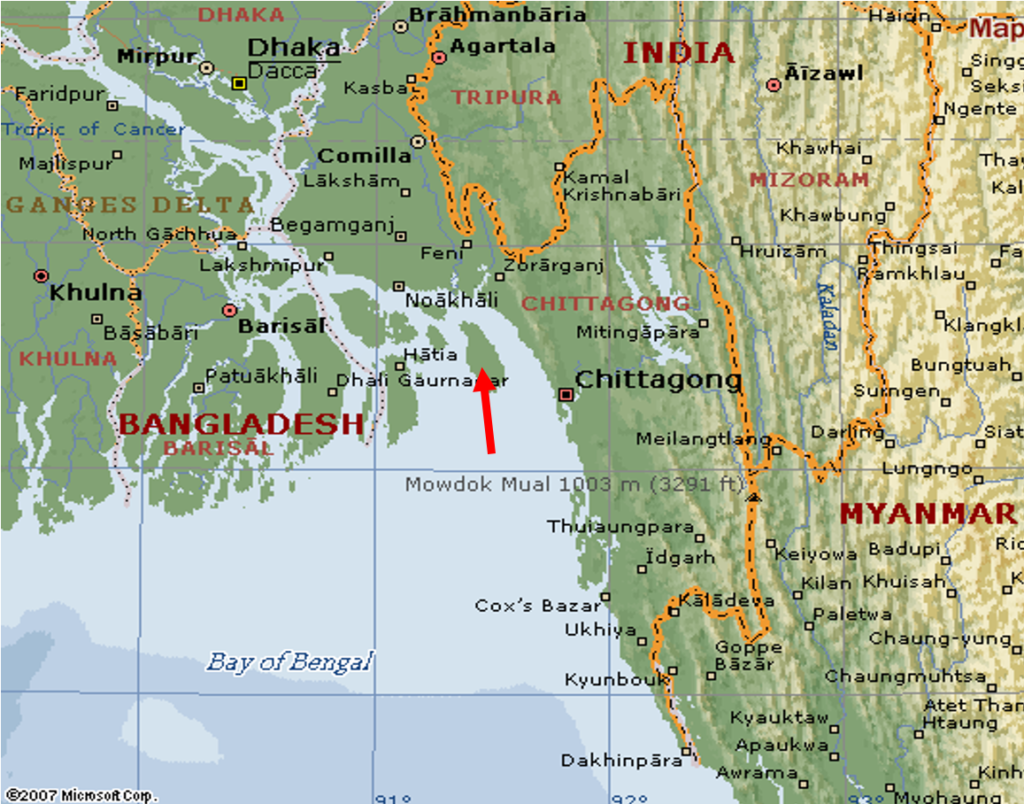
The 1991 cyclone hit Sandwip island and Chittagong city. Figure 1
shows the map.

banglamap
Figure 1  Sandwip Island and Chittagong (Map source: Microsoft Group)

To be continued…….
*Table 1 and 2 ‘s source will be mentioned later.

Related books and info. for further understanding


sponsored link

Day_106 : Myanmar-This week’s earthquake and the past trends

Myanmar had a huge earthquake (M6.8) on 24Aug2016.
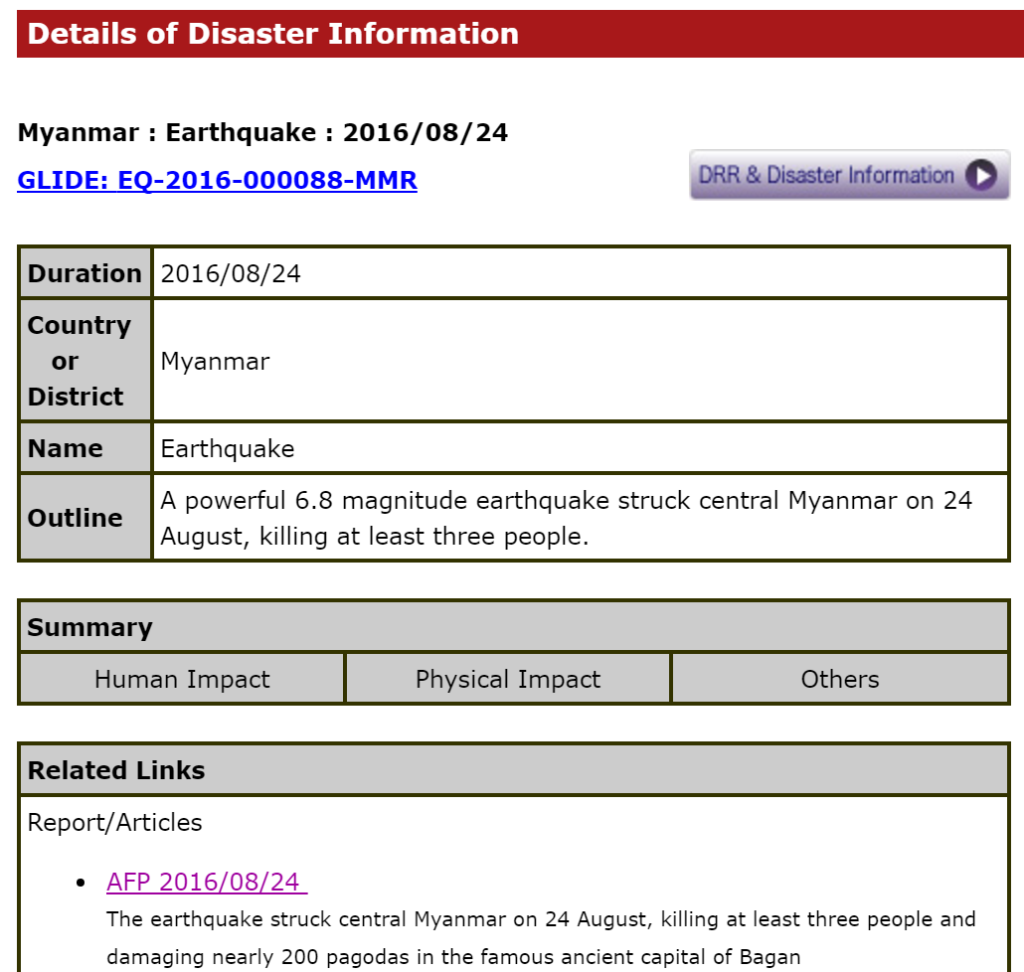
The outline of the information can be checked by the ADRC website (Figure 1).

Myanmar Earthquake
Figure 1  Myammar Earthquake 24Aug2016 (ADRC)

“A powerful 6.8 magnitude earthquake struck central Myanmar, killing at least three people and damaging nearly 200 pagodas in the famous ancient capital of Bagan. The quake was also felt across neighboring Thailand, India and Bangladesh, sending panicked residents rushing onto the streets (AFP).”

Let’s check the disaster data.
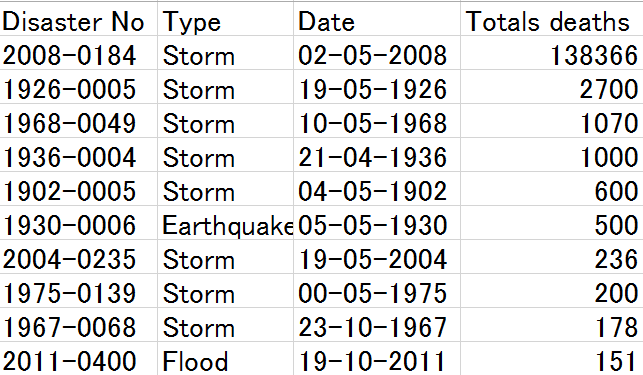
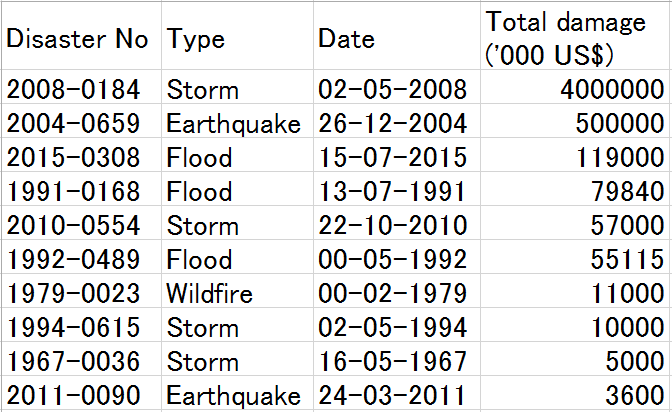
The Figure 2 Figure 3 are the 1900-2016 top 10 deadliest and costliest disasters  in Myanmar (EM-DAT).

Myanmar death toll 2
Figure 2 Totals Deaths (Top 10 deadliest natural disasters in Myanmar)

Myanmar economic damage 2
Figure 3 Total damage (Top 10 costliest natural disasters in Myanmar)

We can confirm how the 2008 Cyclone Nargis was influential.
Many natural disasters which have high total deaths numbers occurred before 2000 (7/10).  On the contrary, many high economic damage natural disasters hit after 1990 (8/10).  These facts support the following “disaster is from human suffering to economic damage with development process”.

The notes on the recent major events (ADRC) are as follows:

1) Cyclone Nargis (May 2008)
Cyclone Nargis hit Myanmar in May 2008 which killed 84,537, with the missing 53,836, injured    19,359. 450,000 houses were destroyed, with another 350,000 damaged. Total affected people     were 2.4 million. The total economic loss was US$ 4.1 billion (according to Post-Nargis Joint         Assessment- PONJA).

2) Indian Ocean Tsunami (December 2004)
Indian Ocean Tsunami occurred off the Sumatra Island on 26 December 2006 killed 61,                 injured 42, affected 2,592 and destroyed 601 houses in Myanmar.

*The numbers of deaths are not the same with different sources. This is the one of the most important challenges of disaster research.

We can especially consider the political conditions for understanding the 2008 Cyclone Nargis disaster exacerbations. During the disaster, the county had refused international aids.

[ad#ads1]

Day_88 : Inamura no Hi

“Inamura no Hi” is a story of a man who noticed a precursor of a large tsunami at the earliest stage and led village inhabitants to higher ground by burning harvested rice sheaves. This story was based on a true story at the time of Ansei-Nankai Tsunami (1854), which claimed around 3,000 lives in the coastal areas of Western Japan (ADRC).

Based on the information from ADRC, 8 countries, language versions were released:  Bangladesh, India, Indonesia, Malaysia, Nepal, Singapore, Sri Lanka, and the Philippines.
Thai language version was also found.

This story became famous after the 2004 Indian Ocean Tsunami disaster, especially the 2005 UN WCDR (World Conference on Disaster Reduction)  in Kobe. Former Japanese Prime Minister Junichiro Koizumi introduced this story in the Japanese lessons for disaster education (Government of Japan, 2006). Hirogawa Town’s video well explains the background of the story in short and their tsunami disaster education.

Day_82 : Earthquake disasters in Asia (2) – Other countries

The below is the overviews of Earthquakes (Casualties) in Asian earthquake prone countries (except Iran)

Turkey
1999 Izmit Earthquake(M7.4)* Death Toll approx.17000**
1992 Erzincan Earthquake(M6.8) Death Toll approx.500
Note : The one of the main reasons to cause huge numbers of casualties is the same with the Iran cases, building structure, Adobe.

*School Geography Video

** The death toll is different from the sources. This is our challenge.

Pakistan
2005 Kashmir Earthquake (M7.7) Death Toll approx.90,000
1990 Quetta Earthquake (M7.5) Death Toll approx.60,000

India
2001 Gujarat Earthquake (M8.0) Death Toll approx.20000
Note: International assistance efforts influenced the country’s governance negatively.
Illegal house buildings were spread out after the event. This leads India to make a decision
not to accept international assistance efforts (workers,etc.) after the Indian Ocean Tsunami
disaster in 2004
1994 Bihar-Nepal Earthquake (M8.3) Death Toll approx.10000
Note : Nepal did not allow foreigners into the country.
Therefore, the death toll number is inaccurate.
1993 Latur Earthquake (M6.2) Death Toll approx.10000
Note : Stone wall house buildings impact on the high mortality numbers.

Indonesia
2004 Sumatra Earthquake(M9.1)
<Tsunami Leading wave>
The Sri Lanka : Death toll is approx. 35000 Tsunami height is max. 15m
India : Death toll is approx.12000 Tsunami height is max.12m.
<Drawback wave>
Thailand :  Death toll is approx. 8000 Tsunami height is max. 20m.

With earthquake direct impact
Indonesia : Death toll is approx.167000.

Note: They had no Tsunami Warning System. In Thailand, some people go to the seashore to      obtain shells, fishes, or something unusual and not evacuate during the drawback wave              because they lacked tsunami experience and knowledge.

China
1976 Tanshan Earthquake (M7.8) : Death Toll is approx.250,000 (actually estimated 3 times)
USGS’s estimation 655,000
Note :
-Tanshan was a big industrial city
-94% of residential brick wall houses were destroyed
– Chinese gov. refused international assistance
(This makes the disaster worse) …This could be
the deadliest earthquake in the world history

2008 Situan Earthquake (M7.9) : Death Toll is approx. 90,000
-4,000,000 houses were destroyed

The source of the death toll data is NIED DIL***

***National Research Institute for Earth Science and Disaster Prevention, Disasster Information Laboratory.
[ad#ads1]

Day_81 : Earthquake disasters in Asia (1) – Iran

Iran is the one of the most earthquake vulnerable countries in Asia. The following is the high death tolls earthquakes in the country:

2003 Bam Earthquake (M6.8) Death Toll approx.43,000
1990 Majil Earthquake (M7.4) Death Toll approx.50,000
1978 Tabas Earthquake (M7.4) Death Toll approx.18000

Death toll numbers are totally different from the sources.The above death toll data from NIED DIL (National Research Institute for Earth Science and Disaster Prevention, Disaster Information Laboratory) Website**.These gaps tell us a lot of things. This will be explained later.

Especially, the Bam was an ancient city which has many historical buildings and 90% of them were destroyed.

One of the main causes of the casualties is the house building structures, adobe (mud brick). The Adobe is good for thermal mass, however bad for earthquakes. This is very embedded in their culture.
EM-DAT* indicates the Iran’s historical disasters since 1900. We can confirm the Iran is the earthquake prone country as shown in the below table.
Iran

*D. Guha-Sapir, R. Below, Ph. Hoyois – EM-DAT: The CRED/OFDA International Disaster Database –www.emdat.be – Université Catholique de Louvain – Brussels – Belgium.

**http://dil.bosai.go.jp/workshop/05kouza_chiiki/00toppage/index.htm

Day_79 : Disaster trends in developed and developing countries

Day_77 indicates disaster damage trends from human to economic. The following figure (sorry, little bit old data) can show the important aspects. Once we divided death tolls, affected people numbers, the costs of the disasters by the numbers of occurrences, the data can clearly tell the reality because the data indicates the tendencies. For example, the death toll / occurrence (number) means “easy to die by disasters”.

Naturaldisasterbyregion

So, we can say the people in Asia are easy to die, be affected, and have costs of disasters. The comparison between the Africa and the America apparently shows the tendencies. The people of Africa are likely to die however the people of Americas are difficult to die. The disasters in the Americas tend to have the highest cost.

[ad#ads1]

Day_78 : Disaster statistics – Overview

The following is an overview of disasters worldwide. The data from 1970 to 2010, over 2000 death-toll disasters, which had 50 events, were analyzed (Total death toll approx. 3mil).

Vulnerable Areas:
1. Southeast Asia –West Asia
Over 50% of the world’s pop.is living.
events 68%
death 56%
Countries: The Philippines, Indonesia, China, Myanmar, Bangladesh, India, Pakistan, Afghanistan, Iran, Armenia, Turkey

2. Central America
event 18%
death 14%
Countries: Mexico, Guatemala, Nicaragua, Honduras, Haiti, Venezuela, Columbia, Peru

3. Africa
Drought: 3 events, total death toll 0.9mil. (29%)

4. By country
India 8, Iran 6, Bangladesh 4, China/Indonesia/The Philippines 3

India: Earthquake and Flood
Iran: Earthquake 1/4 of the world earthquake disasters (over 1000 death toll)
Bangladesh: Storm Surge 1/10 year has over 1000 death toll event.

5. Others
Volcanic Disaster
Indonesia has 13/30 events (over 1000 death toll after 19the 60s) in the World.

Affected People
Populated Countries: China and India: Flood and drought

These analyses referred to the NIED DIL homepage (in Japanese).