
An infographic, “Myanmar Earthquake 2025 Educational Sector Impact & Recovery Roadmap,” was created. Myanmar Earthquake 2025 Educational Sector Impact & Recovery Roadmap
*Please note that these are my research results, for my memo.

An infographic, “Myanmar Earthquake 2025 Educational Sector Impact & Recovery Roadmap,” was created. Myanmar Earthquake 2025 Educational Sector Impact & Recovery Roadmap
*Please note that these are my research results, for my memo.
From Tragedy to Leadership: The Birth of ADRC
The Asian Disaster Reduction Center (ADRC) was established in 1998 following the devastating Great Hanshin-Awaji Earthquake (commonly known as the Kobe Earthquake) that struck Japan in 1995. This catastrophic event became a catalyst for change, transforming how Japan—and later Asia—approached disaster management and resilience.
Kobe’s Remarkable Recovery Journey
Kobe’s recovery story stands as a powerful testament to resilience and strategic rebuilding. Within just 9 years after the earthquake, Kobe’s population returned to pre-disaster levels—an extraordinary achievement considering the scale of destruction. This recovery wasn’t merely about rebuilding structures but reimagining the city’s future role.
HAT Kobe: A Hub for Disaster Reduction Excellence
Today, Kobe has reinvented itself as a global center for disaster reduction policies and activities. The area known as HAT Kobe hosts numerous disaster-related organizations, including ADRC. The name “HAT” carries dual significance:
This wordplay perfectly captures Kobe’s transformation from a disaster-struck city to a knowledge hub that helps others prepare for and respond to unexpected disasters.
Learning From Kobe: A Model for Disaster Recovery
Kobe’s recovery process offers valuable lessons for communities worldwide facing similar challenges. The city demonstrates how effective post-disaster planning can transform tragedy into opportunity, creating not just infrastructure but institutional knowledge that benefits others.
ADRC’s Mission Across Asia
ADRC plays a vital role in sharing disaster reduction expertise with its member countries throughout Asia. The organization:
Resources for Disaster Management Professionals
ADRC maintains comprehensive resources that disaster management professionals can access:
These resources provide valuable insights into regional disaster management systems, country-specific approaches, and up-to-date information on current disaster situations across Asia.
Building Regional Resilience Together
Through organizations like ADRC and the example set by Kobe, Asian countries are developing stronger collaborative approaches to disaster risk reduction. By learning from past experiences and sharing knowledge, communities across the region are better prepared to face future challenges with resilience and determination.
Even though the countries are limited, UN Desinventar has really detailed disaster information. Let me share an example: Vietnam’s data.
Just click the target country (Vietnam), and you can see the different types of data, such as pie charts (disaster type), polygonal lines (trend), spatial (geographical distribution), and statistical (regional data).
The following are the screen shots:.
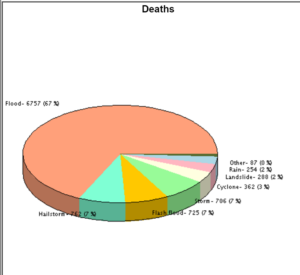
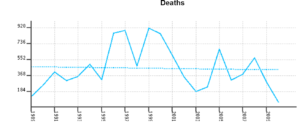
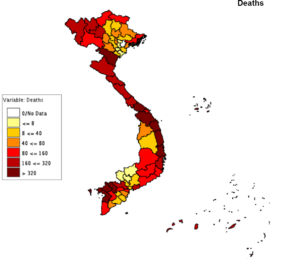
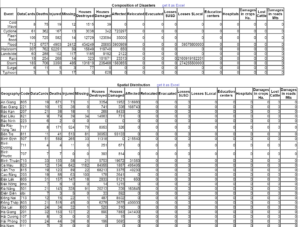
* UN Desinventar
http://www.desinventar.net/index_www.html
I had a query on historical earthquake information in Japan. Therefore, I update the new useful disaster information especially historical data in Japan.
The followings are the same as the disaster information 4.
Flood list: an excellent source of flood disasters
floodlist.com/tag/thailand
AHA center- adinet: disasters in ASEAN countries can be browsed and also checked in detail.
DRH-Asia: cases on local knowledge and their applications related to the technologies in Asian countries can be found.
http://drh.bosai.go.jp/
The post of the disaster information 3 is the followings:
https://disasterresearchnotes.site/archives/3171
——
Introduced you to the following disaster information.
1) General info. 2) Database 3) Update info
1) General info is the first website to check.
1. UNISDR
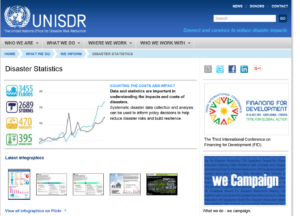
2) Database is the base to analyze the target disasters.
1. EM-DAT
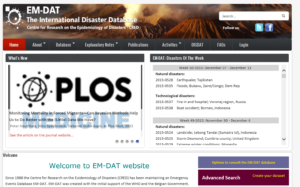
2. Desinventar
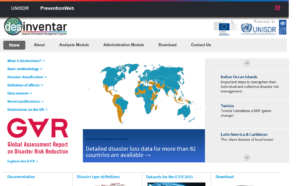
The disinventar is very accurate and detailed, however, the listed
countries are limited.
3) Update info. Is the website, we can check on a daily basis.
These are also useful to overview of the recent disasters.
1. ReliefWeb
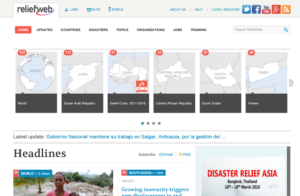
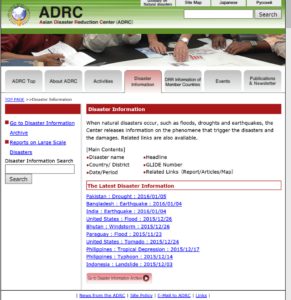
2. ADRC
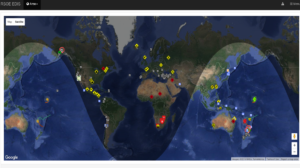
3. ROSE
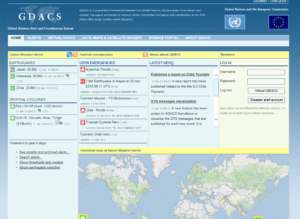
4. GDACS
Concerning, data on demographic, socioeconomic, and others, we should
clarify the levels from national to local.
County Level
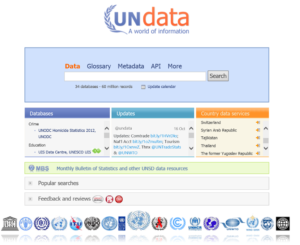
1. UN data
2. World Bank open data

3. CIA world factbook
Provincial (States) Level
1. Government Office (National Statistics Office,etc.)
Community Level
1. Local Government Office
When we investigate the disasters, we first go to the ADRC (if the country is Asia) and Relief Web to see some significant numbers such as the death toll and affected numbers. Then, check the disaster history of the target areas by EM-DAT and Desinventar (if the country is listed). We also overview the county’s background by CIA world fact book and check some socio-economic data by UN or World bank open data. In addition, the local government or community data of the target area are significant to be accessed. These are the primary action to grasp the whole picture of the disaster.
The update of some useful disaster information websites are as follows:
Flood list: an excellent source of flood disasters
AHA center- adinet: disasters in ASEAN countries can be browsed and also checked in detail.
DRH-Asia: cases on local knowledge and their applications related to the technologies in Asian countries can be found.
The post of the disaster information 3 is the followings:
https://disasterresearchnotes.site/archives/3171
——
Introduced you the following disaster information.
1) General info. 2) Database 3) Update info
1) General info is the first website to check.
1. UNISDR
2) Database is the base to analyze the target disasters.
1. EM-DAT
2. Desinventar
The disinventar is very accurate and detailed, however, the listed
countries are limited.
3) Update info. Is the website, we can check on a daily basis.
These are also useful to overview of the recent disasters.
1. ReliefWeb
2. ADRC
3. ROSE
4. GDACS
Concerning, data on demographic, socioeconomic, and others, we should
clarify the levels from national to local.
County Level
1. UN data
2. World Bank open data
3. CIA world factbook
Provincial (States) Level
1. Government Office (National Statistics Office,etc.)
Community Level
1. Local Government Office
When we investigate the disasters, we firstly go to the ADRC (if the country is Asia) and Relief Web to see some significant numbers such as the death toll and affected numbers. Then, check the disaster history of the target areas by EM-DAT and Desinventar (if the country is listed). We also overview the county’s background by CIA world fact book and check some socio-economic data by UN or World bank open data. In addition, the local government or community data of the target area are significant to be accessed. These are the primary action to grasp the whole picture of the disaster.
Introduced you the following disaster information.
1) General info. 2) Database 3) Update info
1) General info is the first website to check.
1. UNISDR
2) Database is the base to analyze the target disasters.
1. EM-DAT
2. Desinventar
The disinventar is very accurate and detailed, however, the listed
countries are limited.
3) Update info. Is the website, we can check on a daily basis.
These are also useful to overview of the recent disasters.
1. ReliefWeb
2. ADRC
3. ROSE
4. GDACS
Concerning, data on demographic, socioeconomic, and others, we should
clarify the levels from national to local.
sponsored link
County Level
1. UN data
2. World Bank open data
3. CIA world factbook
Provincial (States) Level
1. Government Office (National Statistics Office,etc.)
Community Level
1. Local Government Office
When we investigate the disasters, we firstly go to the ADRC (if the country is Asia) and Relief Web to see some significant numbers such as the death toll and affected numbers. Then, check the disaster history of the target areas by EM-DAT and Desinventar (if the country is listed). We also overview the county’s background by CIA world fact book and check some socio-economic data by UN or World bank open data. In addition, the local government or community data of the target area are significant to be accessed. These are the primary action to grasp the whole picture of the disaster.
Introduced you to the following disaster information.
1) General info. 2) Database 3) Update info
1) General info is the first website to check.
1. UNISDR
http://www.unisdr.org/we/inform/disaster-statistics
2) Database is the key to analyze the target disasters.
1. EM-DAT
http://www.emdat.be/
2. DesInventar
http://www.desinventar.net/index_www.html
3) Info. Update website can be checked daily.
These are also useful to overview of the recent disasters.
1. ReliefWeb
http://reliefweb.int/disasters
2. ADRC
http://www.adrc.asia/
3. ROSE
http://hisz.rsoe.hu/
4. GDACS
http://www.gdacs.org/
Concerning, data on demographic, socioeconomic, and others, we should
clarify the levels from national to local.
County Level
1. UN data
http://data.un.org/
2. World Bank open data
http://data.worldbank.org/
3. CIA world factbook
https://www.cia.gov/library/publications/the-world-factbook/
Provincial (States) Level
1. Government Office (National Statistics Office,etc.)
Community Level
1. Local Government Office
When I investigate the disasters, I first go to the ADRC (if the country is Asia) and Relief Web to see some significant numbers such as the death toll and affected numbers. Then, check the disaster history of the target areas by EM-DAT and Desinventar (if the country is listed). I also overview the county’s background by CIA world factbook and check some socio-economic data by UN or World bank open data. Besides, the local government or community data of the target area are significant to be accessed. These are the first action to grasp the whole picture of the disaster.
You cannot copy content of this page