Category Archives: statistics

Day_101 : Deth toll tells

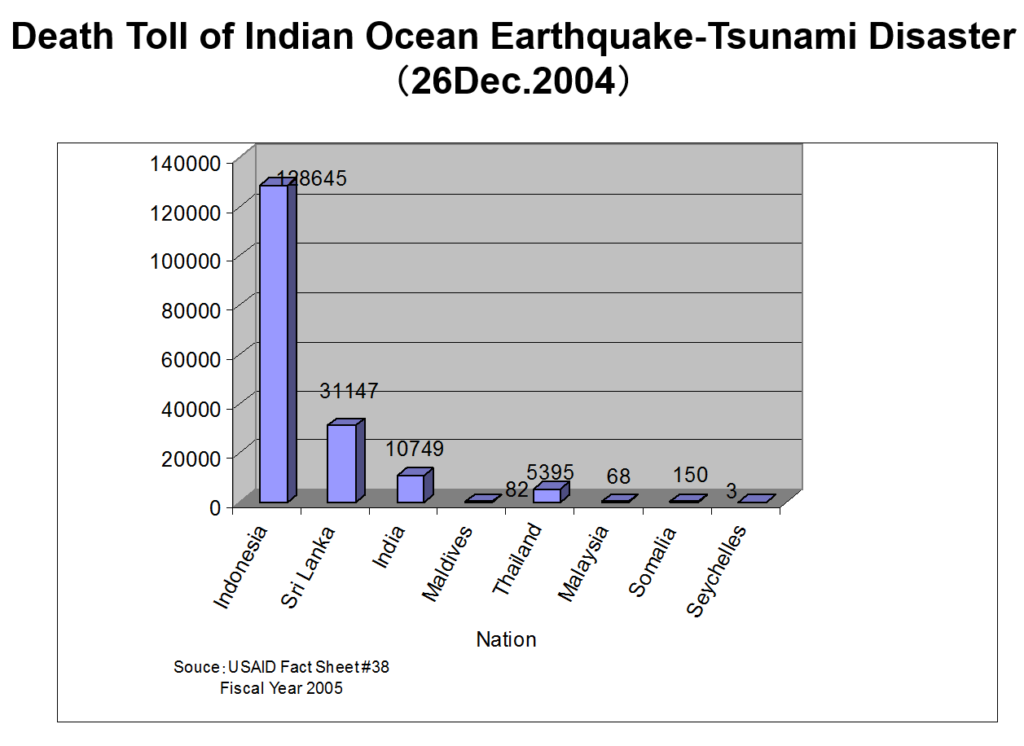
The following Figure 1 is the death toll by country after the 2004 Indian Ocean Tsunami disaster.
death toll
Figure 1 Death toll by country

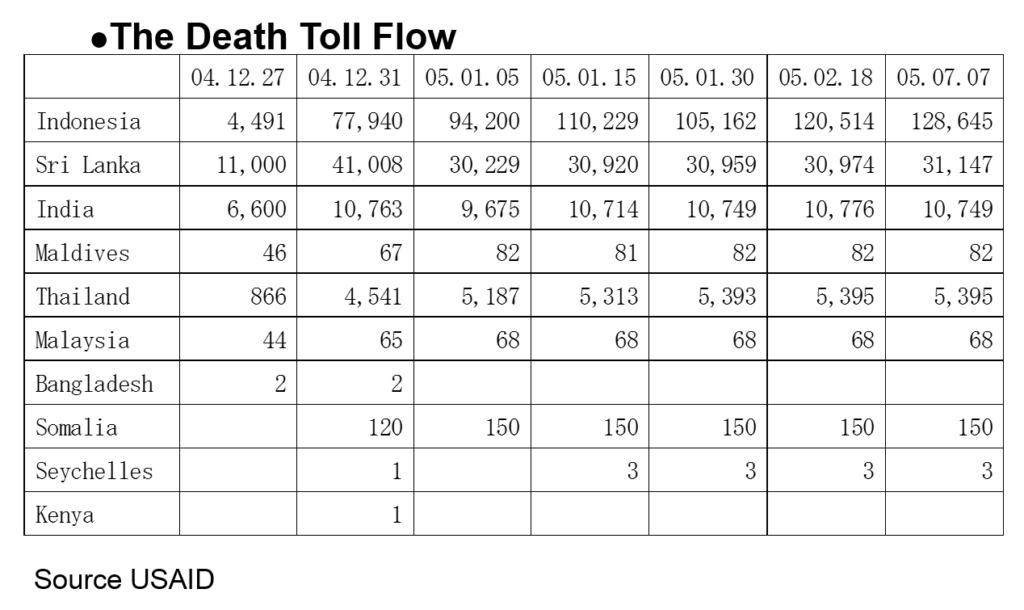
Then Table 1 indicates the death toll flow of each country.
What can we say about this?

Table 1 The Death Toll Flow
Death Flow

As you can see Table 1, the number of victims (deaths) is changing day by day. For instance, the number of deaths reported in Indonesia from 05.01.15 to 05.01.30 is decreasing. The death toll flow of Somaria looks somehow strange. If we can consider these kinds of views, we can understand that the reported death numbers reflect the social situations of the country. These views will be discussed later.

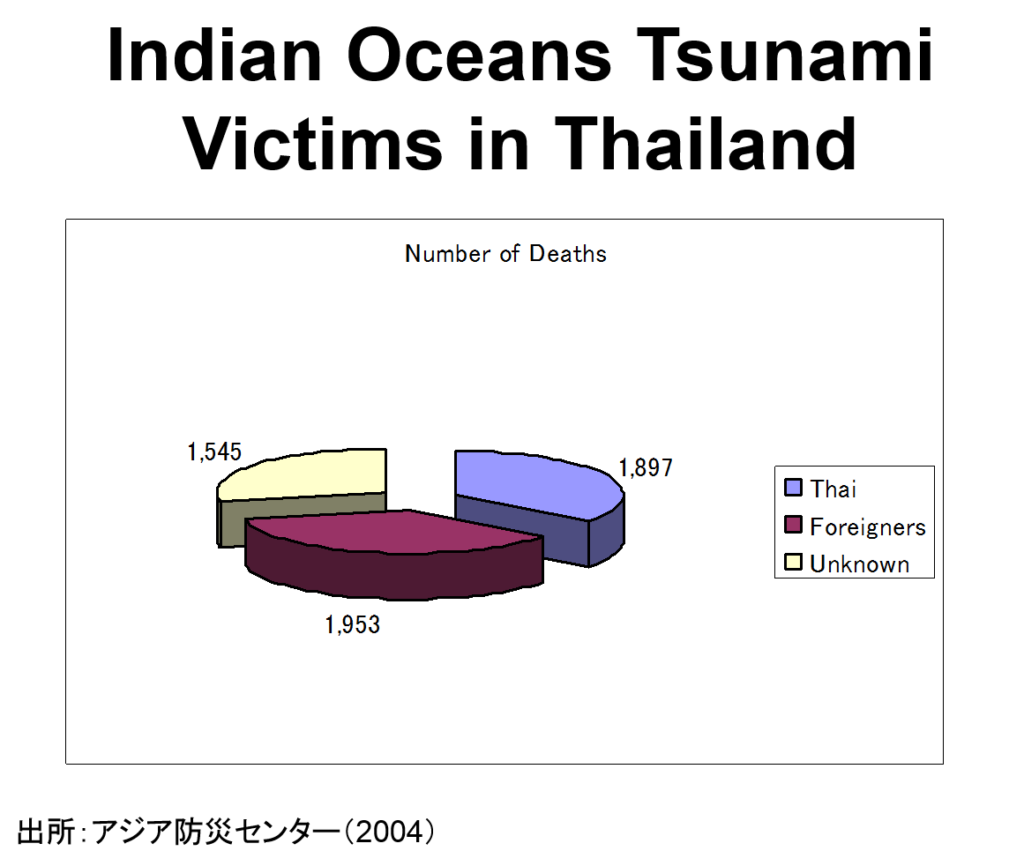
Next, Figure 2 shows the picture taken at the tsunami memorial meeting in Phang Nga province one year after the disaster. This definitely indicates so many foreigners were killed by the tsunami. Figure 3 support this fact. This is because the affected areas were sightseeing spots. Even Thai victims include so many visitors from all over the country.

pictures of memories
Figure 2  The Picture of the Tsunami Memorial Board
tsunami victims
Figure 3 Indian Oceans Tsunami Victims in Thailand

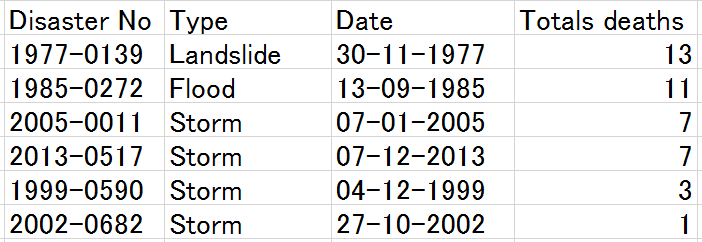
The victim’s nationality is so diverse.Figure 4 indicates the top 10 deadliest disasters (actually top 6 exist) in Sweden and you can know the Indian ocean tsunami is ironically the worst natural disaster in the history of Sweden (The fatality number is 543 Wikipedia).
sweden
Figure 4  Deadliest Disasters in Sweden (1900-2014) Source: EM-DAT

[ad#ads1]
Day_77 : Historical trends of the damages caused by natural disasters

The damages caused by natural disasters are from human to economy with the development. This is one of the universal and historical trends in the world and within the countries. Mortality numbers of natural disasters tend to be decreasing with national development, but economic losses are the opposite. This is because of urbanization, science and technology advancement, asset values, and so on. This is the same as developing and developed countries’ relationships. Developing countries tend to have high mortality numbers, on the other hand, developed countries are inclined to have high economic losses.

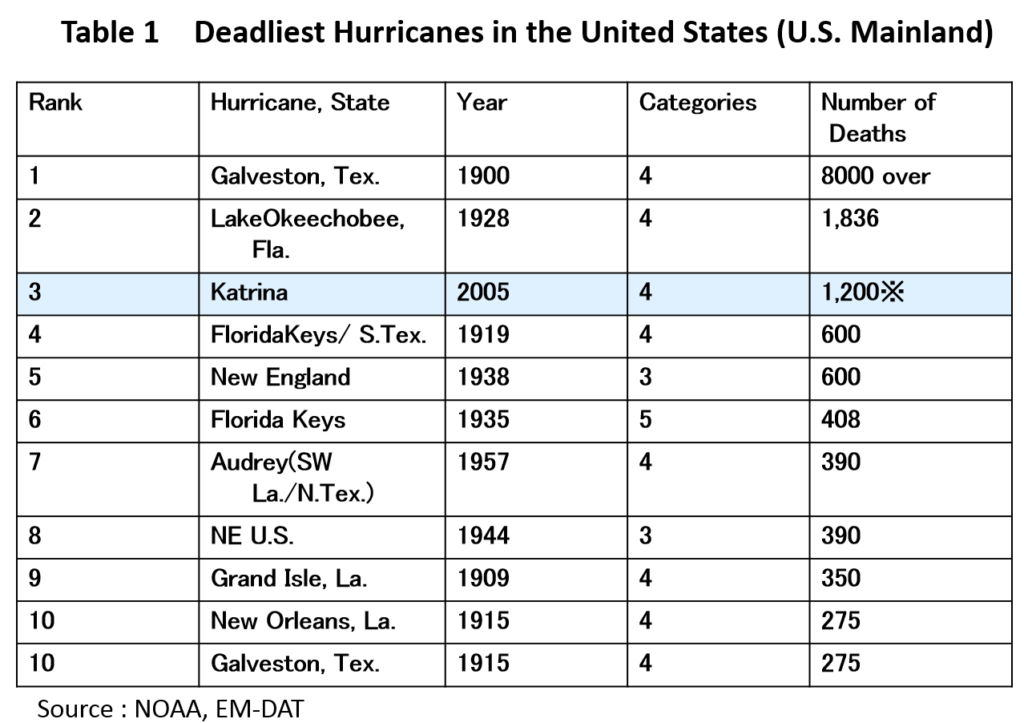
The following tables (little bit old, sorry) which I used to research on Hurricane Katrina in 2005. What you can say about these?

table1

table2

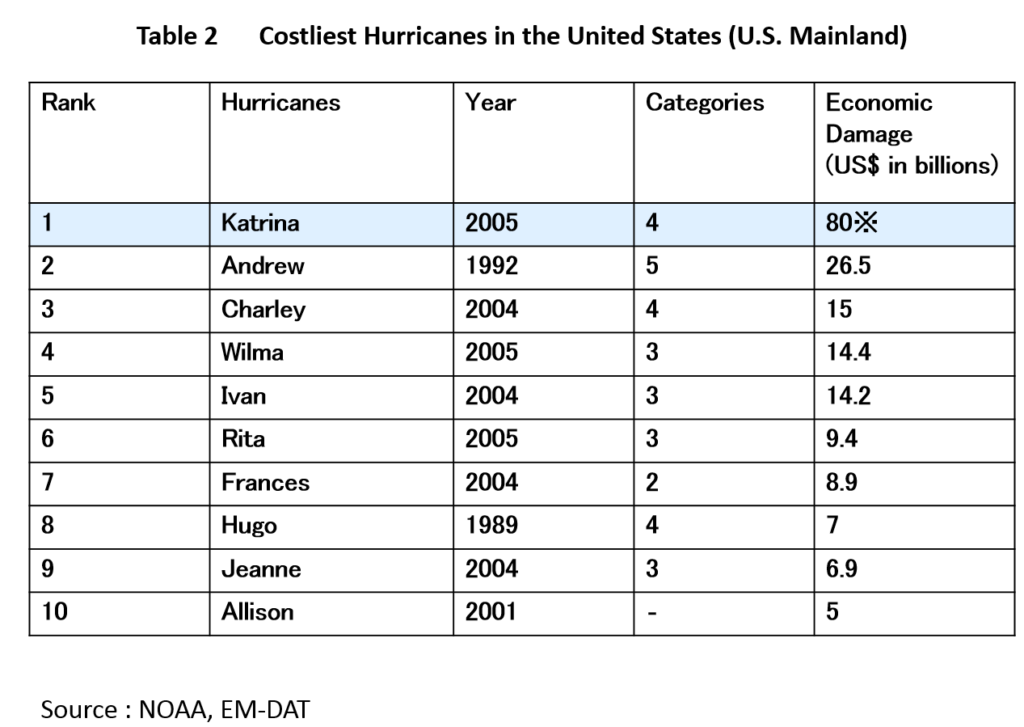
Yes, table 1 indicates almost all high mortality numbers hurricane disasters in the United States are before 1960. On the contrary, table 2 shows almost all high-cost hurricane disasters are after 2000.

sponsored link

Day_17 : The R for disaster research

Just started to use R for disaster research. The R is free, but a very useful and powerful tool for statistical analyses as you may know. Now I am challenging some future’s mortality risk estimation using population projection data.I thank the experts who assist me from the bottom of my heart. The aging societies will influence on the disasters exacerbation. The challenges will be written here.